
Bianka Boglárka Csiki, an 11th-semester student, completed a two-week internship in Hong Kong between October 12–26, 2025, supported by the Pannónia Scholarship Program. She arrived on October 10 to begin her mobility period. Hong Kong is a Special Administrative Region of China, a city-state made up of 263 islands, surrounded by the South China Sea.
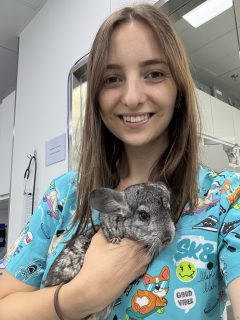 Bogi completed her internship on Hong Kong Island, at Concordia Pet Care in the Happy Valley district. The clinic is modern, well-equipped, and handles a high caseload while maintaining excellent professional standards. The hospital consists of two main departments:
-
a small animal unit treating dogs and cats, and
-
an exotic unit specialising in a wide range of exotic pets.
The exotics department admits everything from hamsters and parrots to monitor lizards. It includes a separate hospital wing with two large wards offering different temperature conditions – a “cold” and a “warm” ward – ensuring species-specific housing. Between the two wards, a storage area holds a variety of substrates, hides, aquariums, artificial plants, and enrichment tools, ensuring proper husbandry conditions even during hospitalisation. The department also features a large treatment room, an operating theatre, and two consultation rooms.
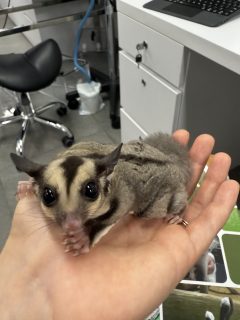 The clinic provides 24-hour care, though most caseload occurs during the day. Bogi’s internship supervisor was Dr Zoltán Szabó, a graduate of the University of Veterinary Medicine Budapest, who has been practising in Hong Kong for 15 years as an exotic specialist. He is internationally recognised for his outstanding professional work, and observing his methods provided a major learning opportunity for Bogi.
Workdays began at 9 a.m. with clinical rounds, reviewing hospitalized patients’ conditions, ongoing treatments, and performing routine checks (weight, temperature, physical exam). This was followed by medication administration, wound care, and bandage changes. Bogi assisted in animal restraint, force-feeding, and administering medications orally, subcutaneously, or intramuscularly.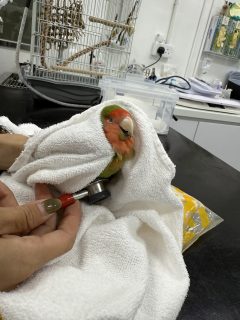
Consultations followed, scheduled in advance. These were conducted in English, with assistants providing translation between English and Chinese when needed. Bogi had full access to the clinic’s digital medical records, allowing her to review patient histories, monitor ongoing treatments, assess diagnostics, and study imaging and laboratory results. After consultations, she performed blood draws, practised catheter placement, and prepared patients for anaesthesia and restraint for X-ray and CT scans. She learned the practical steps of imaging diagnostics – positioning, image acquisition, and interpretation – and independently administered contrast material for CT examinations.
The department has its own laboratory capable of immediate blood sample analysis. Bogi learned the principles of using laboratory equipment and studied key haematology and biochemistry parameters, their clinical significance, and possible causes of abnormalities.
In the mornings, she also observed a variety of surgical procedures, from routine neutering to soft-tissue and orthopaedic surgeries.
During her internship, she mastered the fundamental steps of clinical examination in mammals, birds, and reptiles. She now confidently restrains and handles animals during different types of medication administration, and has become proficient in blood collection, other sampling techniques, physical examination, and interpreting diagnostic results.
This internship significantly contributed to her professional development and strengthened her commitment to exotic animal medicine. The knowledge and experience gained will form an important foundation for her future clinical career.