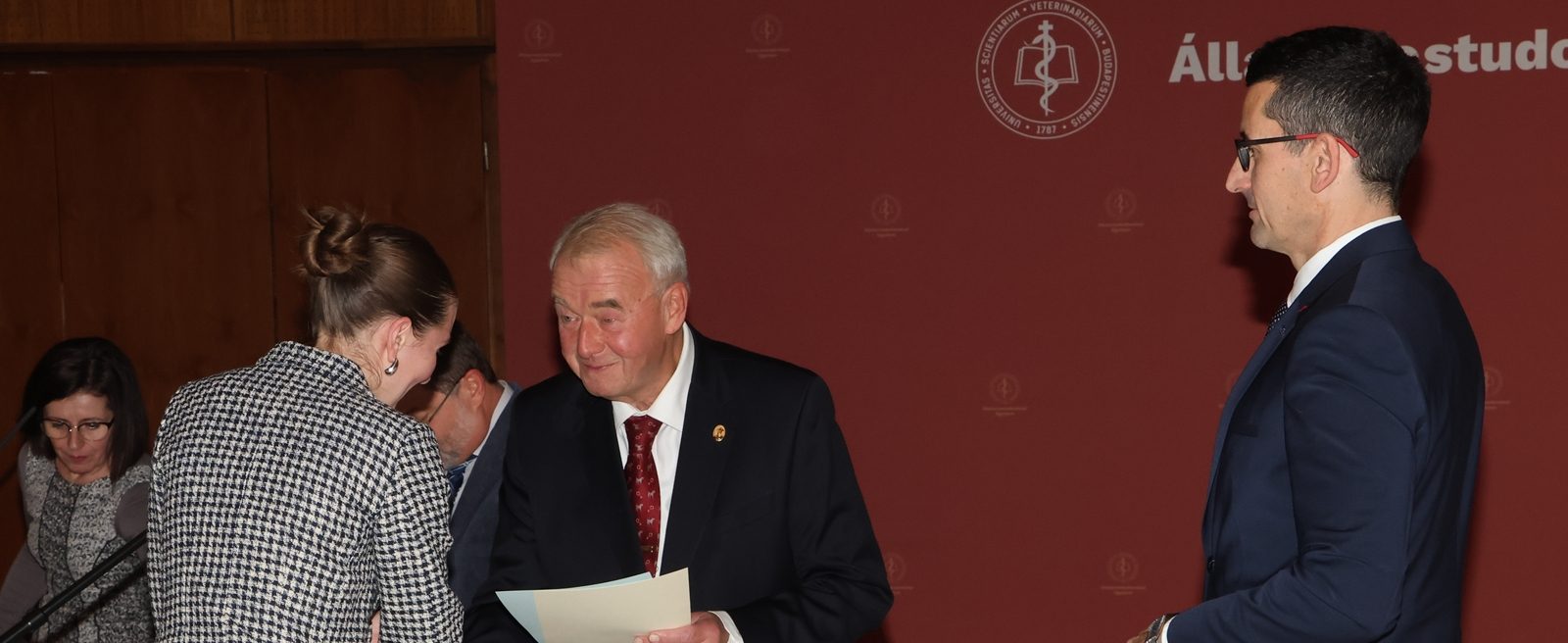
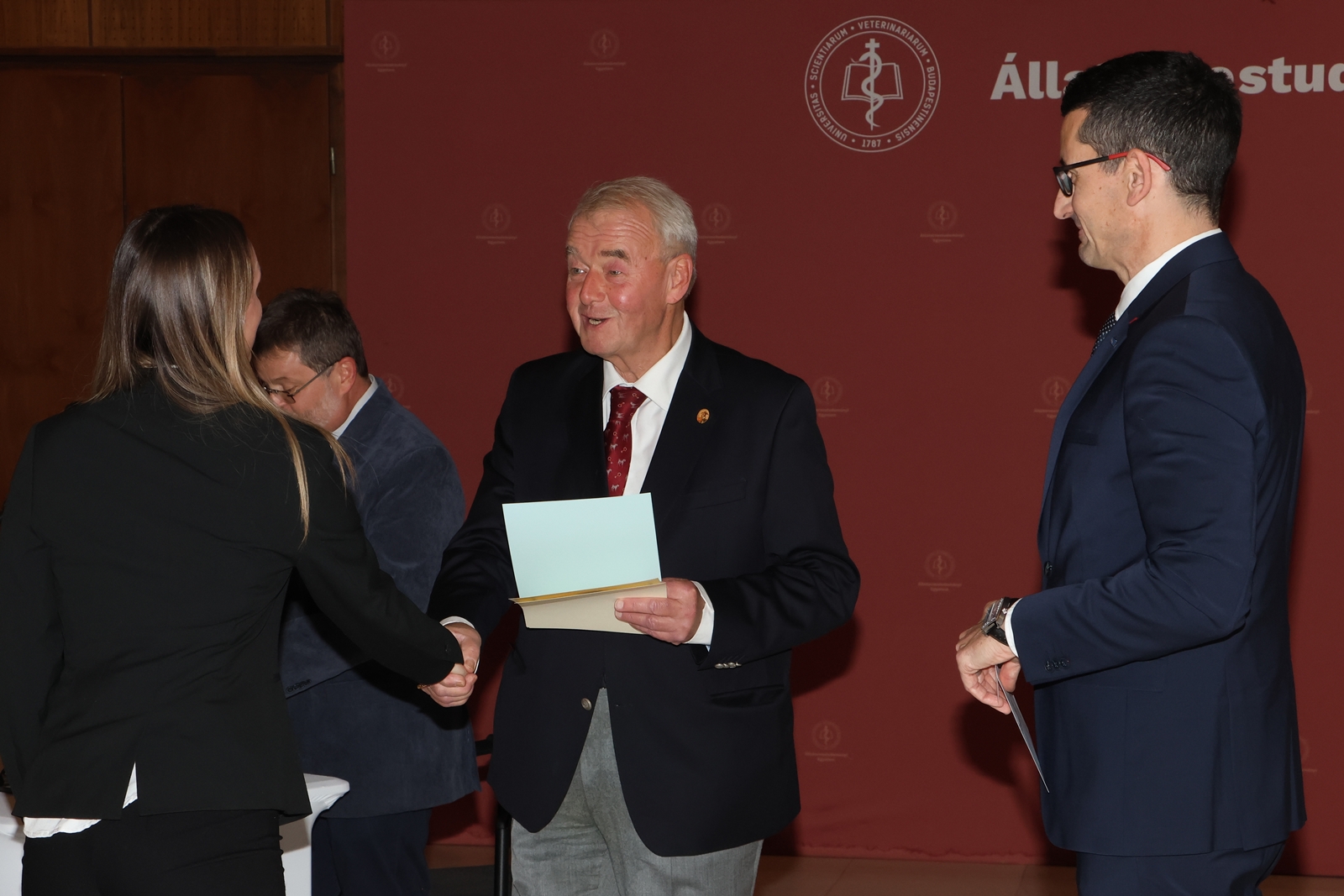
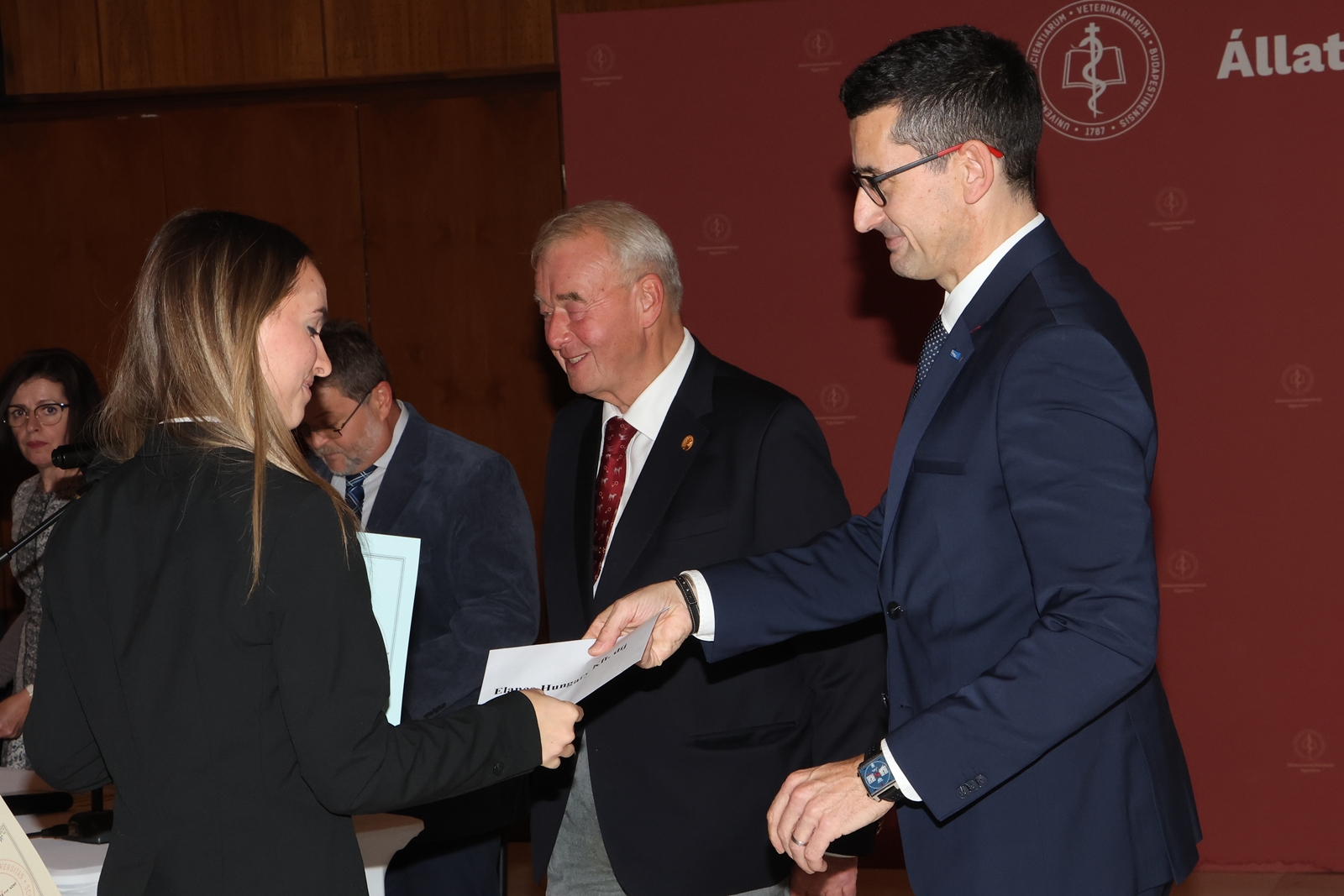
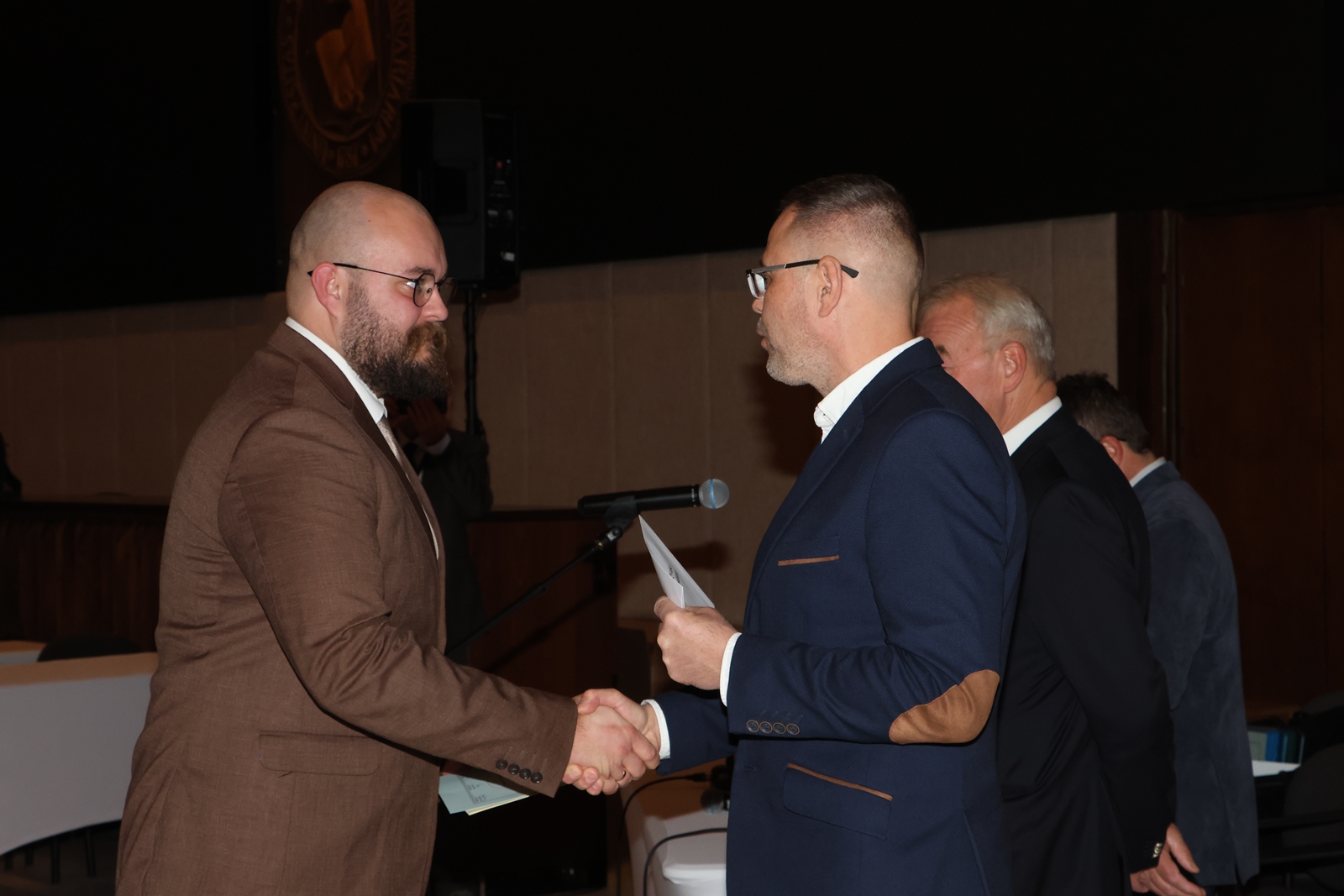
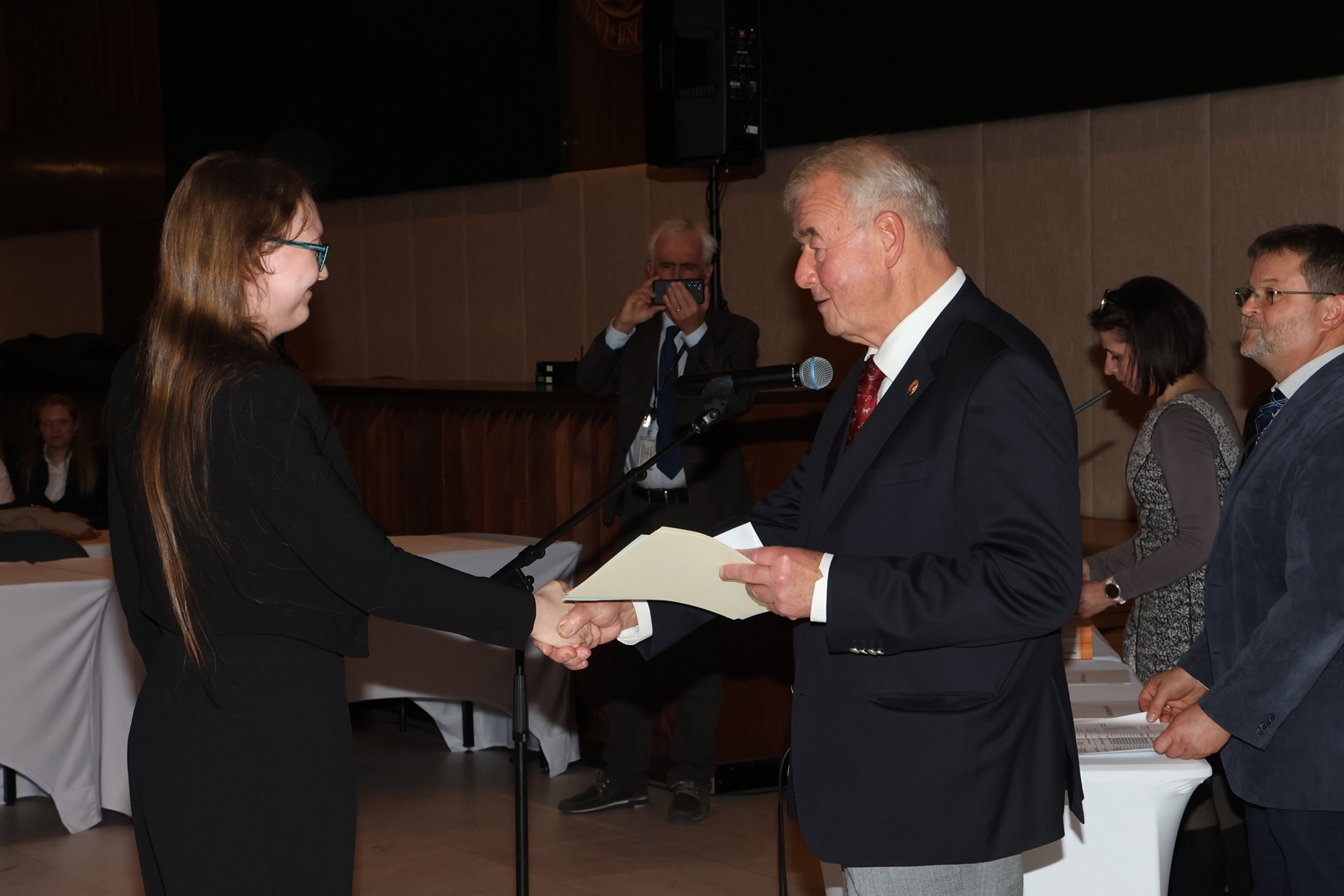
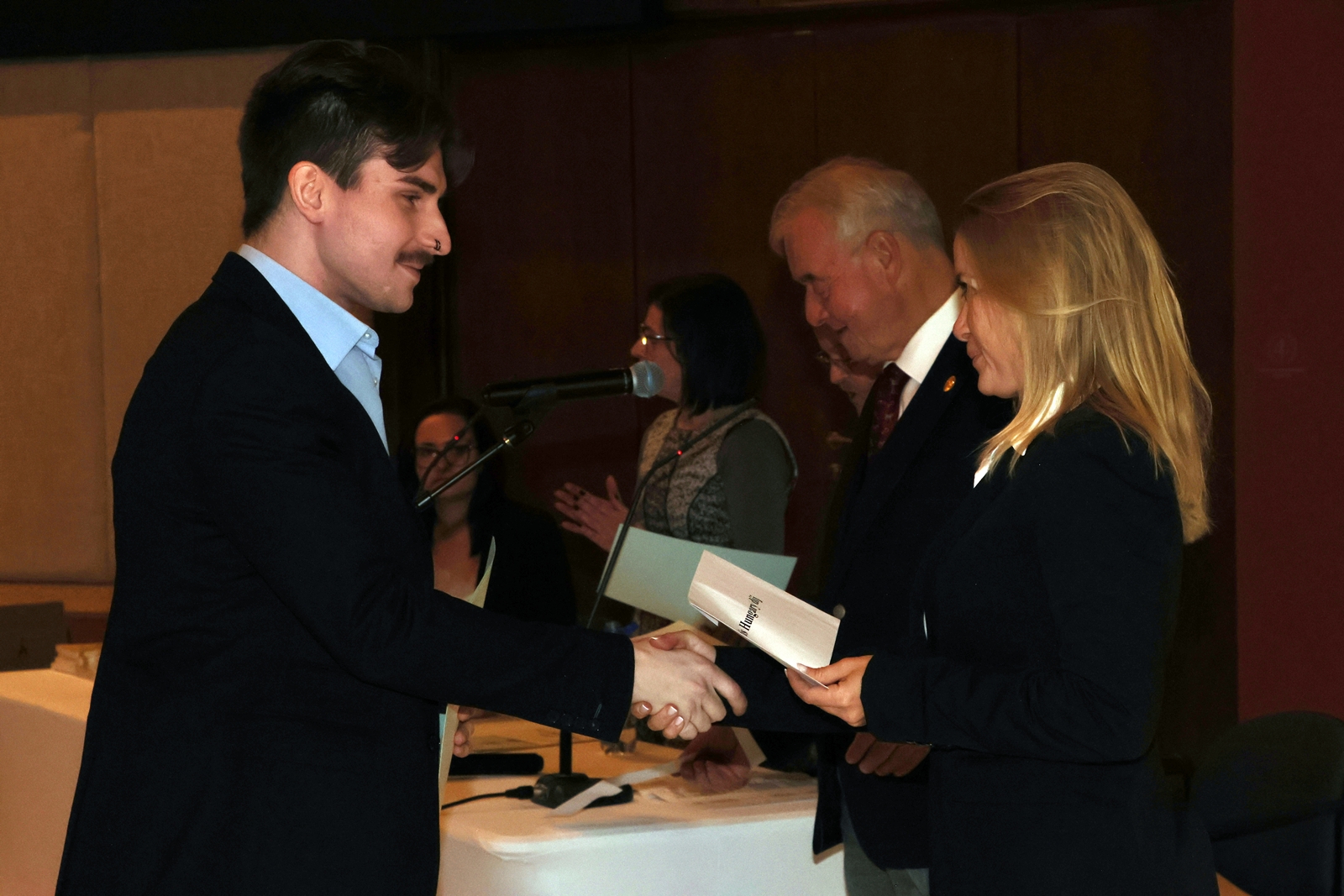
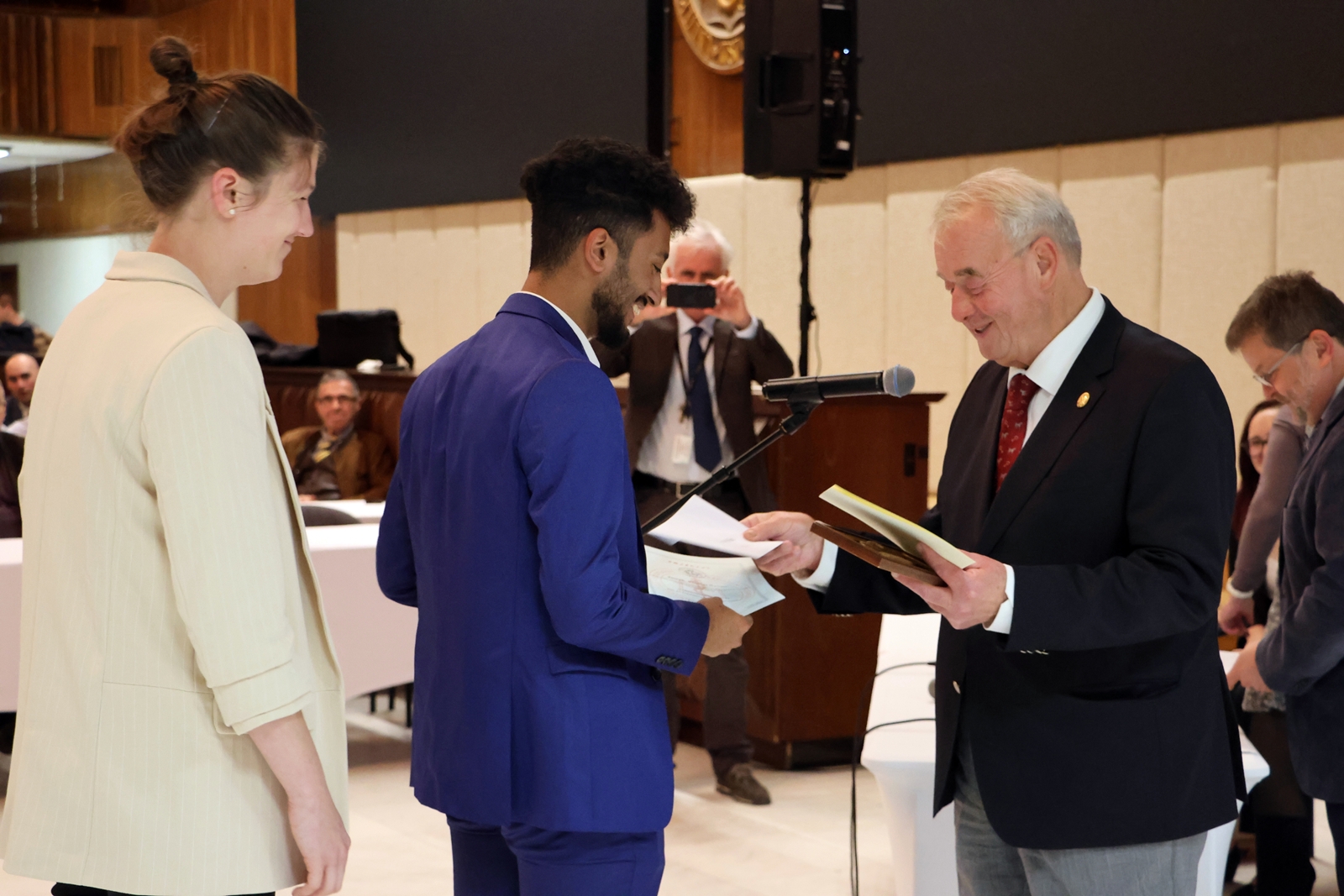
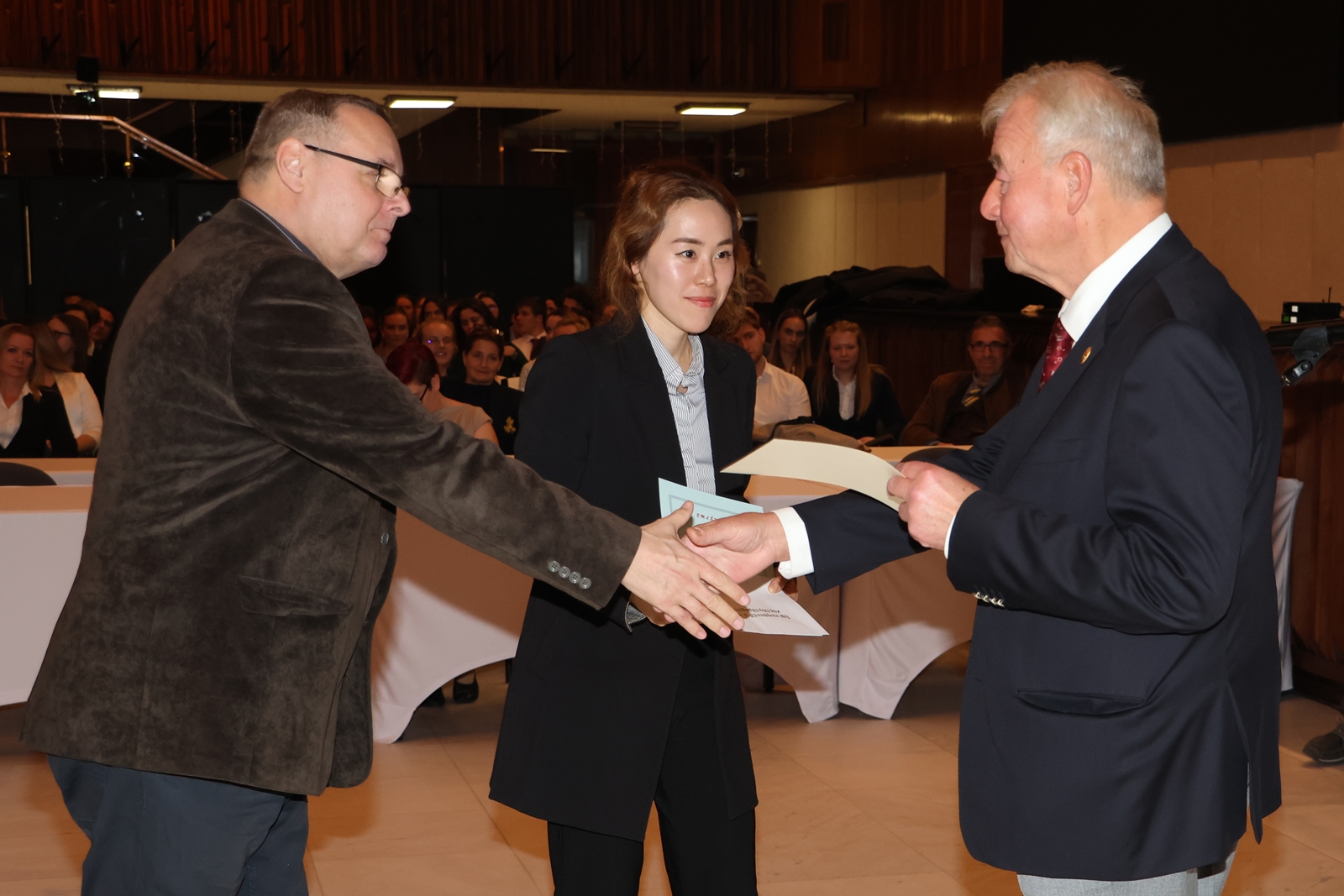
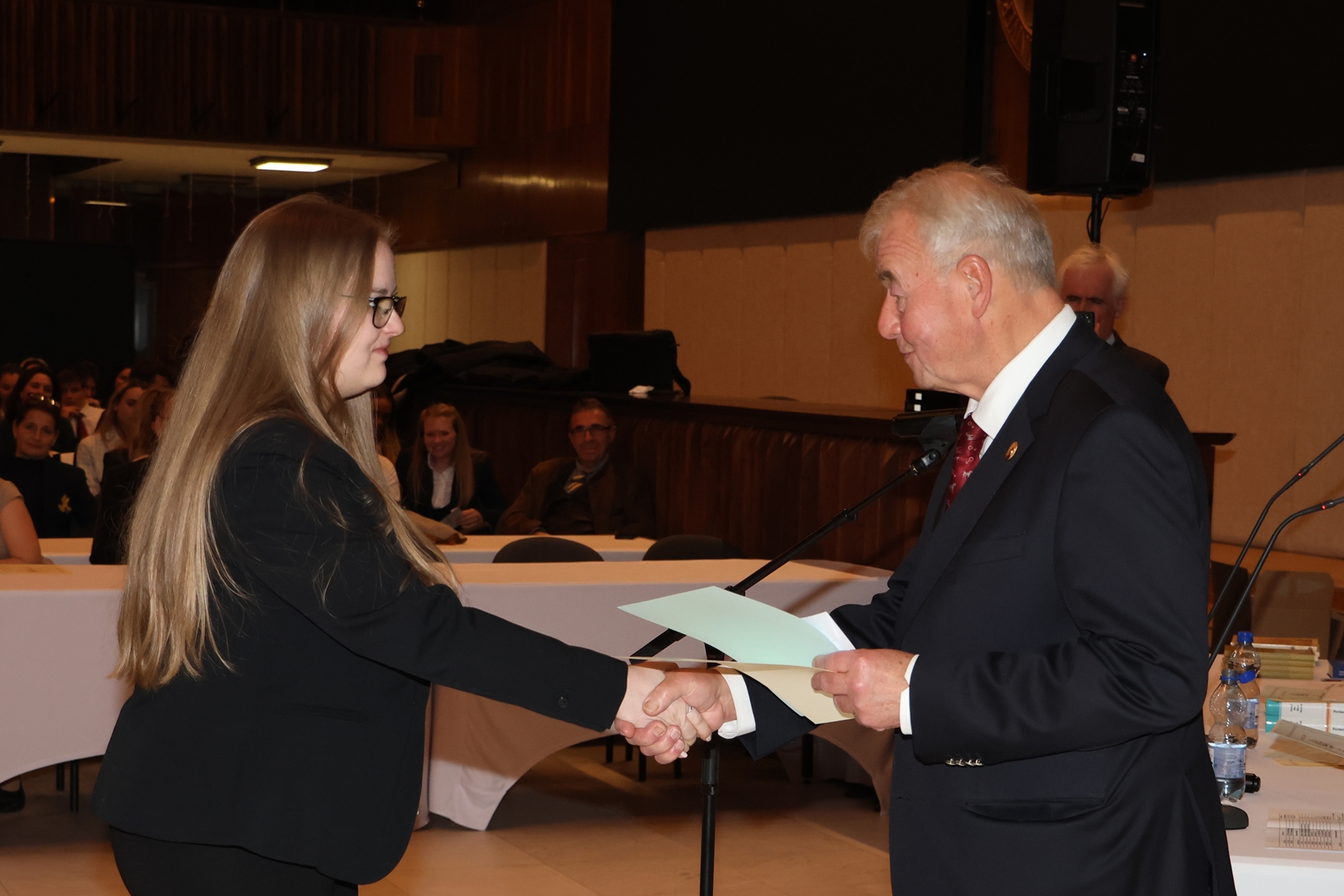
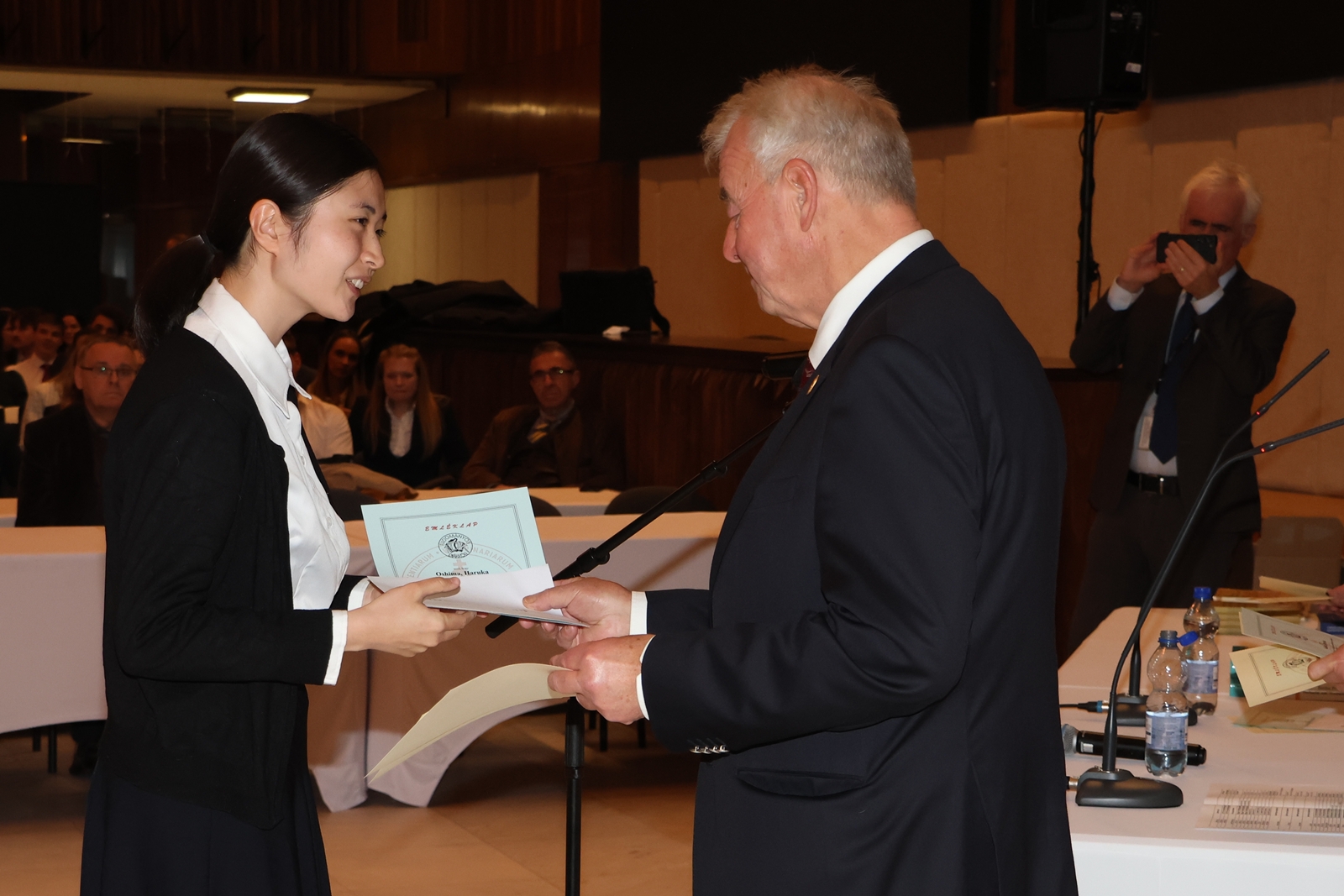
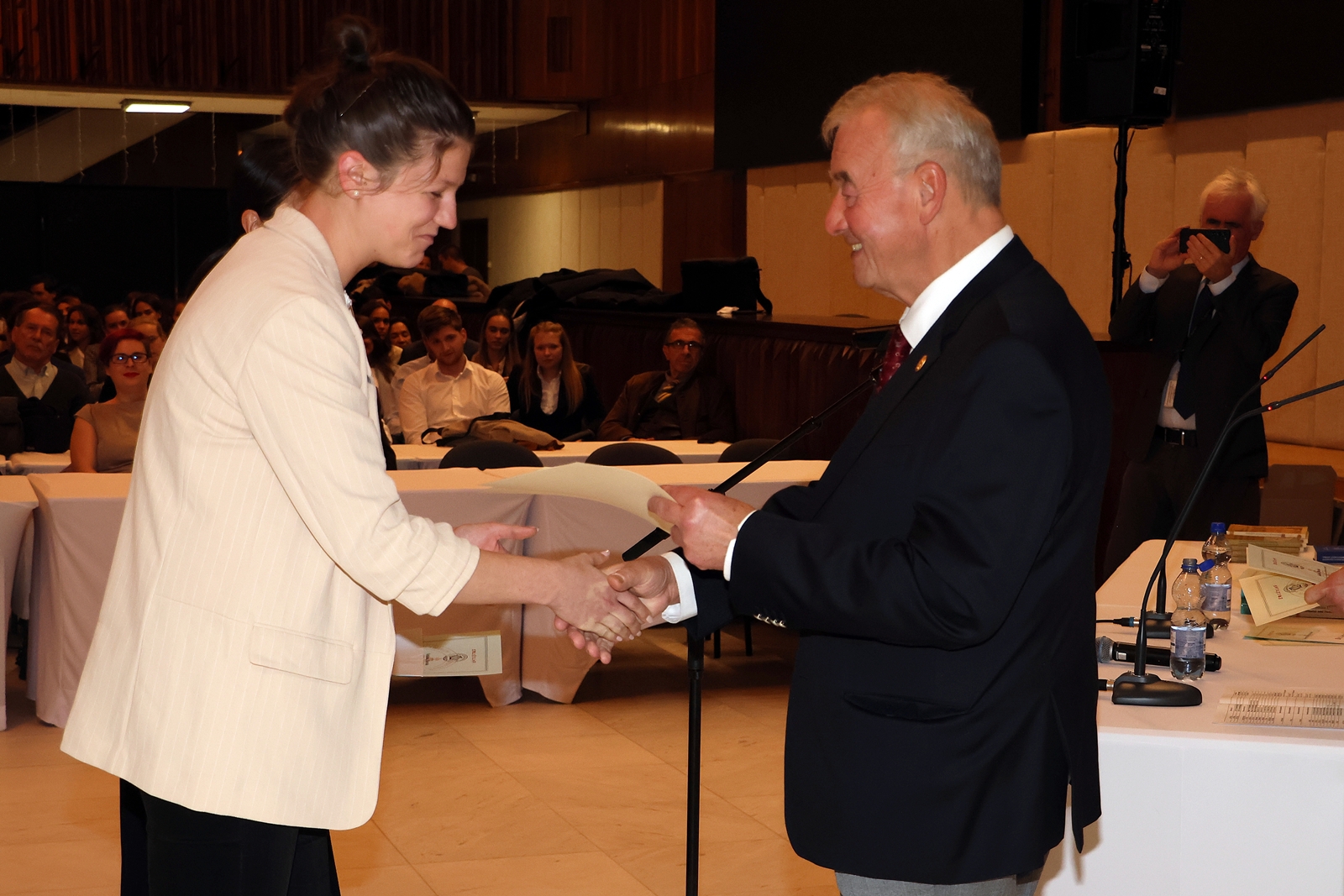
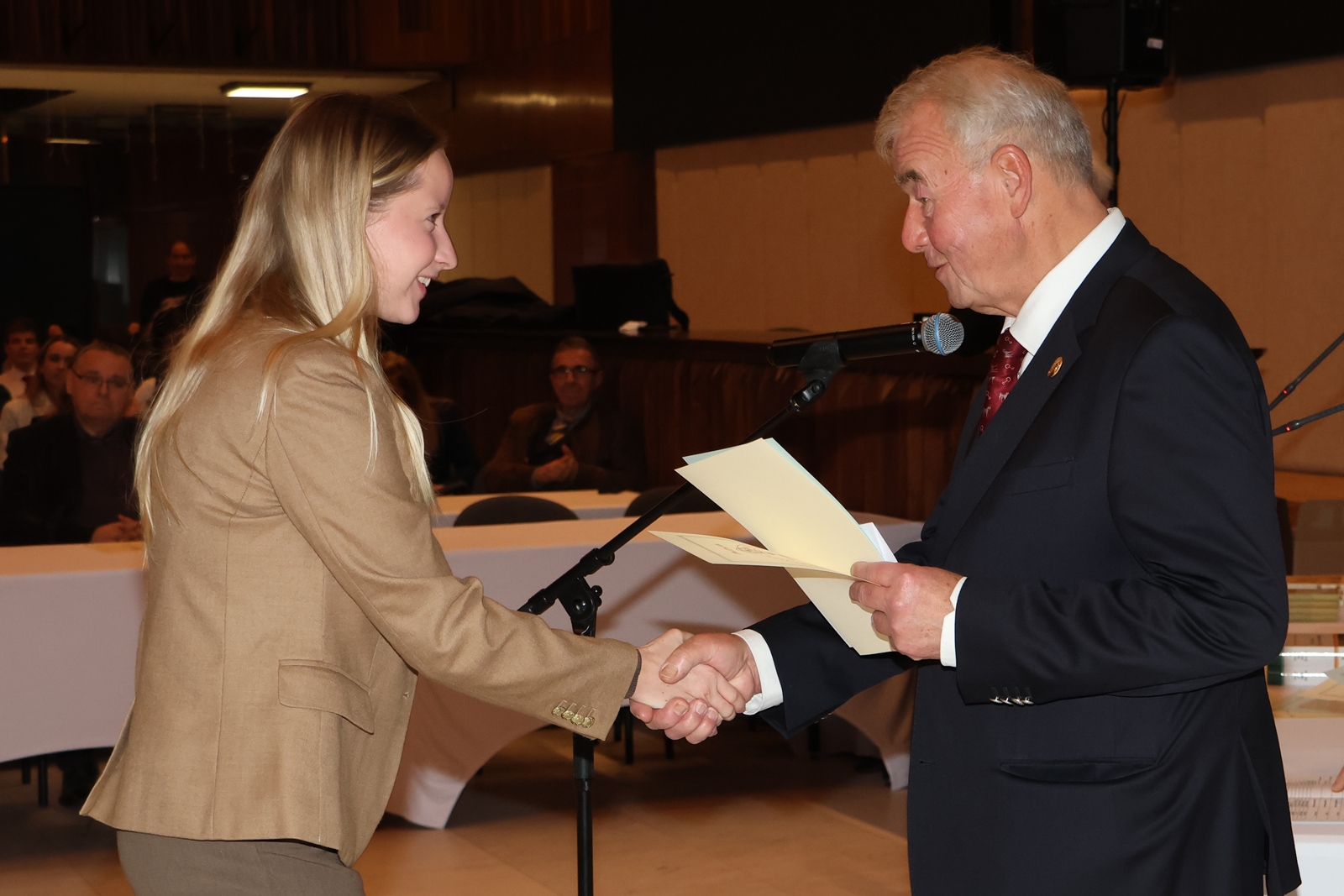
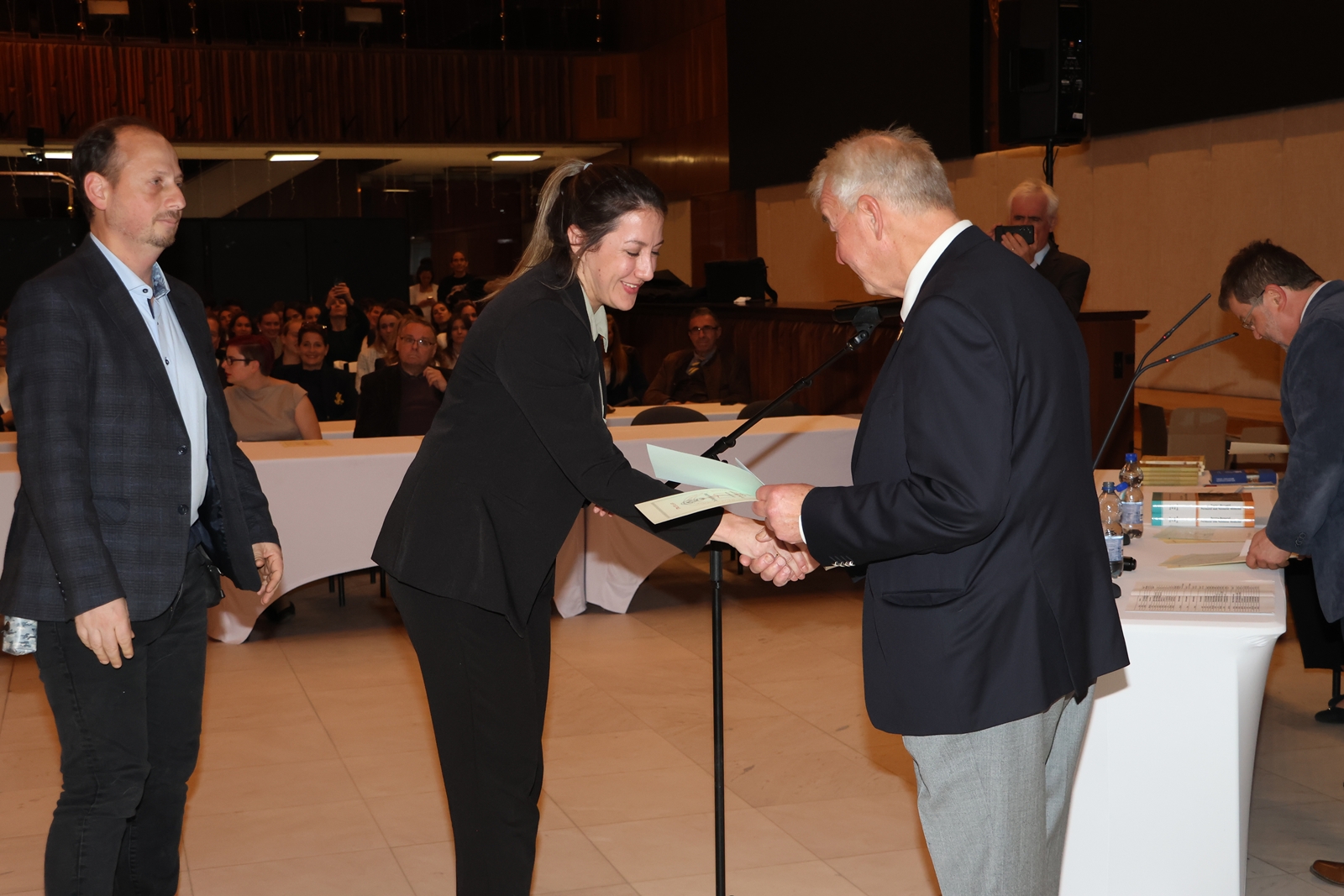
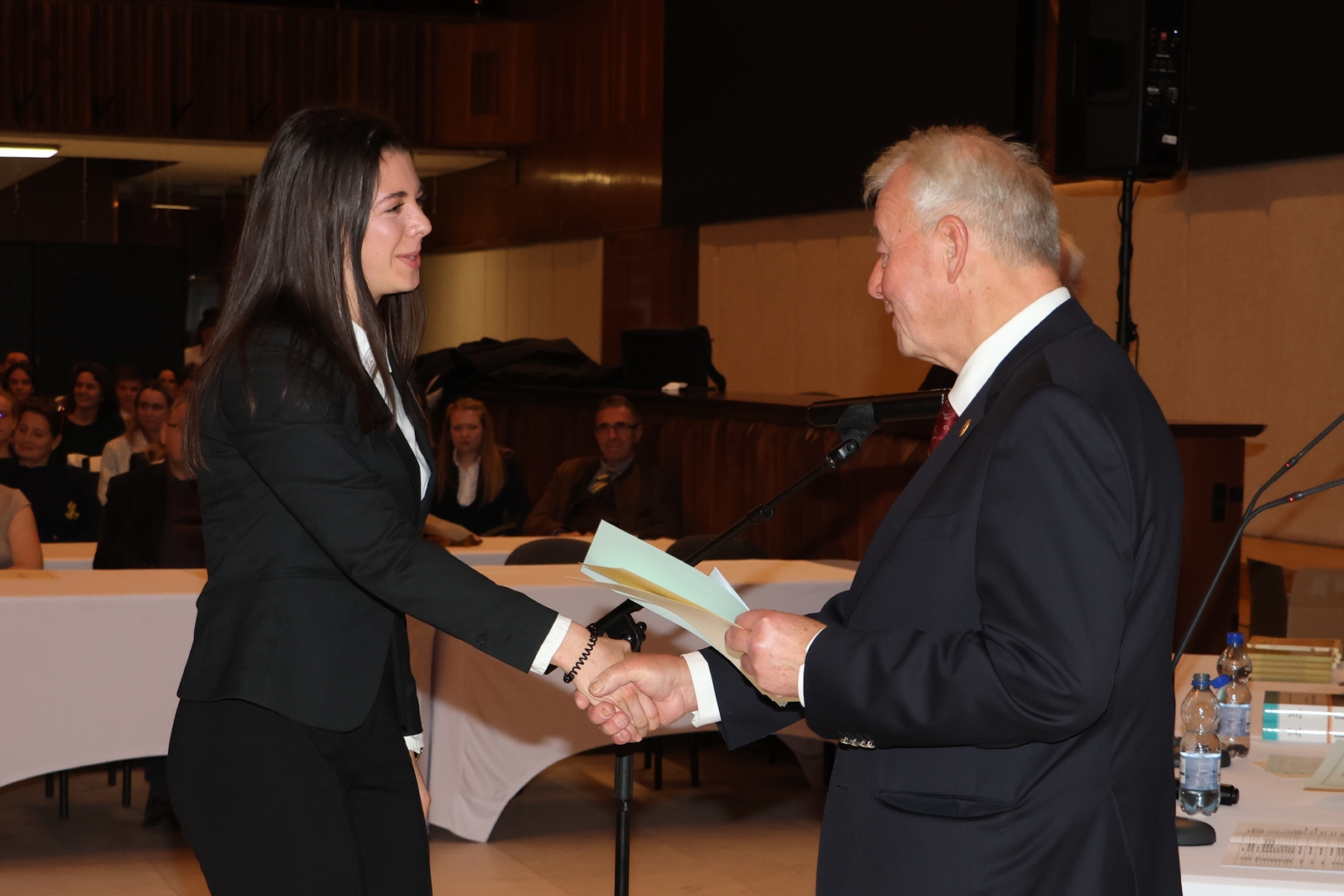
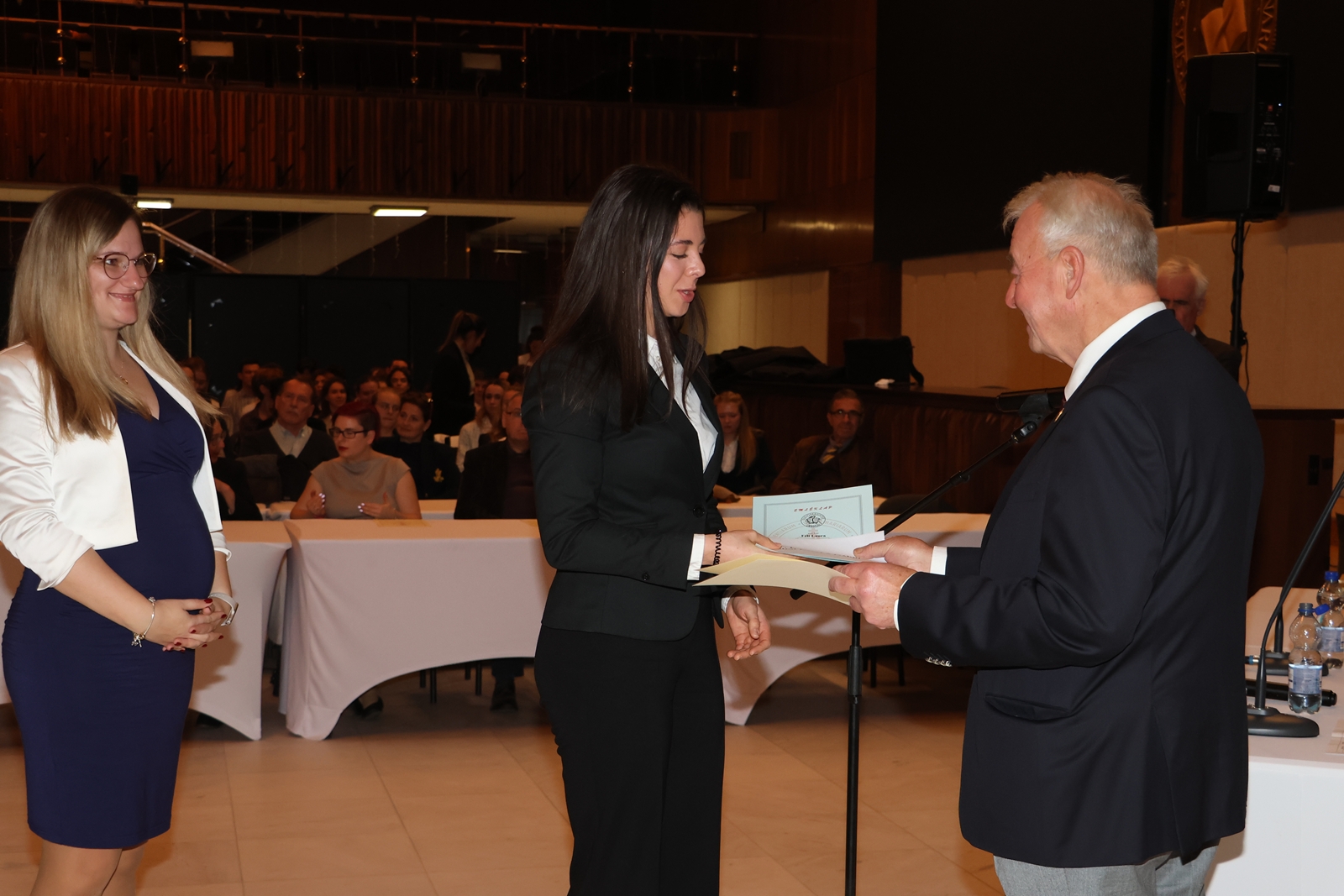
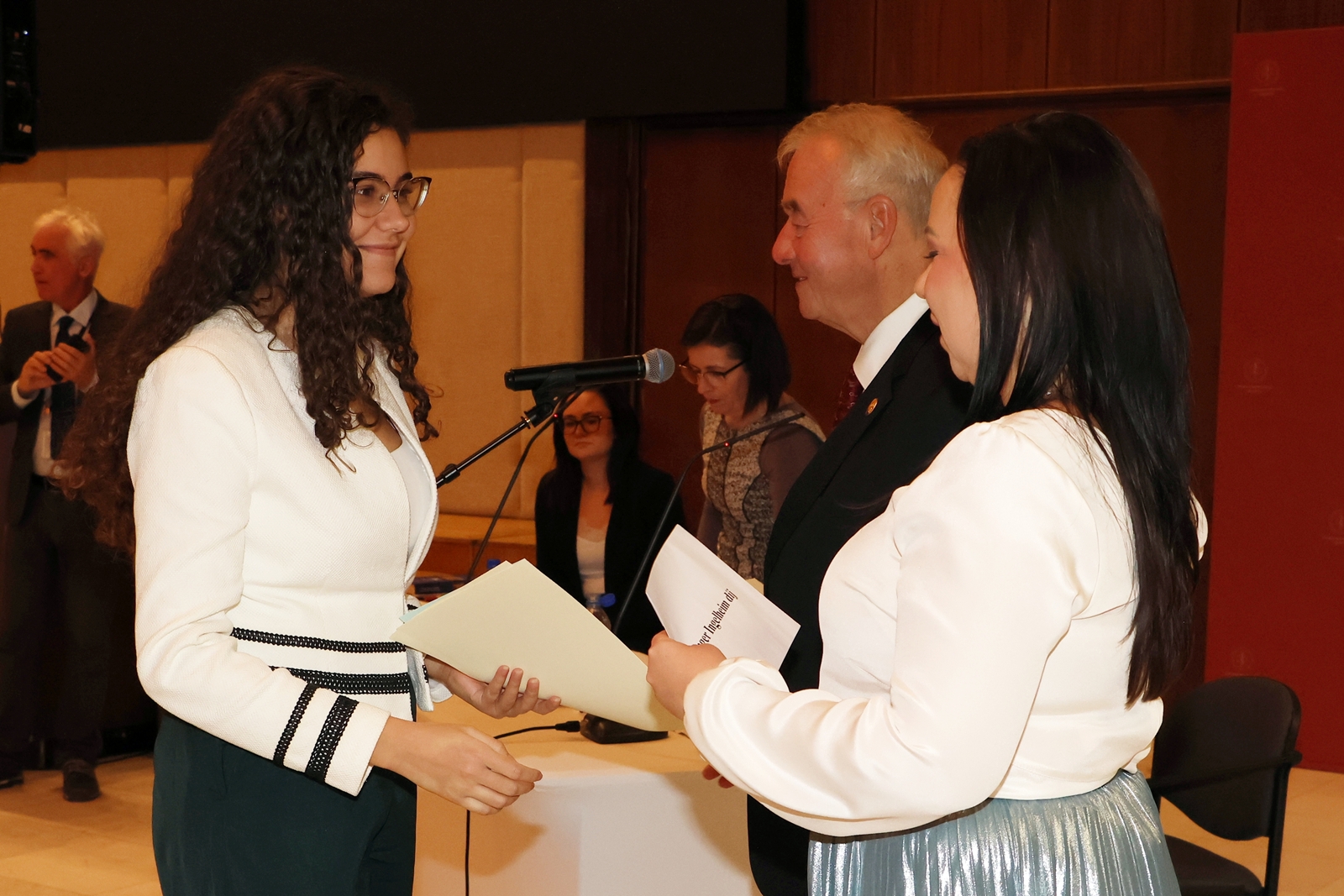
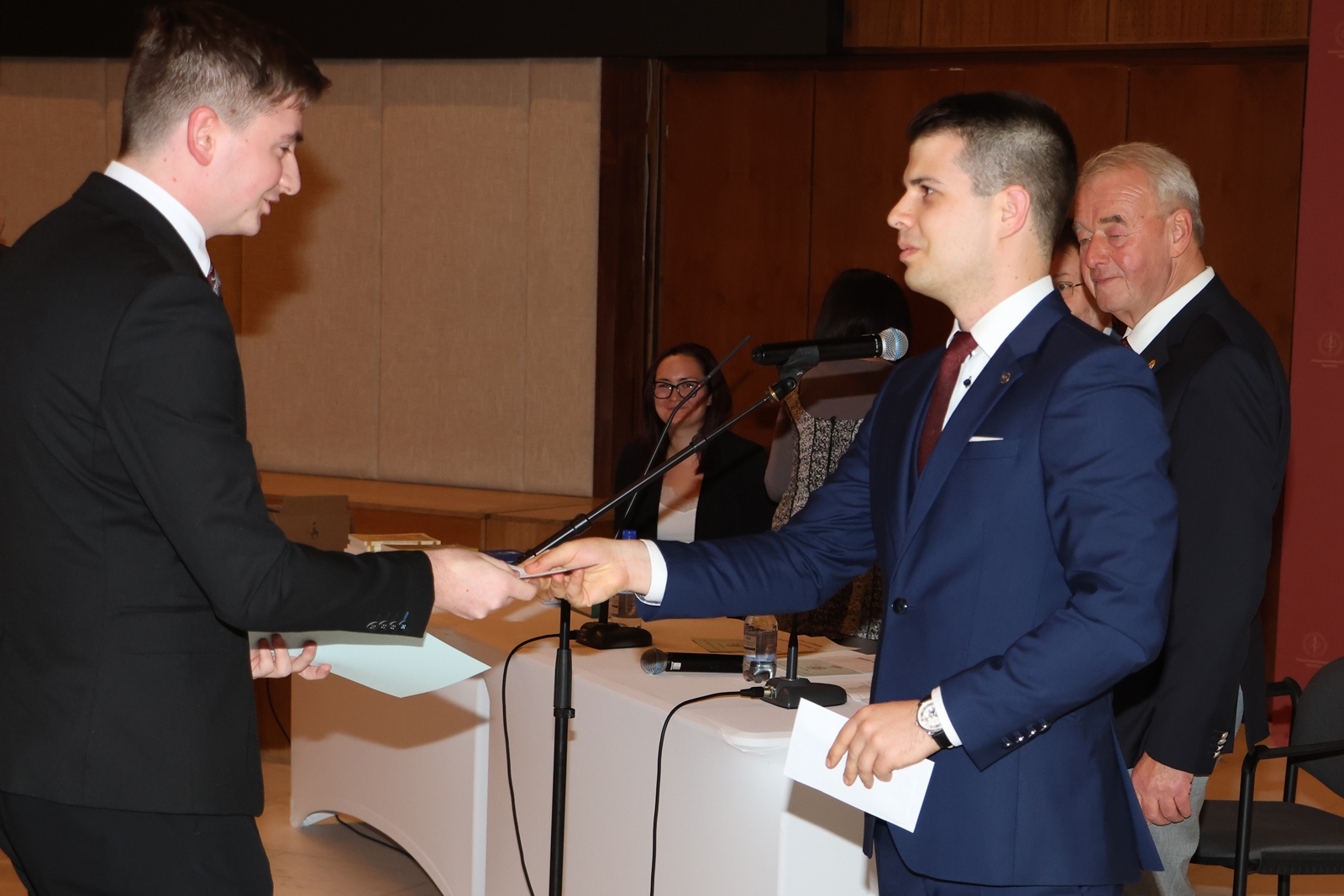
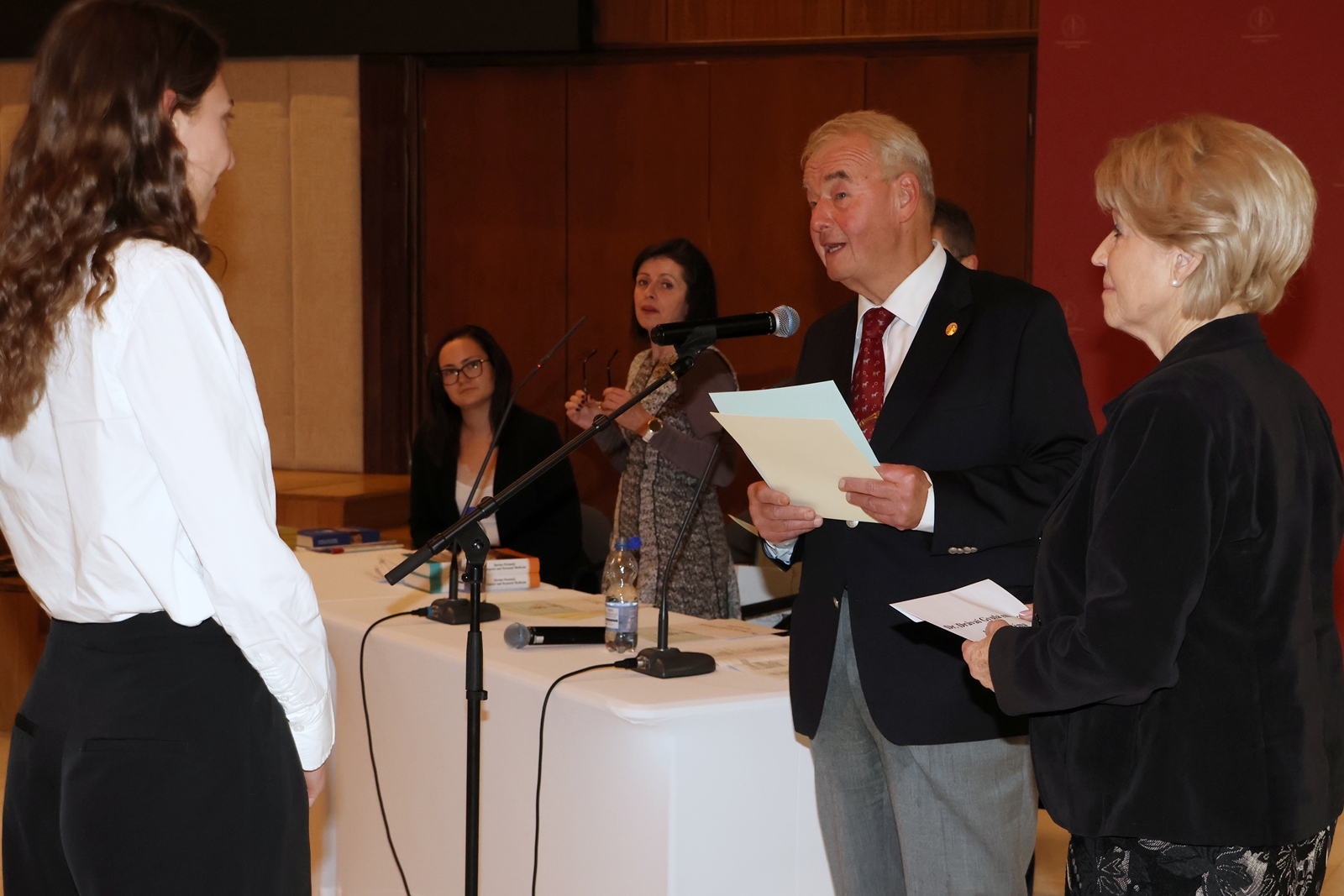
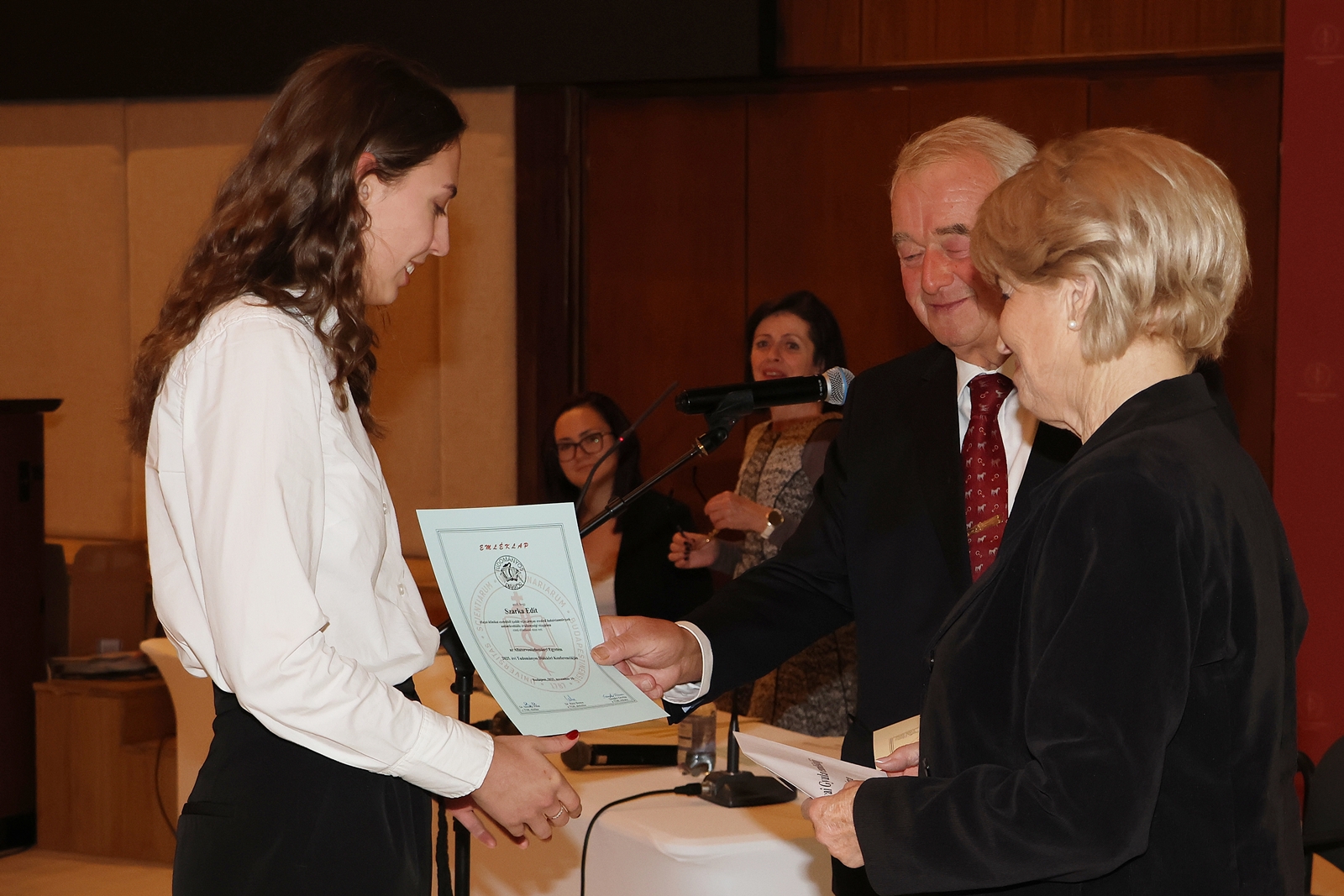
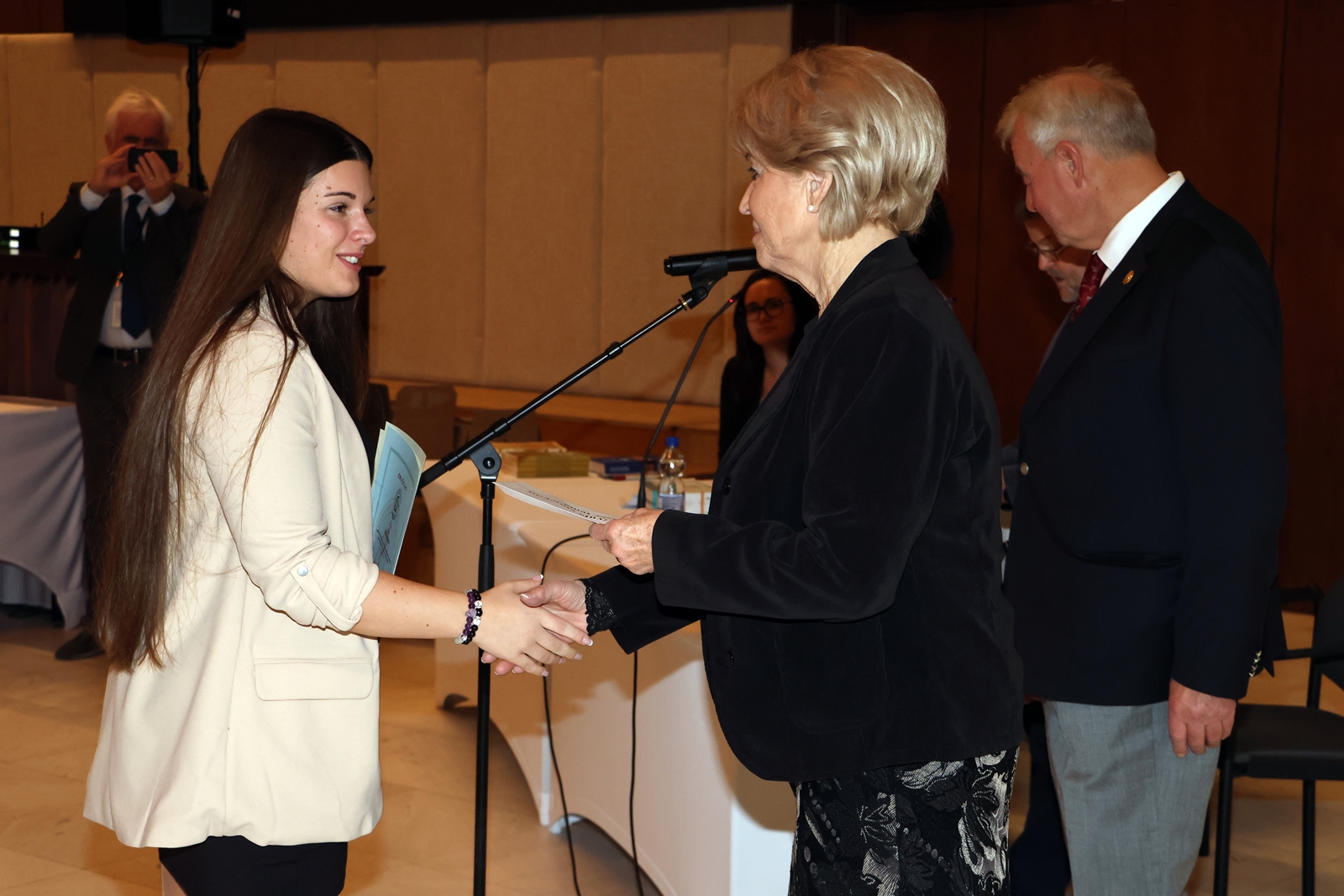
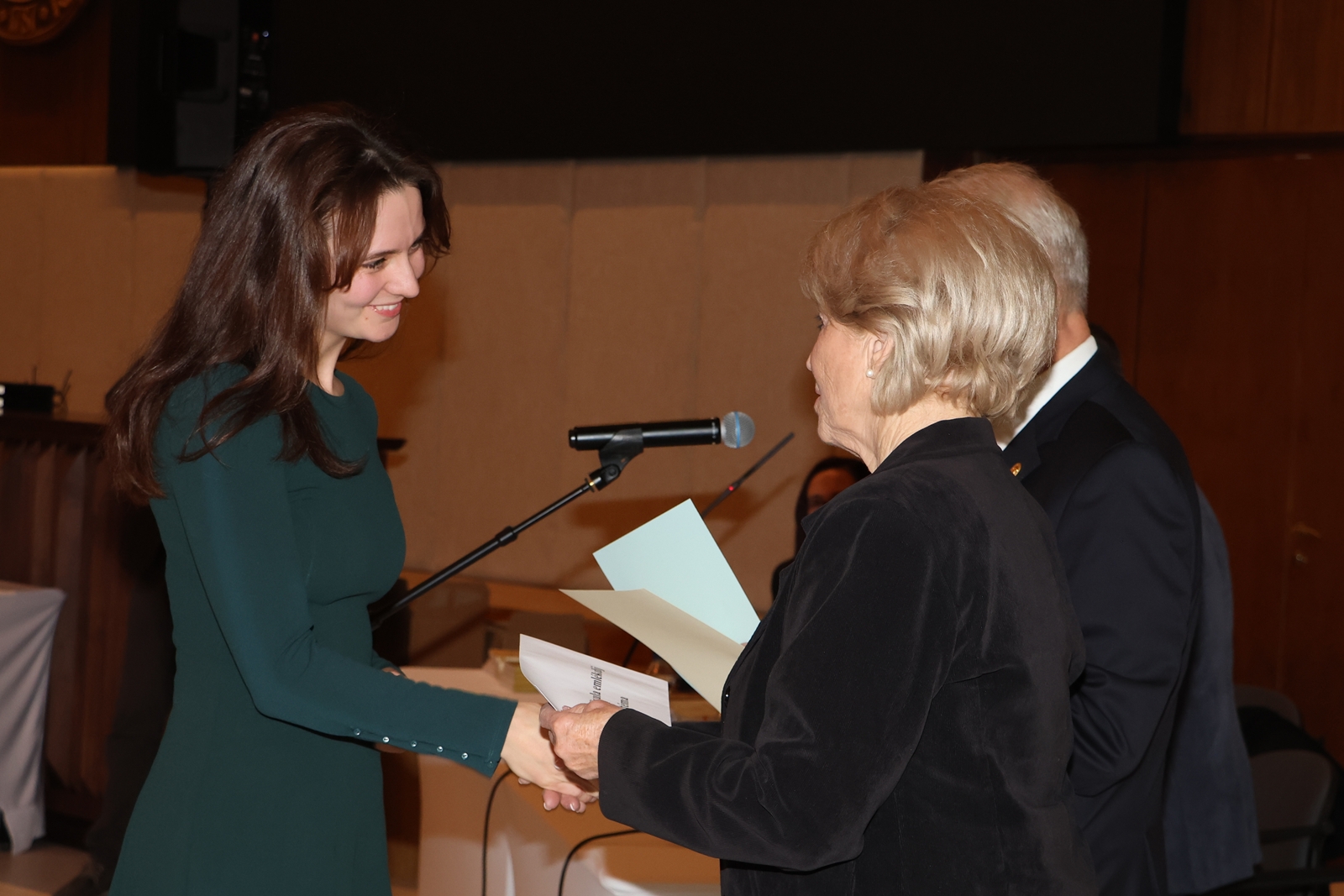
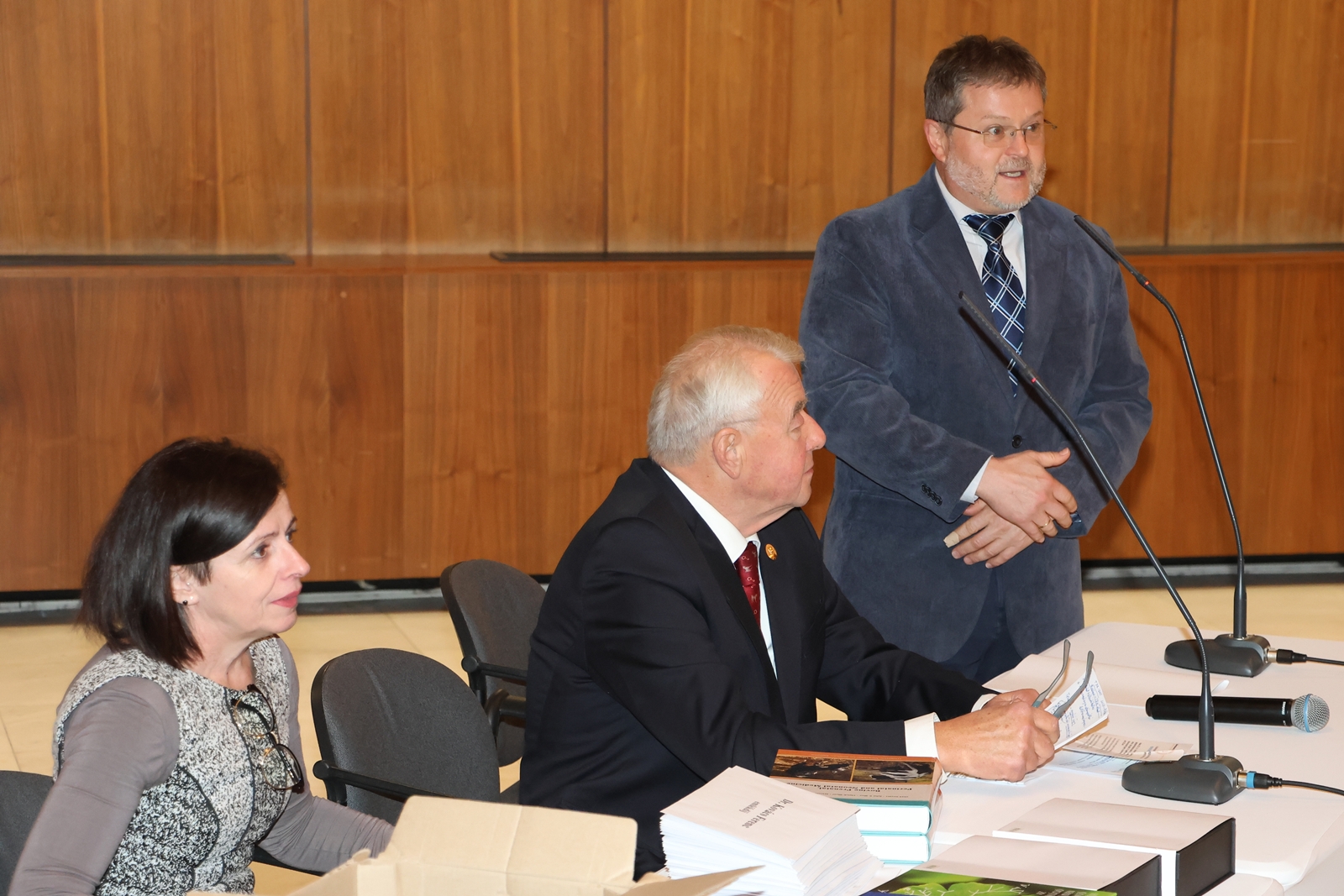
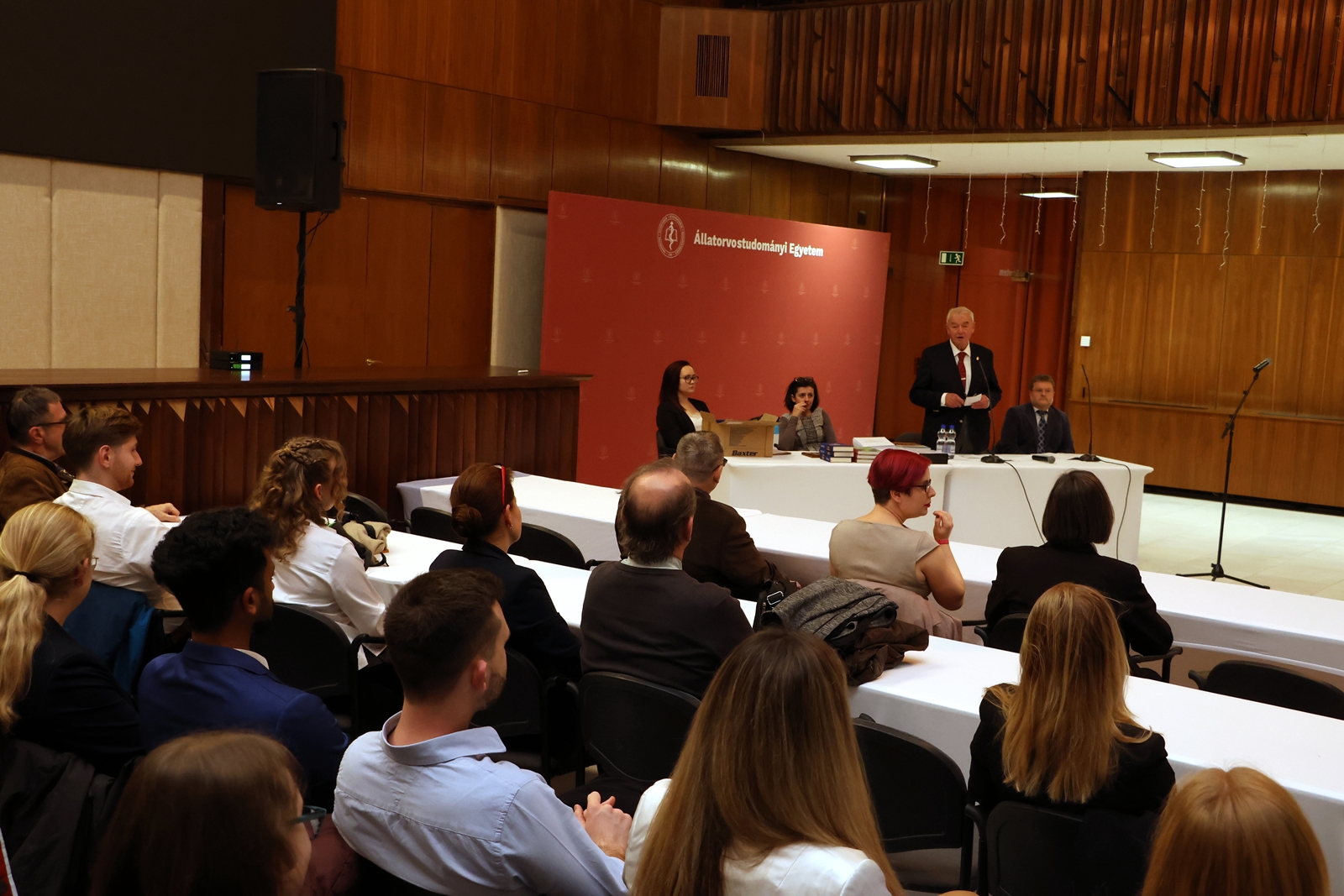
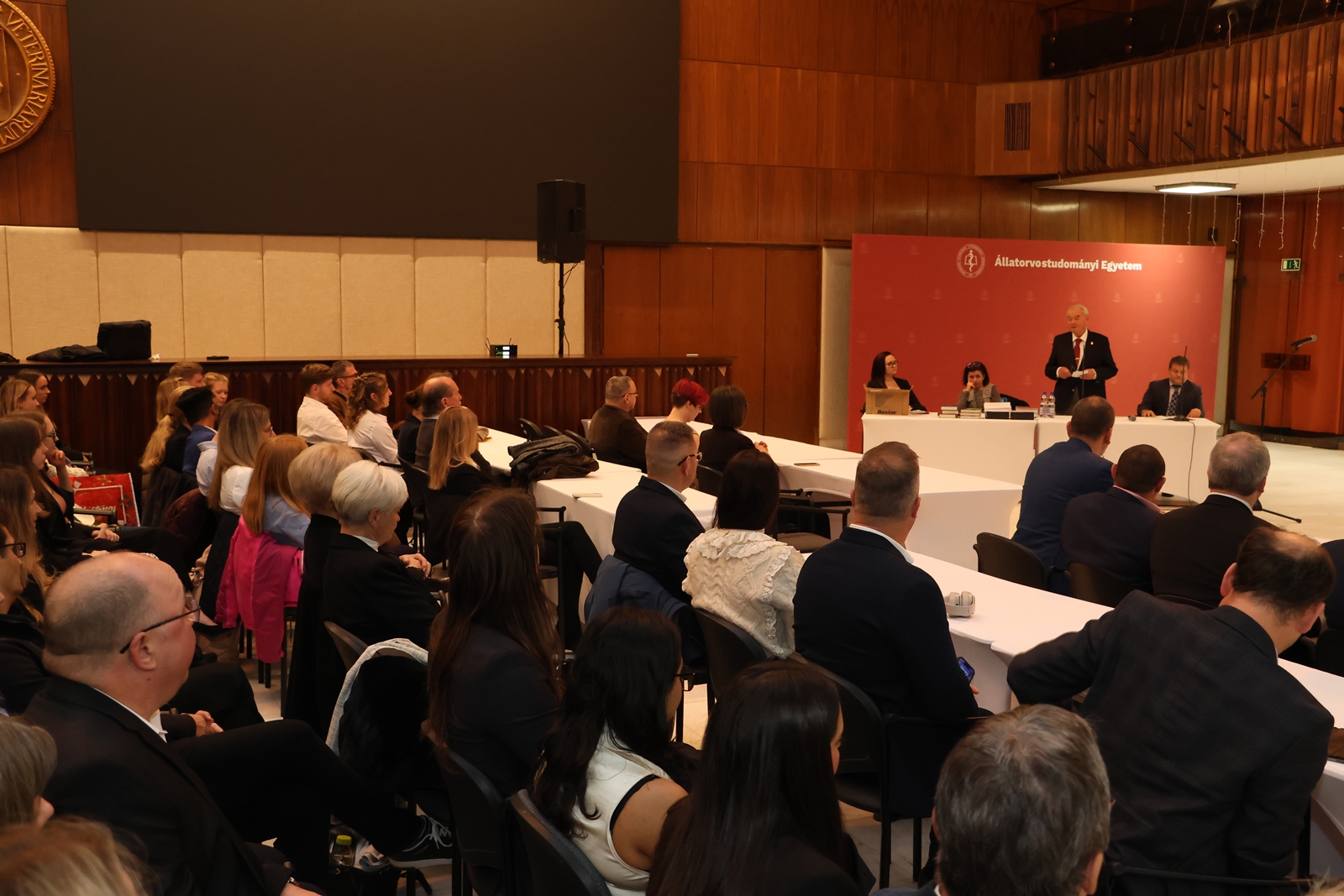
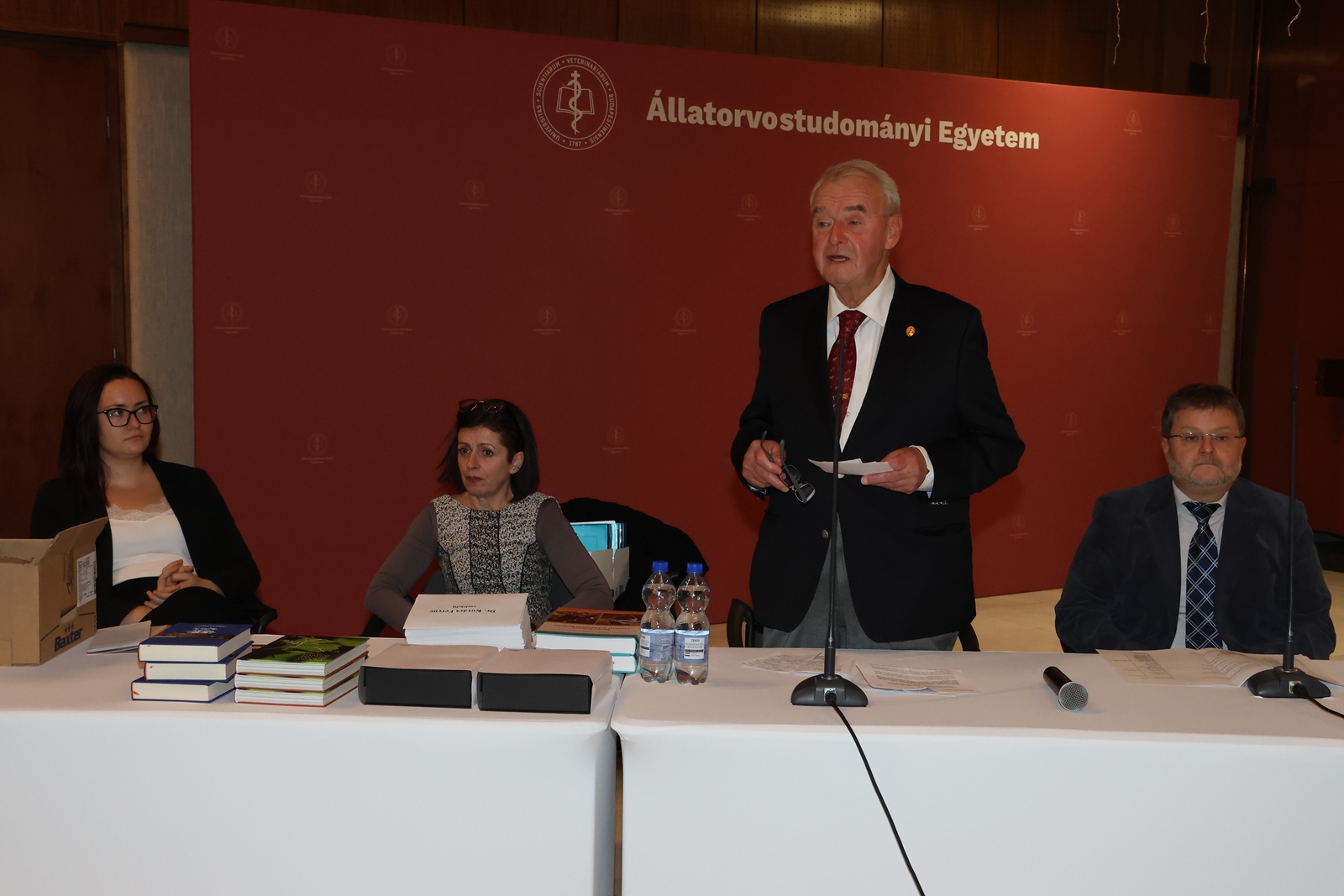
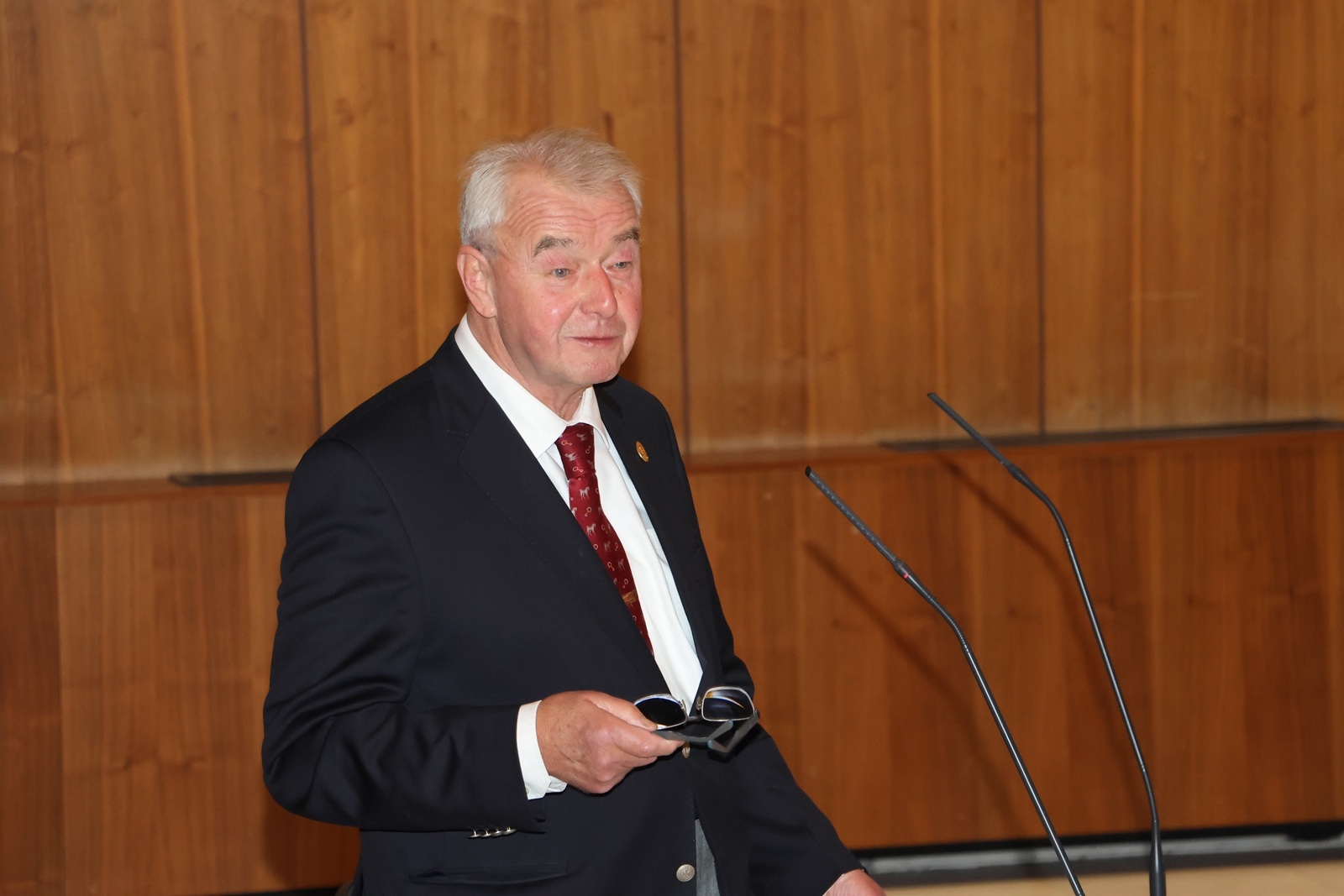
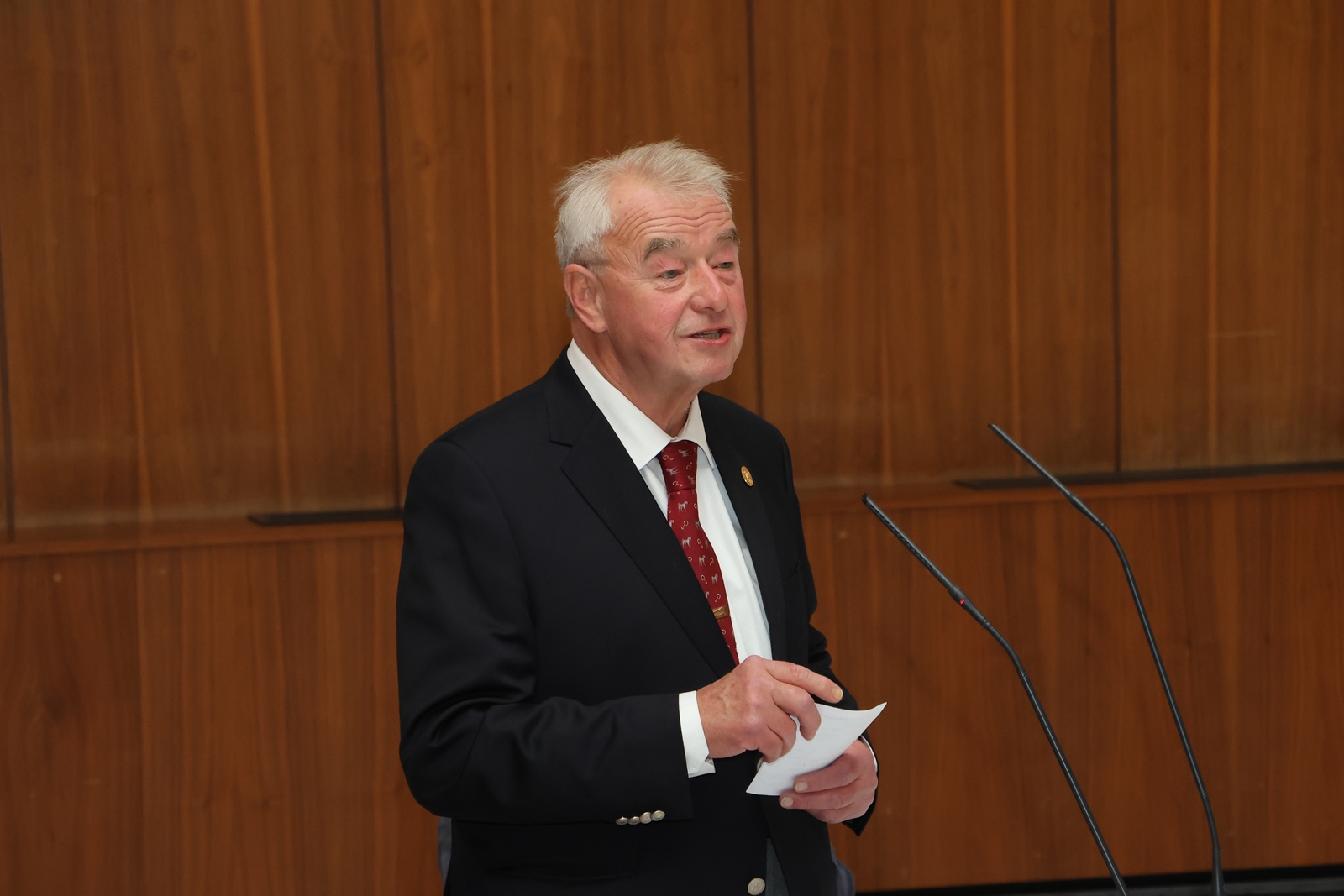
“Talent is an individual merit – but nurturing it is a national cause,” emphasised Prof. Dr Péter Sótonyi, Rector of the University of Veterinary Medicine Budapest, at the awards ceremony of this year’s Scientific Students’ Association (TDK) Conference held on November 19.
The scientific students’ movement has been a cornerstone of talent development in Hungary for nearly 70 years. At this year’s institutional competition, students presented the results of their research in 85 papers across the basic science, applied science, and paraclinical sections.
For the full list of award winners, click here.
According to the section chairs, every division showcased valuable and high-quality presentations – in fact, they agreed that the standard of work this year was the highest ever. The large number of questions reflected both the relevance and the curiosity the topics inspired. Every participant received a prize, a gesture that also demonstrates the sponsors’ strong commitment to the university. Rector Sótonyi added that every student presenter gained something invaluable – experience. Both the presentation itself and the preparation process helped them acquire professional skills they will use throughout their careers.
At the event, Prof. Sótonyi also announced a major institutional success: in 2025, the University of Veterinary Medicine improved its position by almost 100 places in the Shanghai Ranking’s global subject list. In its field, only two Hungarian universities ranked among the world’s top 51–75 institutions: the University of Veterinary Medicine Budapest in veterinary science and Semmelweis University in pharmaceutical sciences. In total score, the veterinary university even surpassed the medical one – confirming that the István Street campus is home to Hungary’s best higher education institution.
As the university approaches its 240th anniversary, TDK work remains a top priority: beyond the supervisors, 60 instructors participated in evaluating student papers. The significance of this talent development framework is also underscored by the fact that UVMB is the only Hungarian university where the Rector also serves as the President of the Scientific Students’ Council.
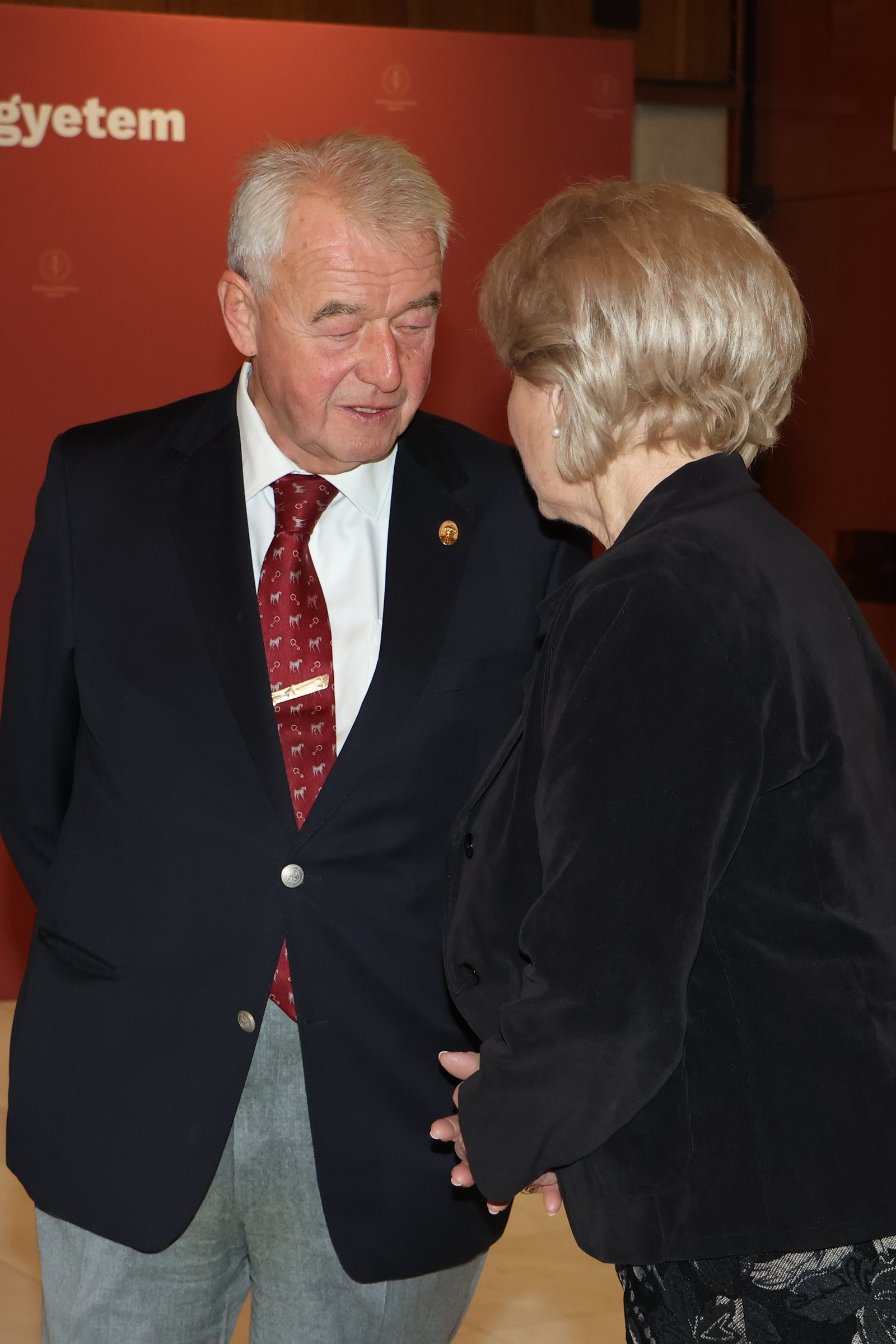
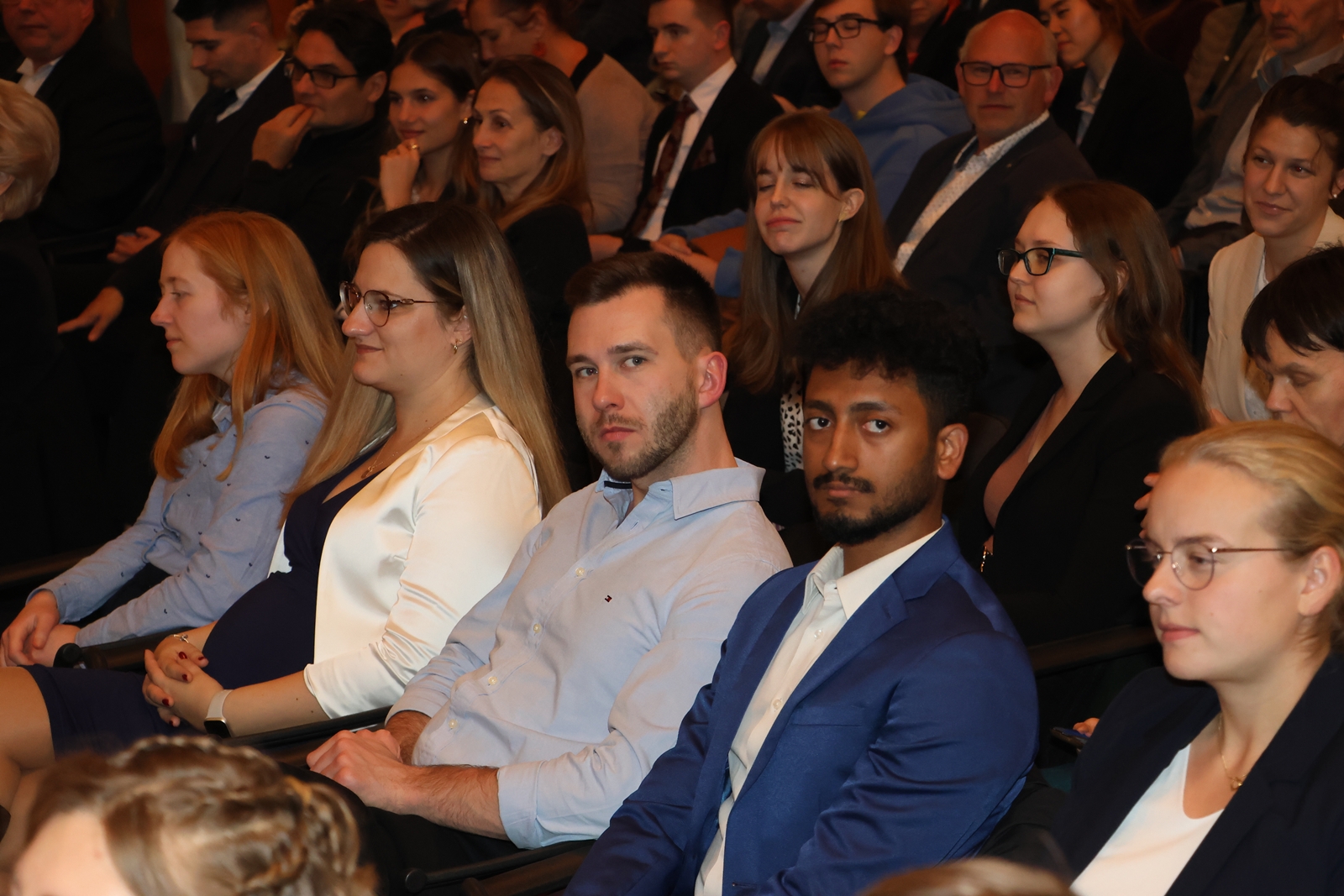
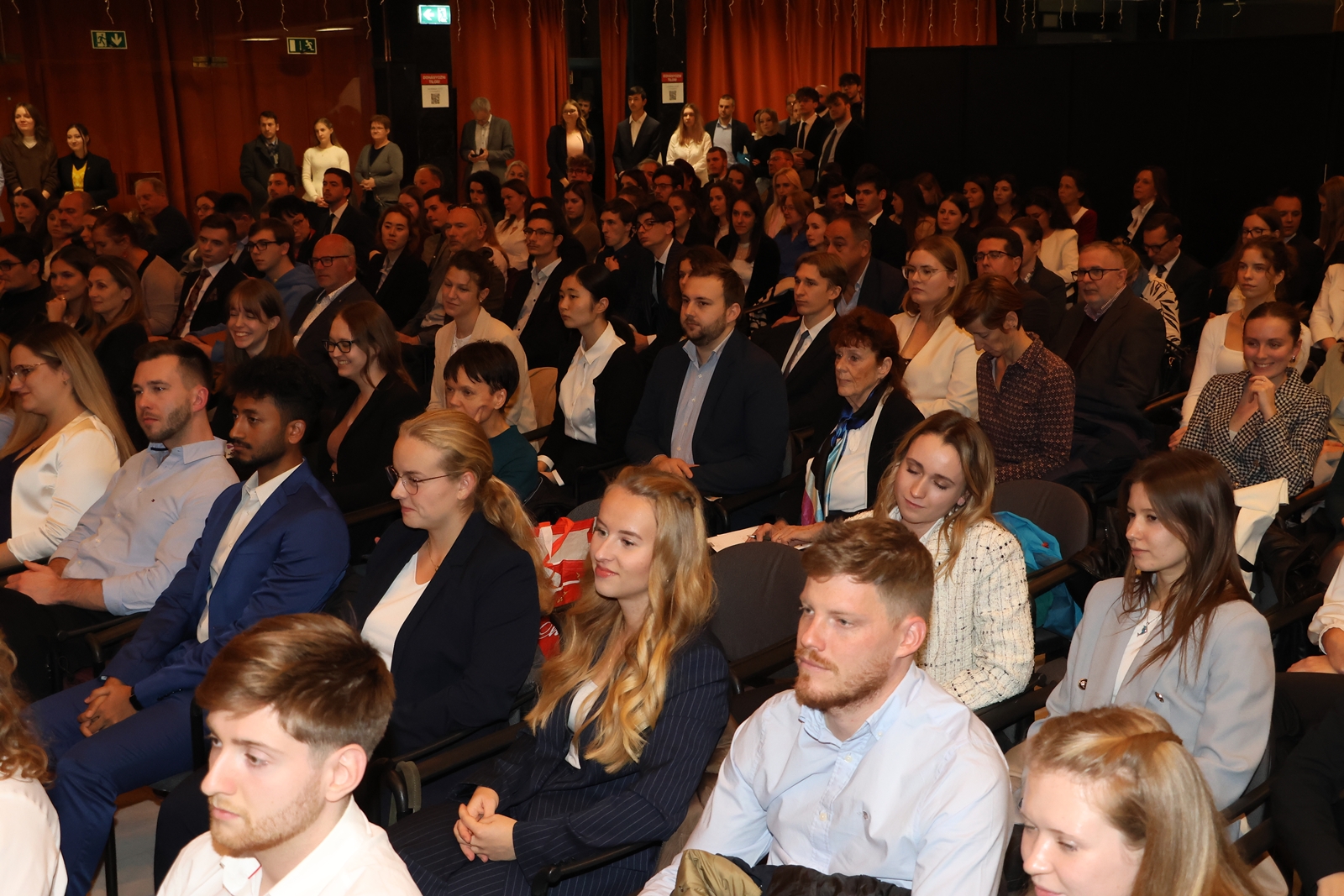
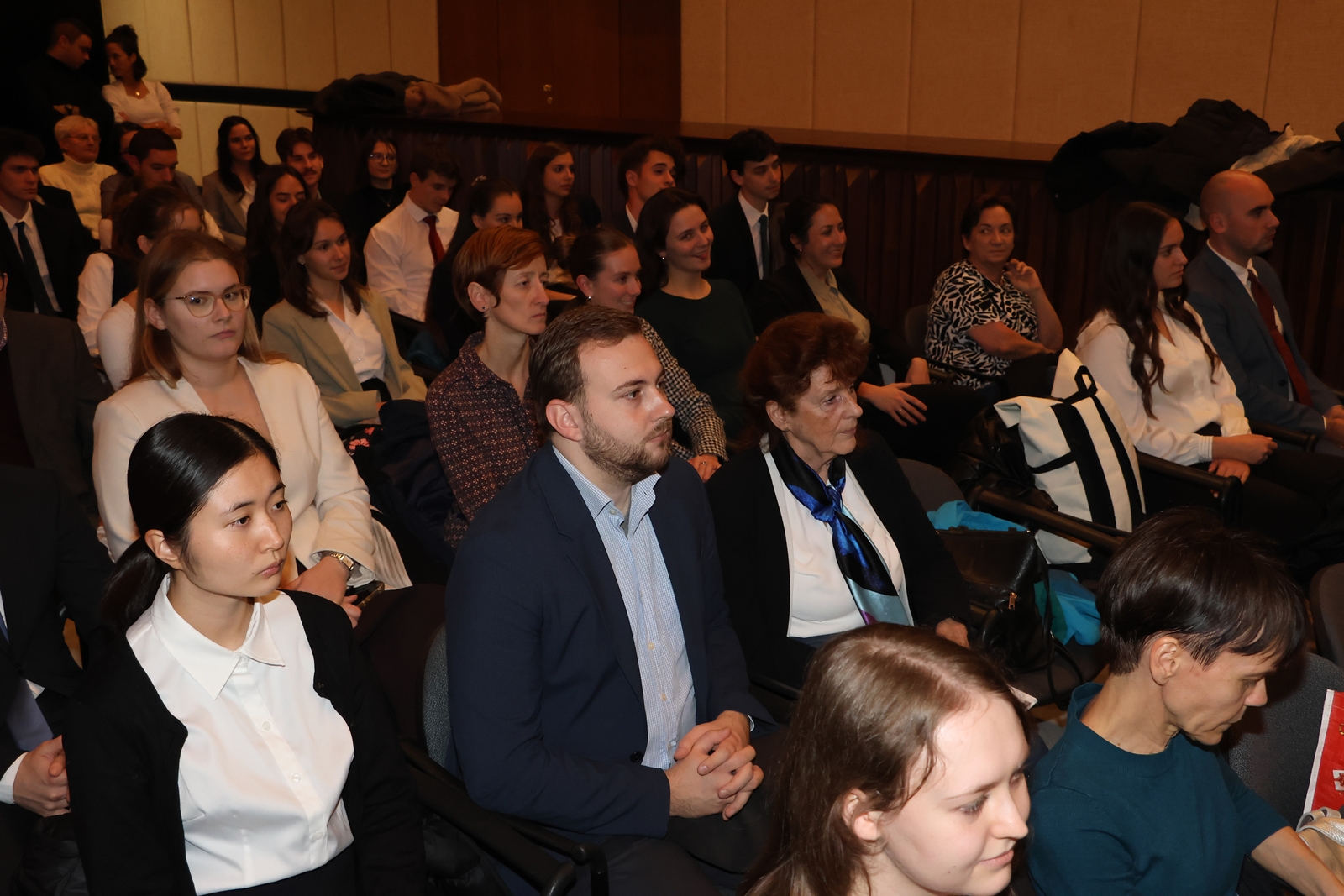
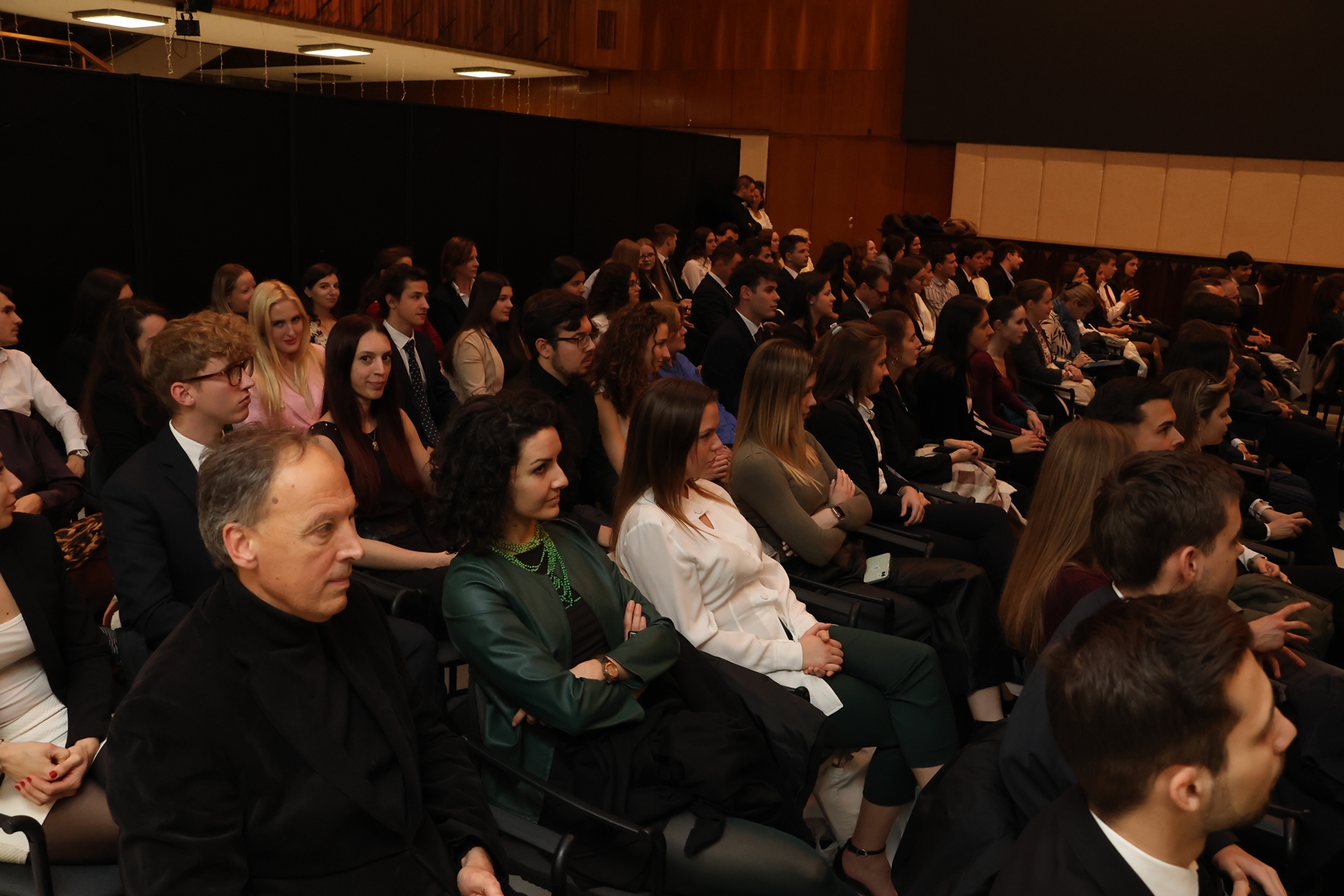
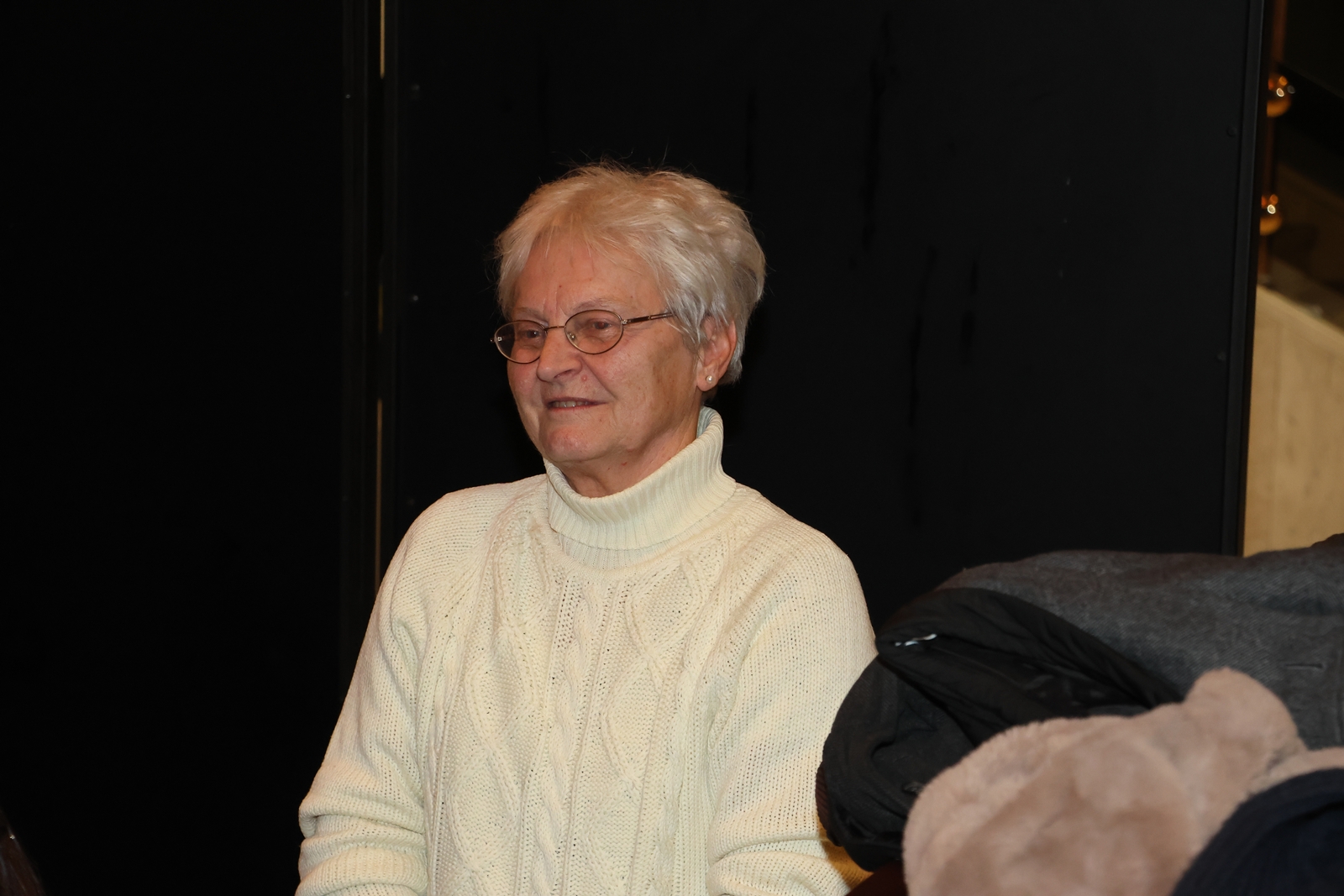
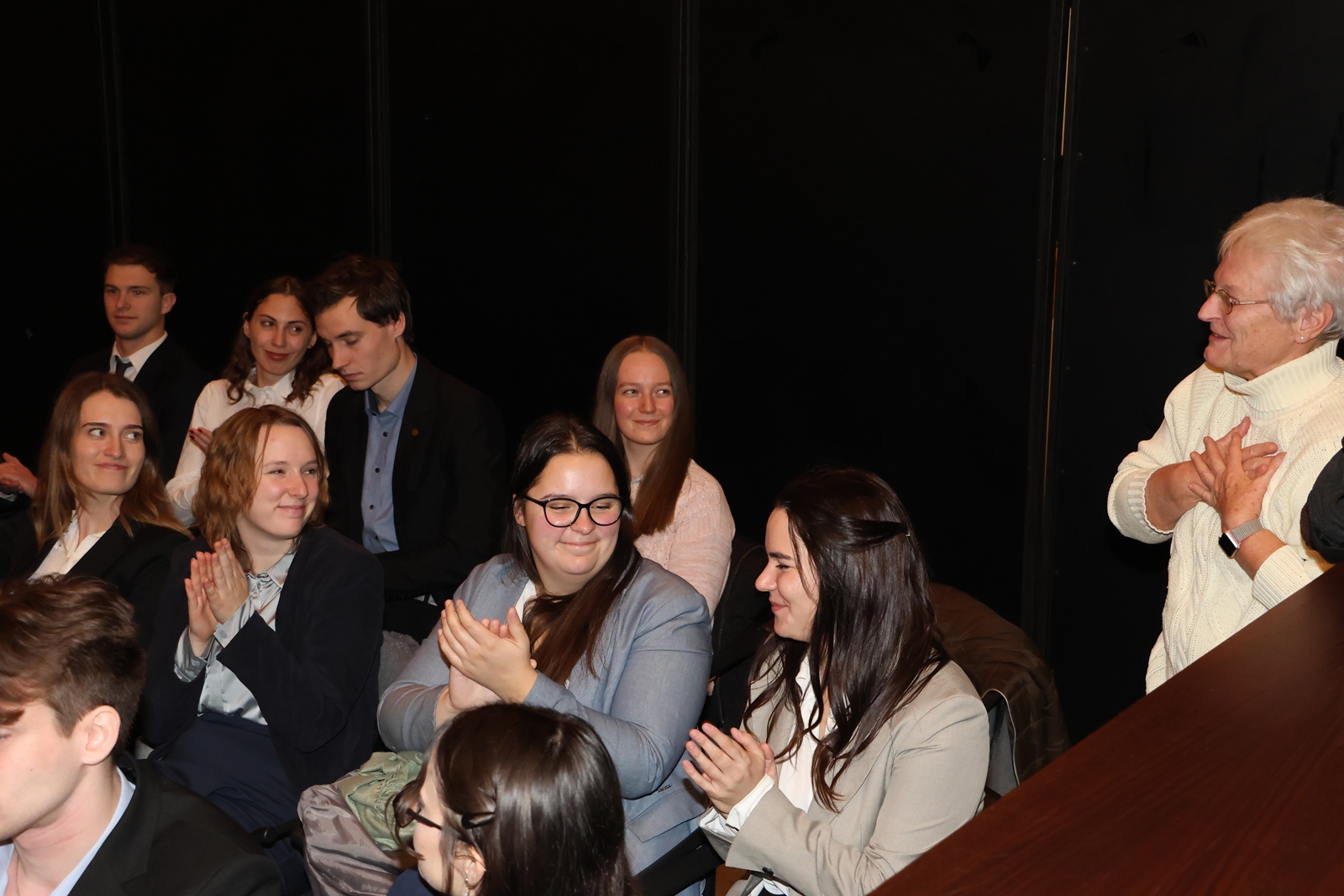
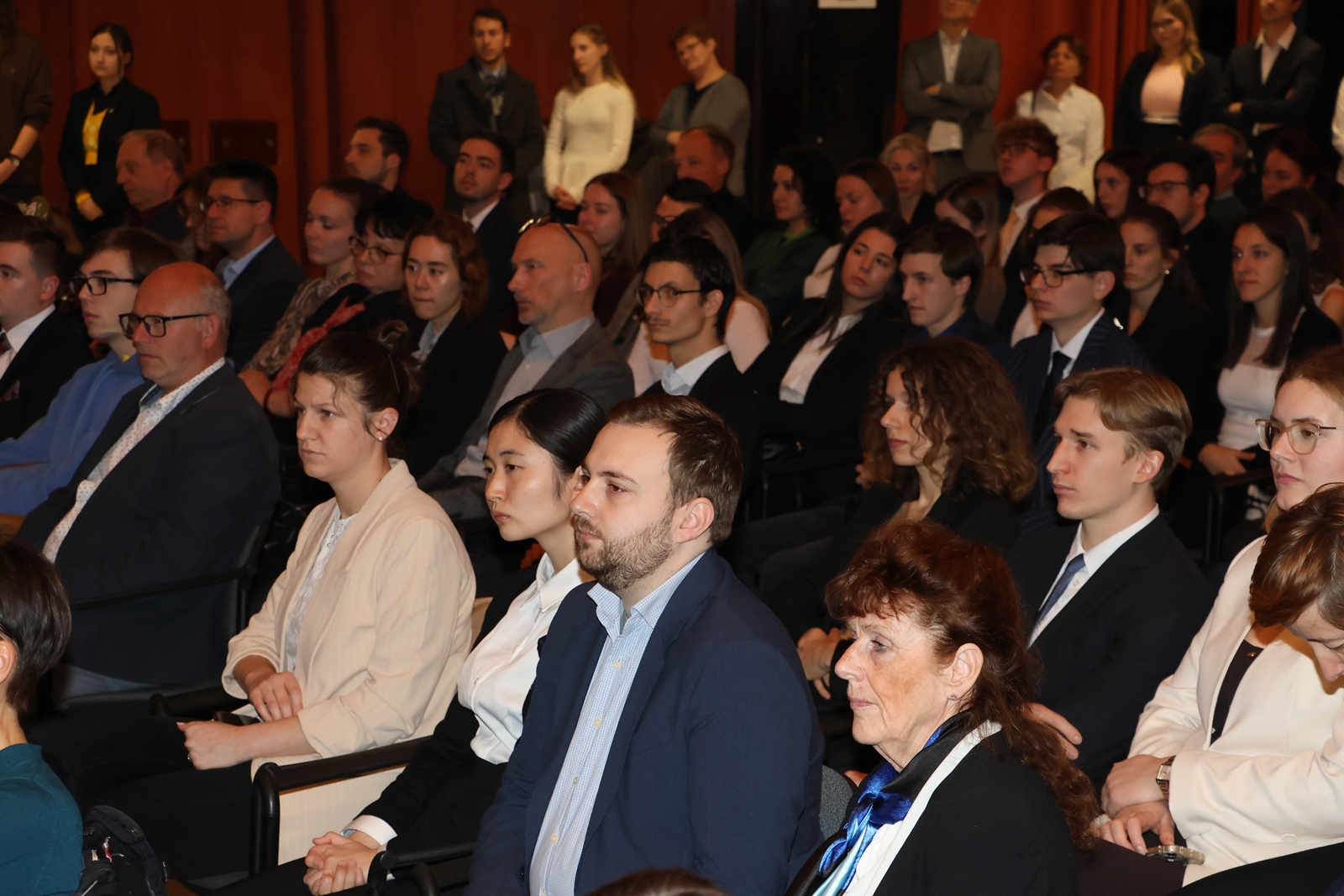
During the ceremony – attended by students, faculty, sponsors, and family members filling the main hall – the Rector congratulated Professor Emerita Dr Erzsébet Hornung of the Department of Zoology. In the coming days, she will receive one of the most prestigious recognitions of the national scientific students’ movement – the Antal Máriás Memorial Medal – at the Hungarian Academy of Sciences.
For organising and running the conference, Rector Sótonyi expressed his special thanks to Prof. Dr Bence Rácz, Vice-Chair of the University’s Scientific Students’ Council, Adrien Kováts, Senior Associate and TDK Secretary, and Dorina Szopkó, student coordinator.
In addition to TDK achievements, the Dr Ferenc Kovács Memorial Prize – awarded for academic excellence and community engagement – went this year to Attila Sin, for his paper titled “Herpesvirus Infection of Siberian Sturgeon in Domestic Slaughter and Breeding Stocks.” His supervisors were Dr Márton Hoitsy and Dr Andor Doszpoly. The research highlighted the critical need for regular veterinary monitoring, strict quarantine procedures, and strong biosecurity measures in domestic fish farms.
The Memorial Prize was established by the late Dr Ferenc Kovács, former Rector and founder of the field of animal hygiene. His daughter, Academician Dr Melinda Kovács, continues to uphold the award.
The Ceva-Phylaxia Research and Development Special Award was granted to Laura Keleti for her paper “Comparative Study of BVDV Subtypes Occurring in Hungary.” Her supervisors were Dr Anna Kollár and Dr István Kiss. The study analysed blood samples from 29 cattle farms to map the subtypes and biotypes of the BVDV-1 virus present in Hungary — data that will serve as a valuable foundation for future vaccine efficacy studies.
The Ceva-Phylaxia Campus Special Award went to Lea Mária Gádor for her paper “Survey of Circoviruses in Wild Birds.” Her supervisors were Anna Pataki and Enikő Fehér. As natural habitats shrink, many bird species adapt to human-altered environments, posing a potential risk to livestock and ornamental birds as pathogen carriers. Monitoring wild birds is therefore essential for the timely identification and management of veterinary health risks.