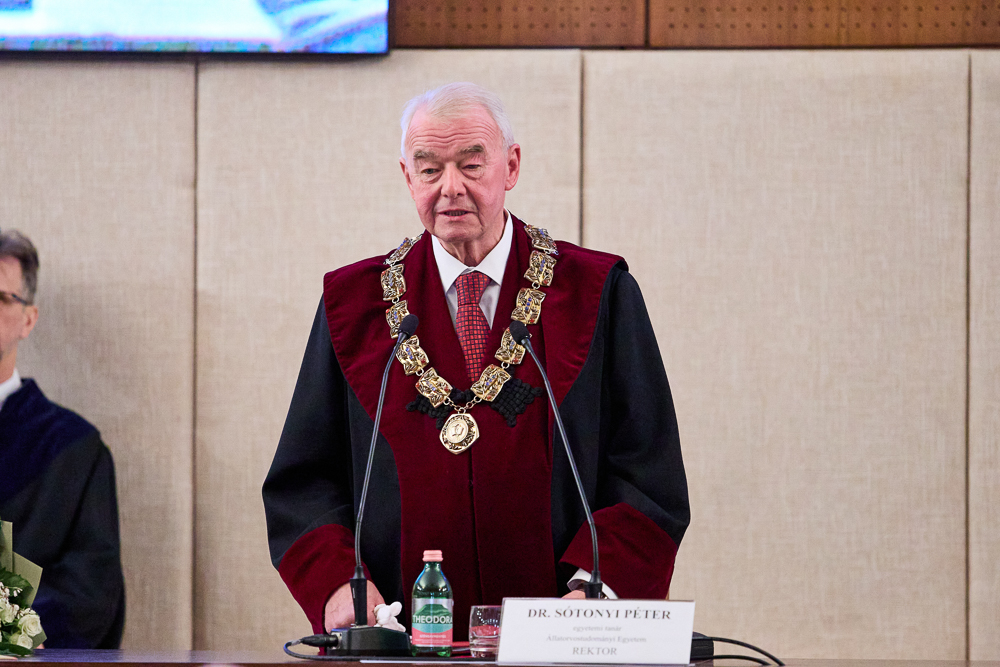
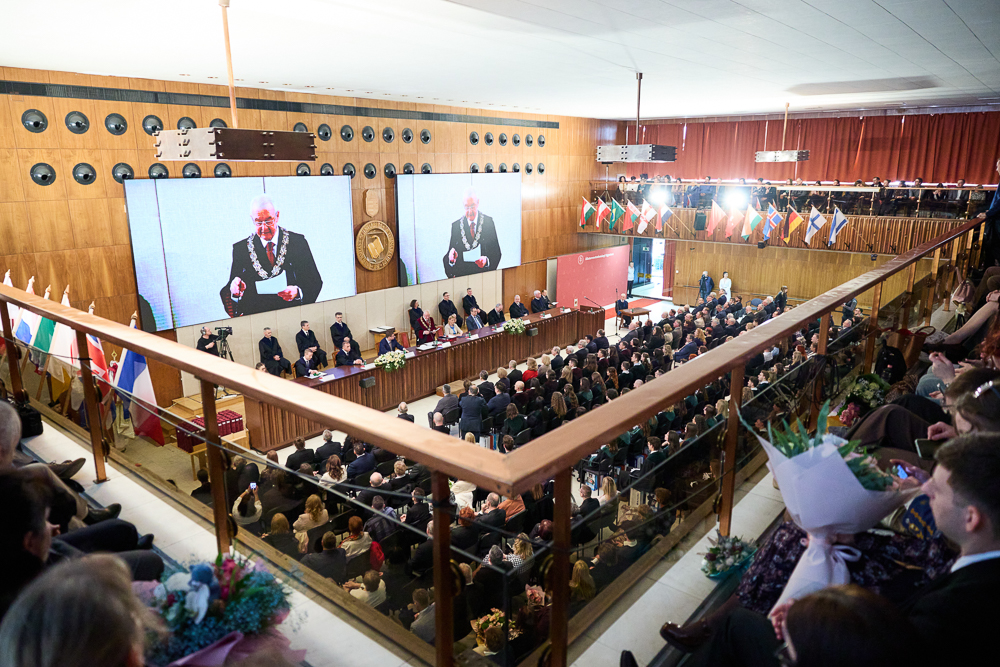
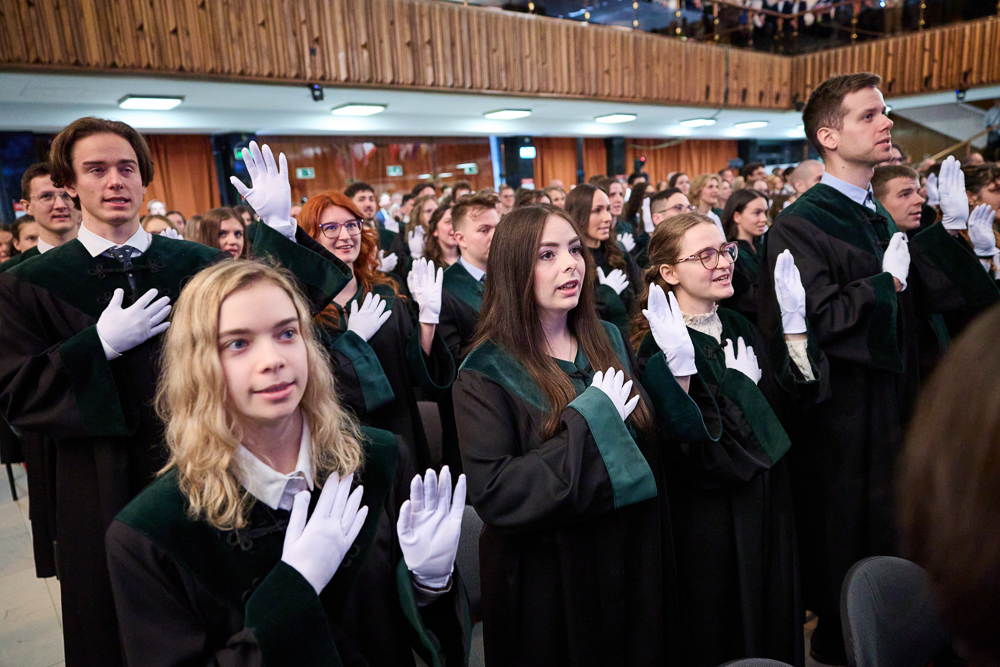
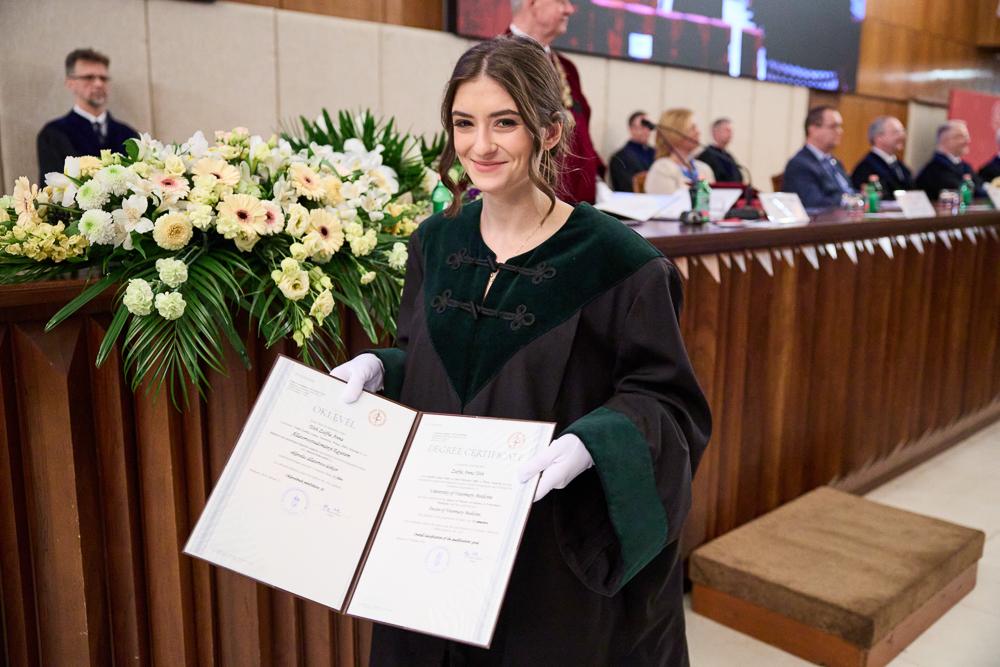
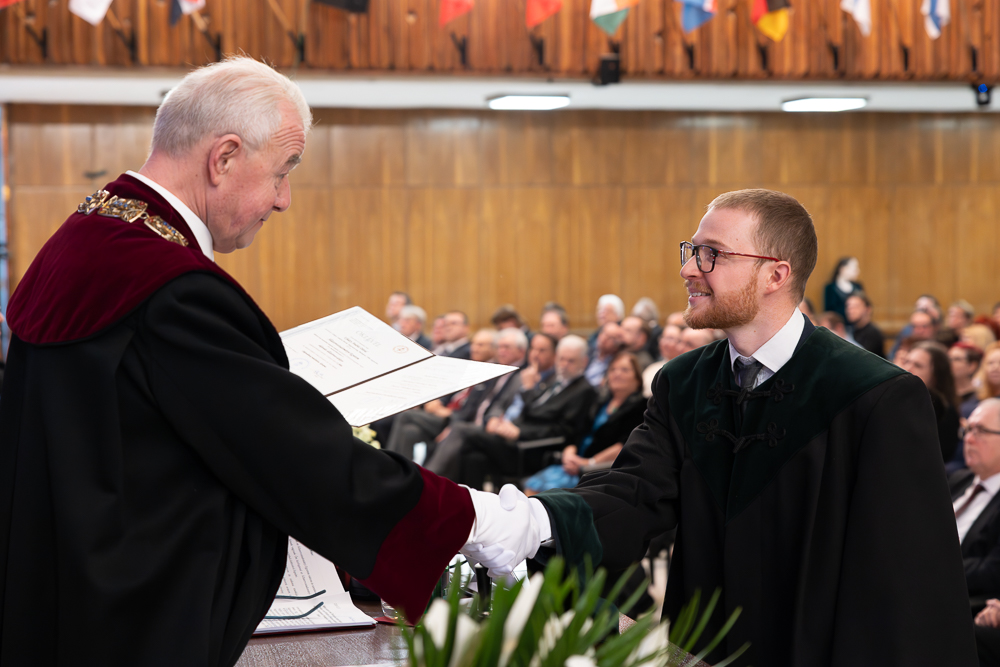
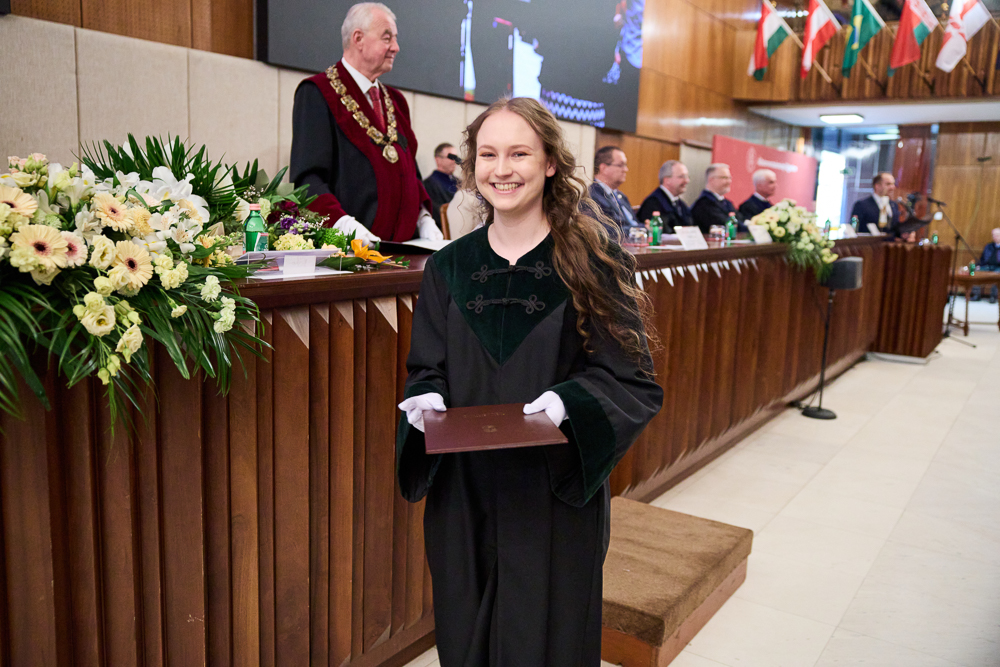
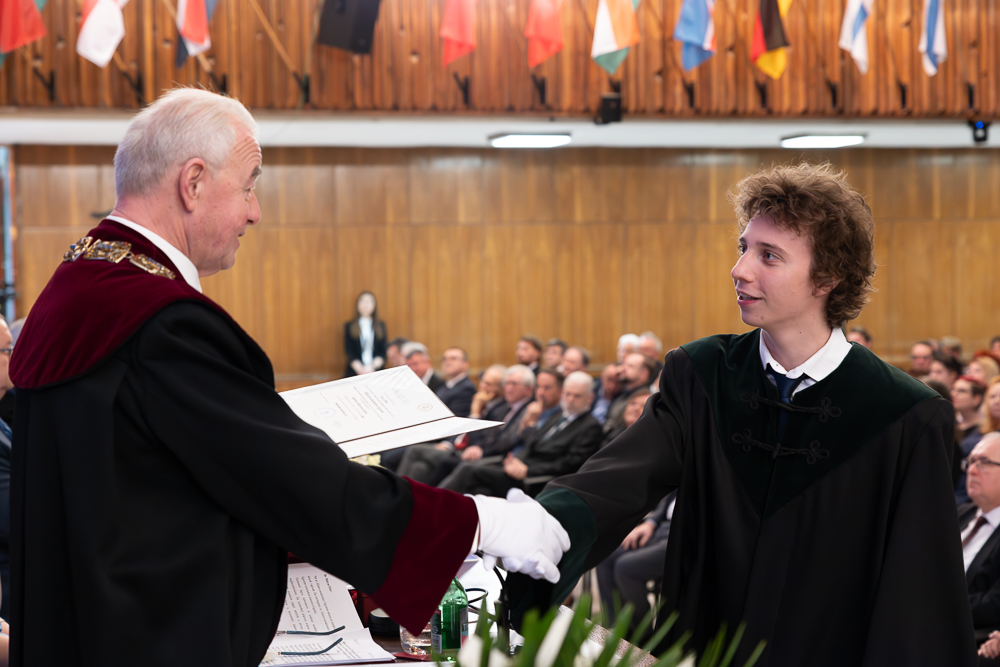
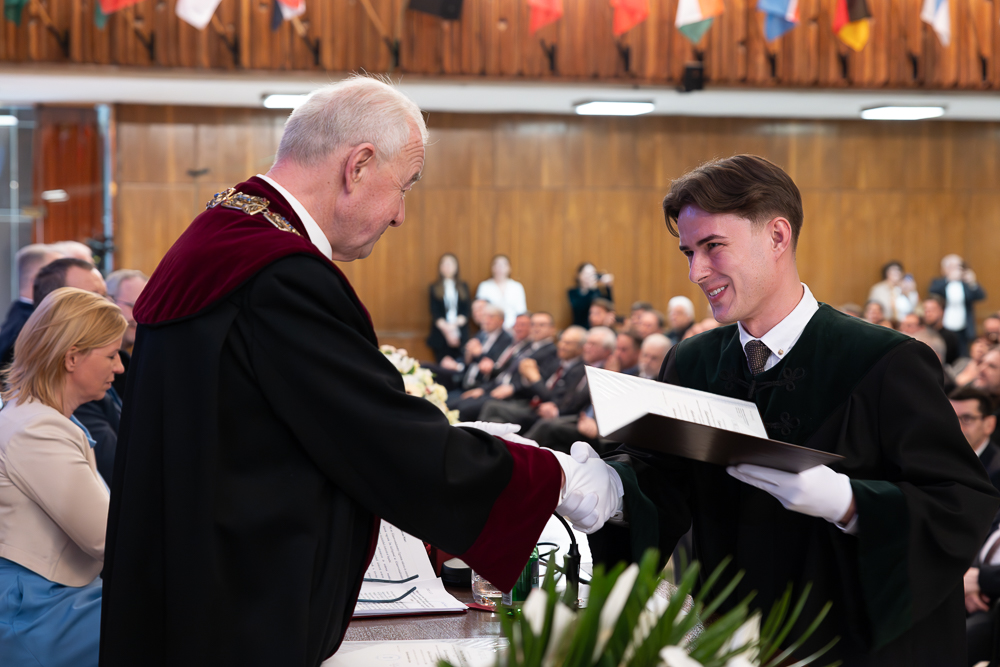
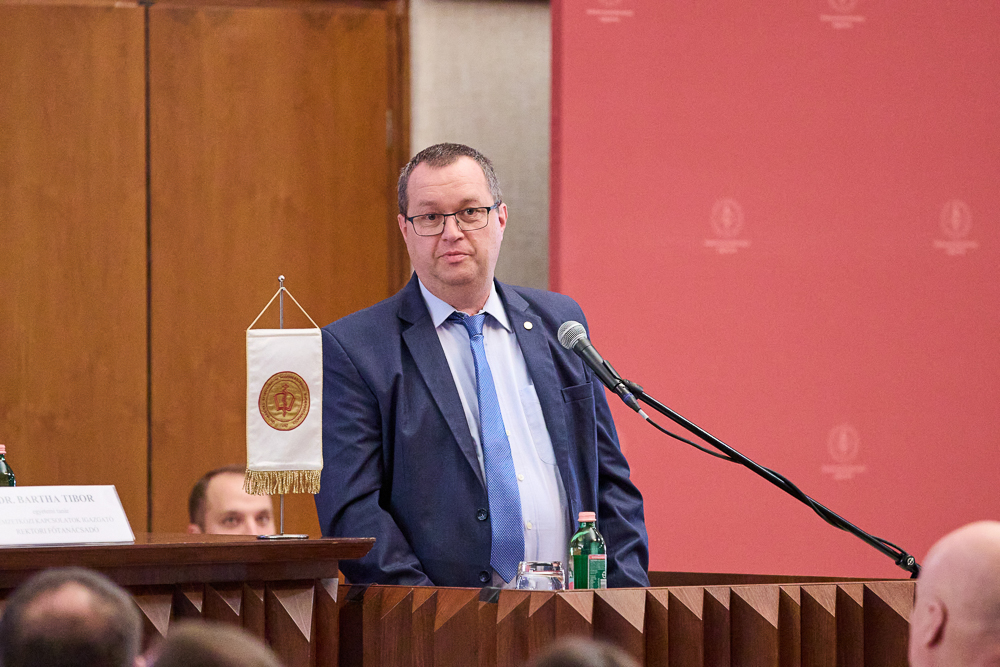
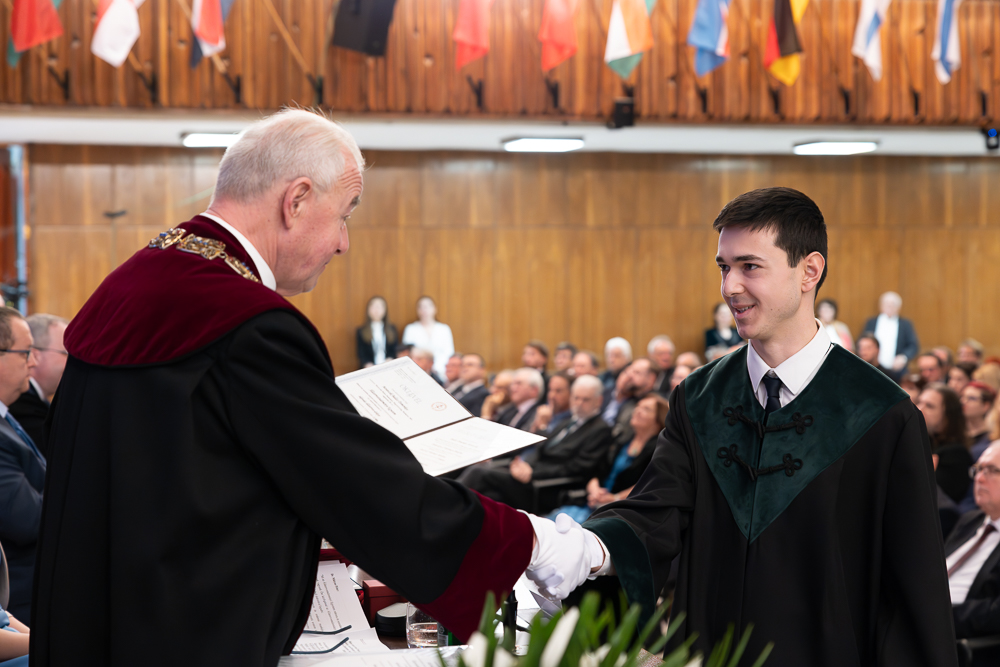
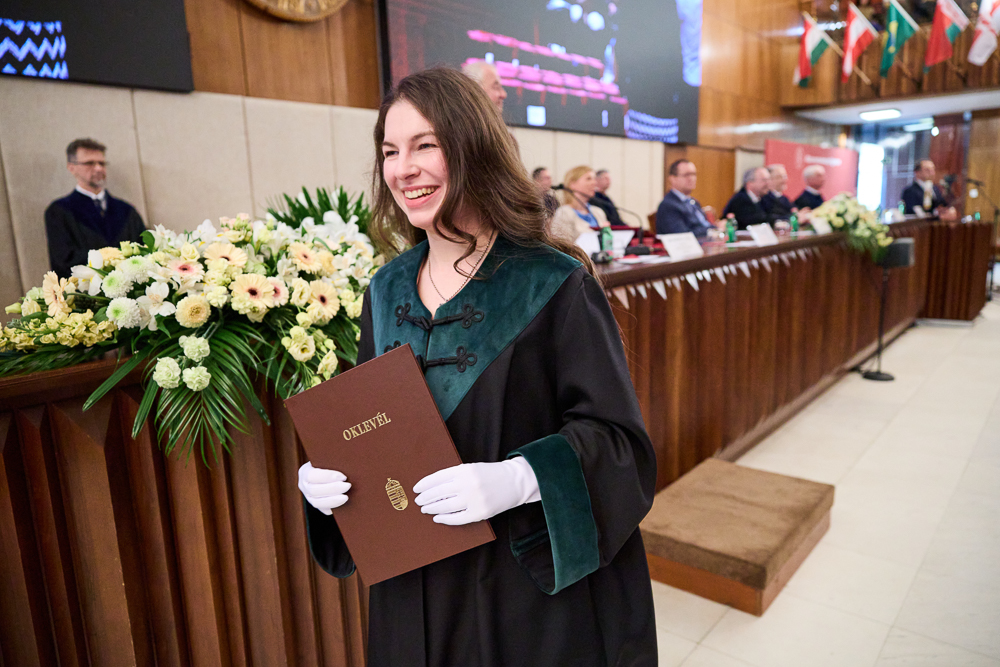
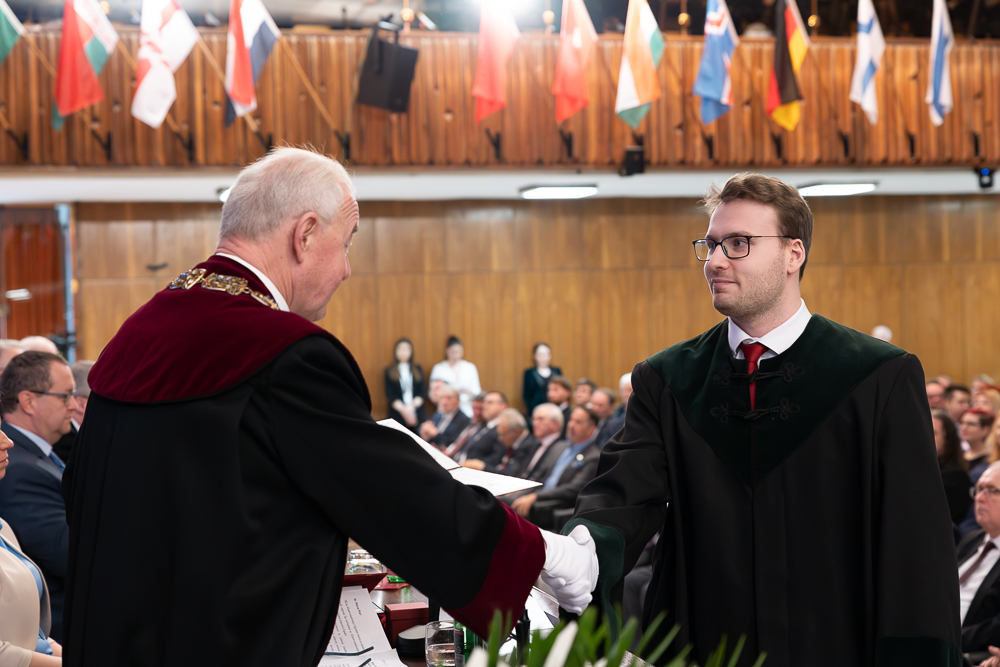
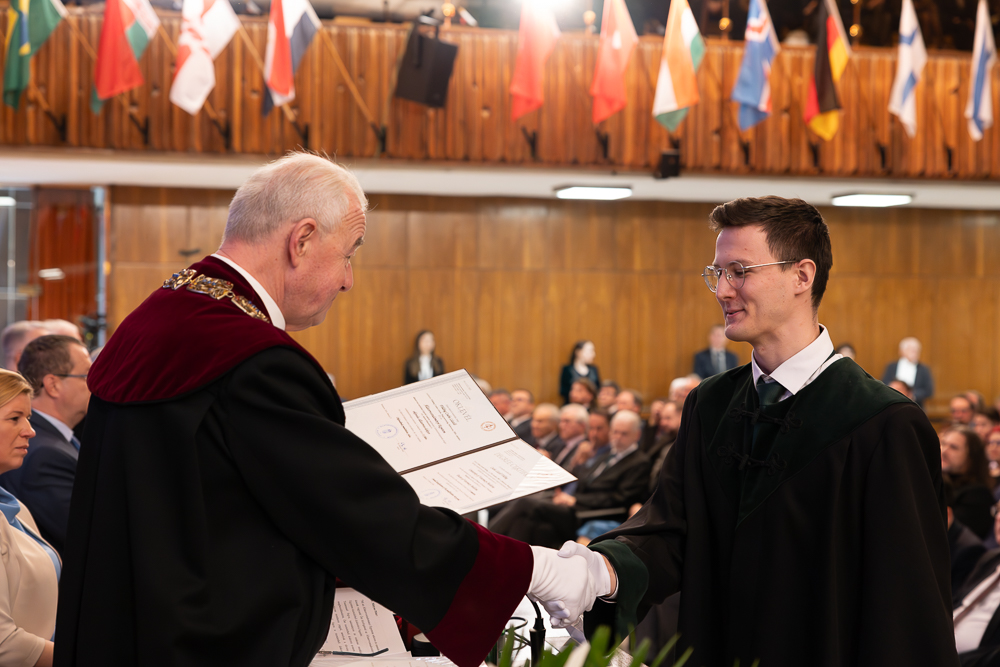
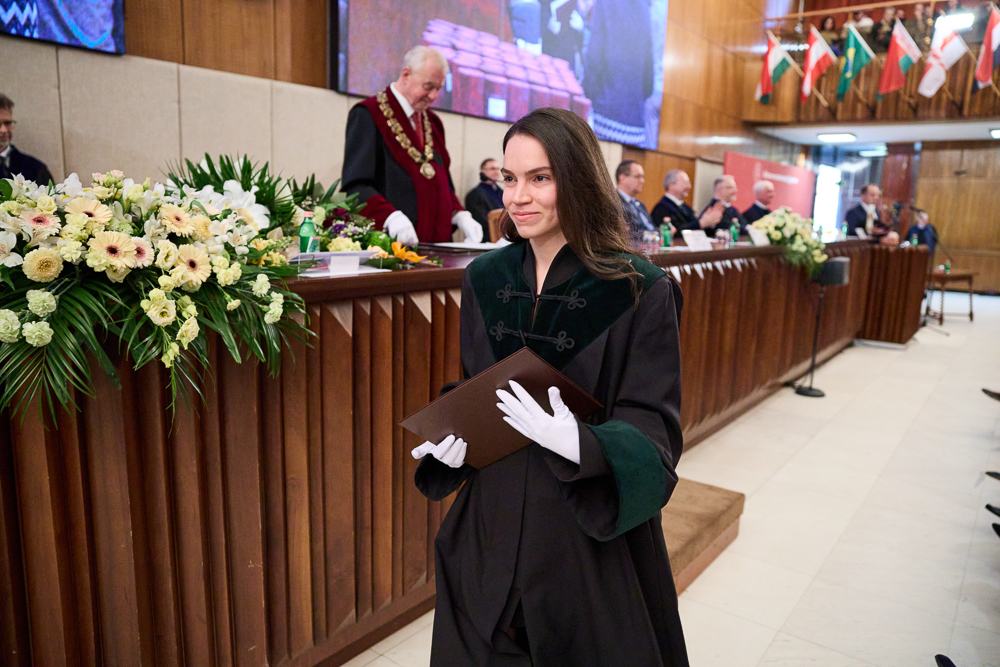
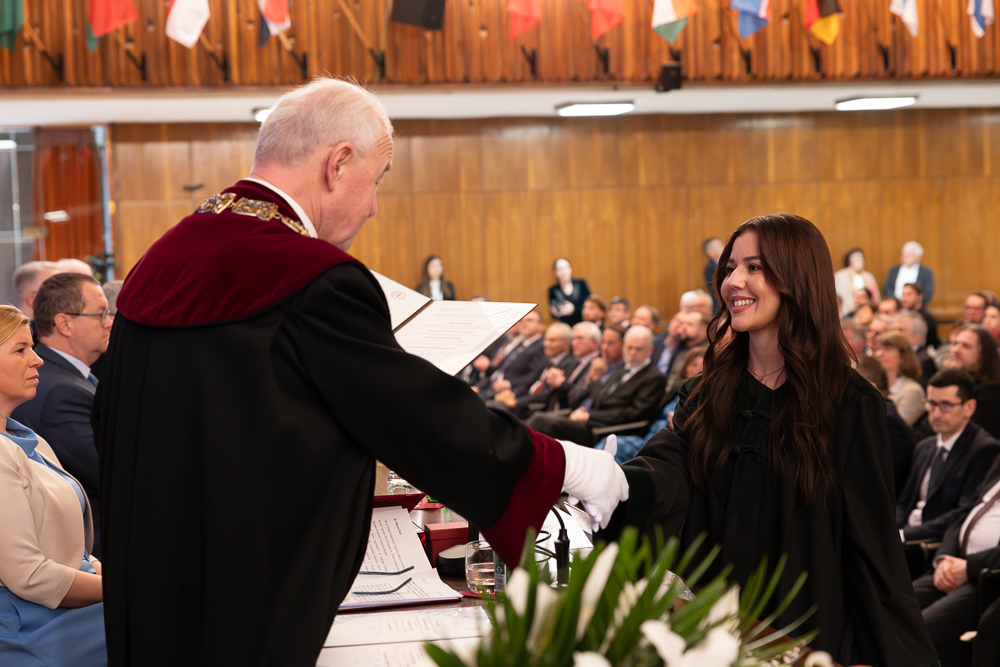
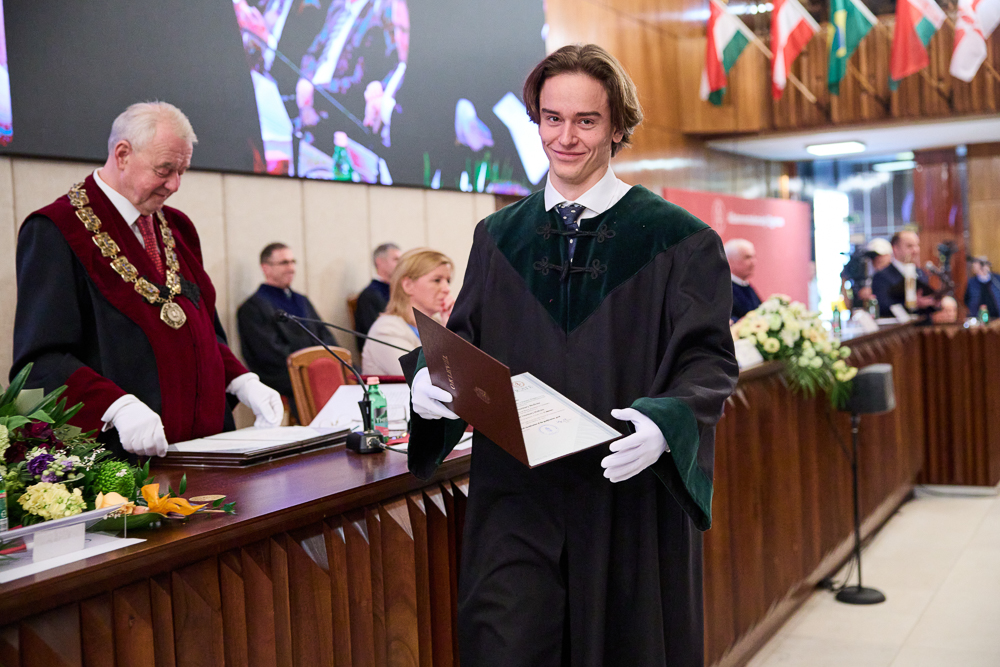
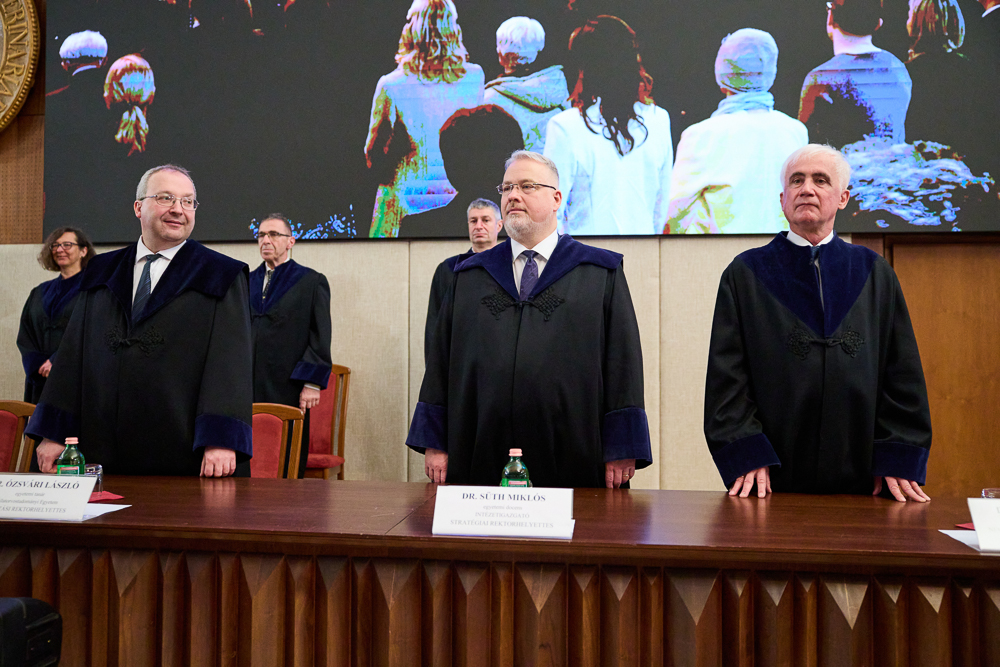
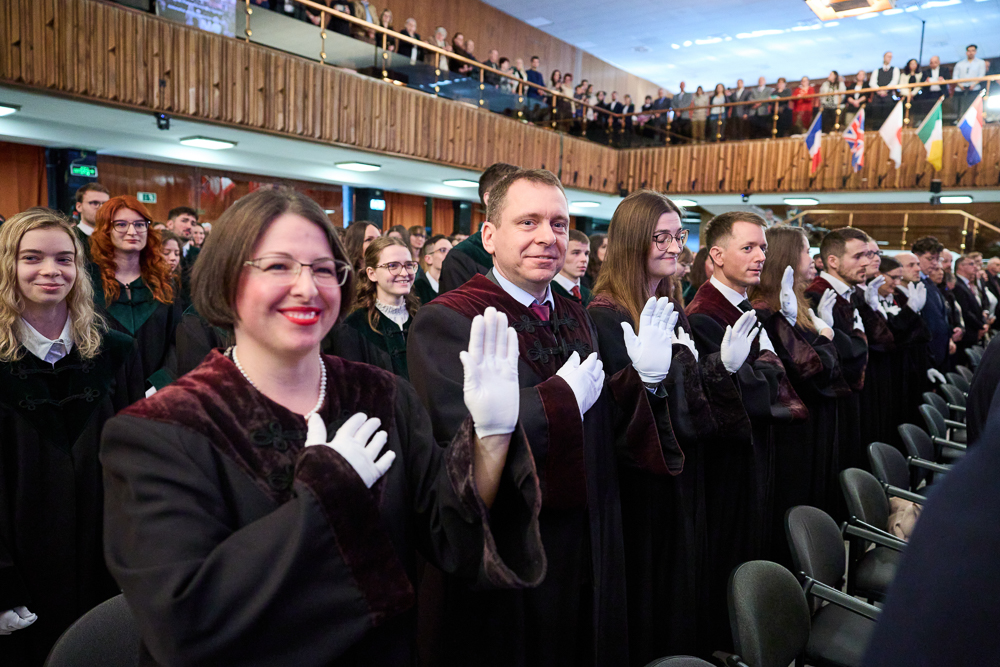
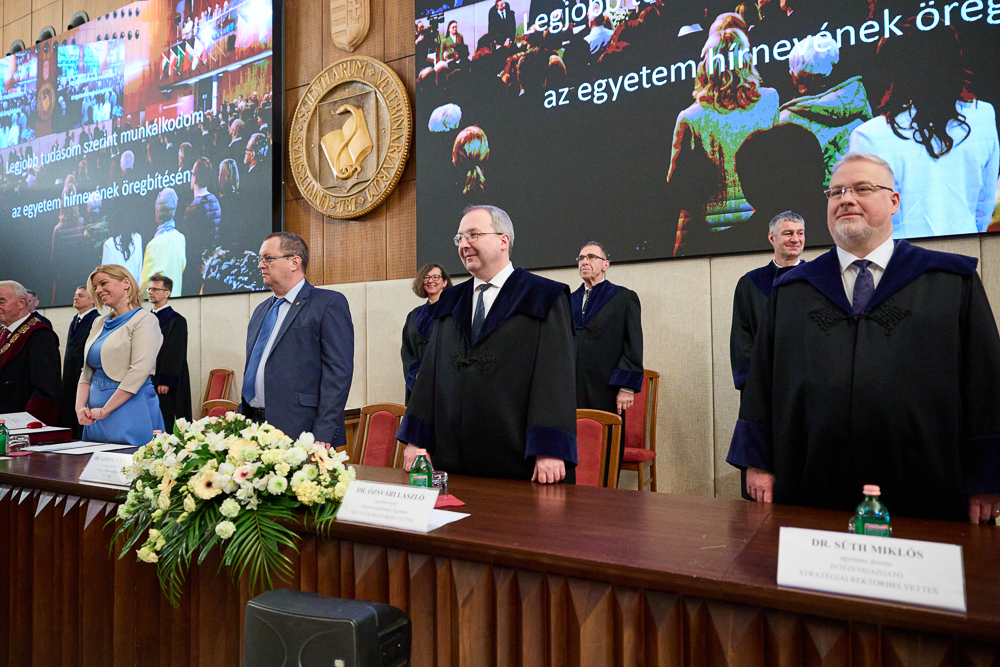
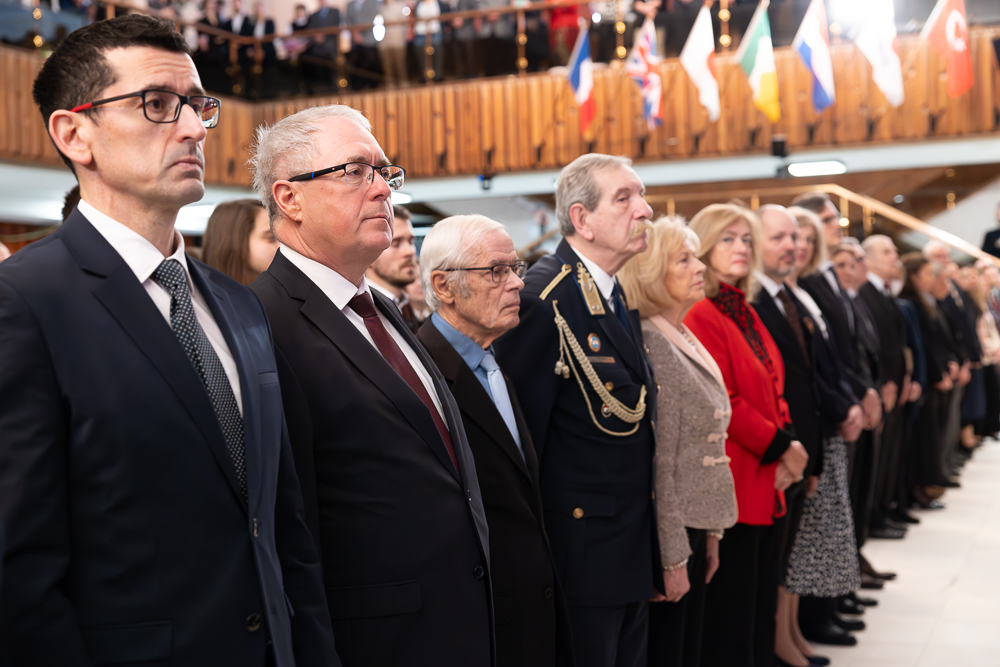
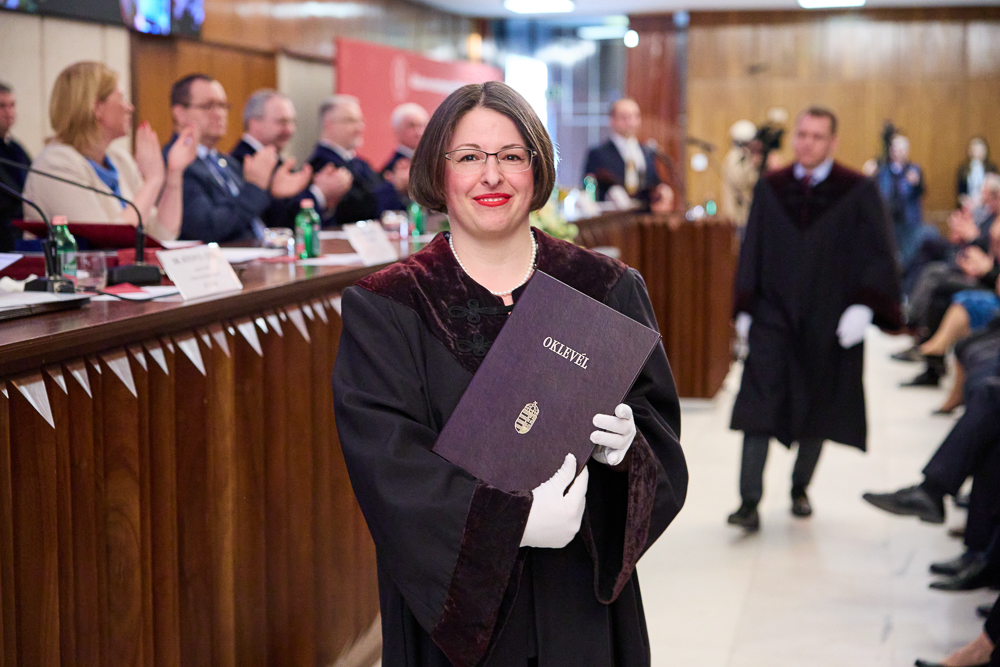
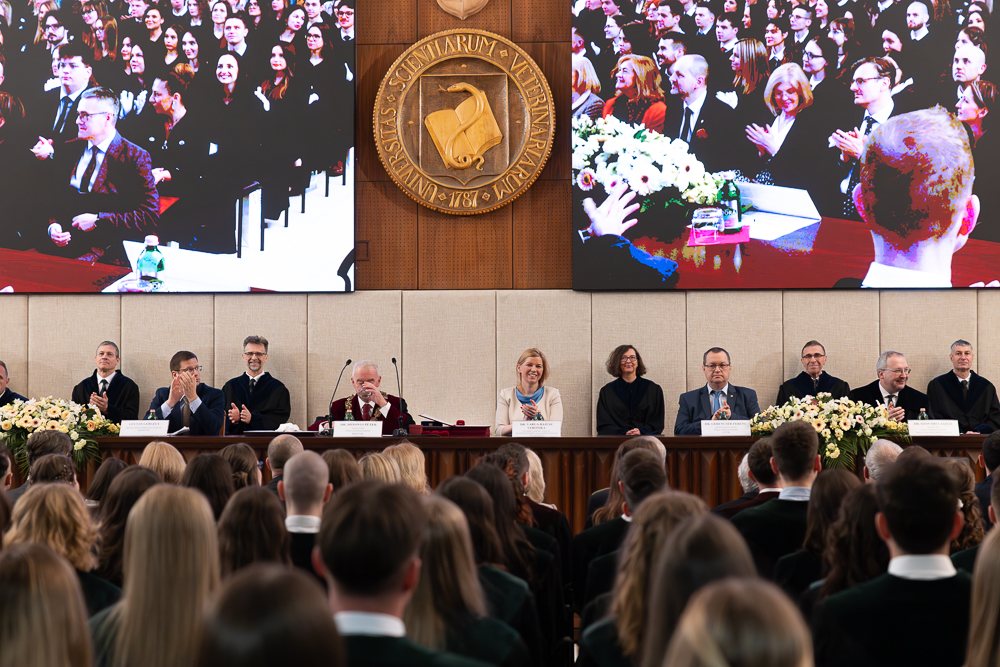
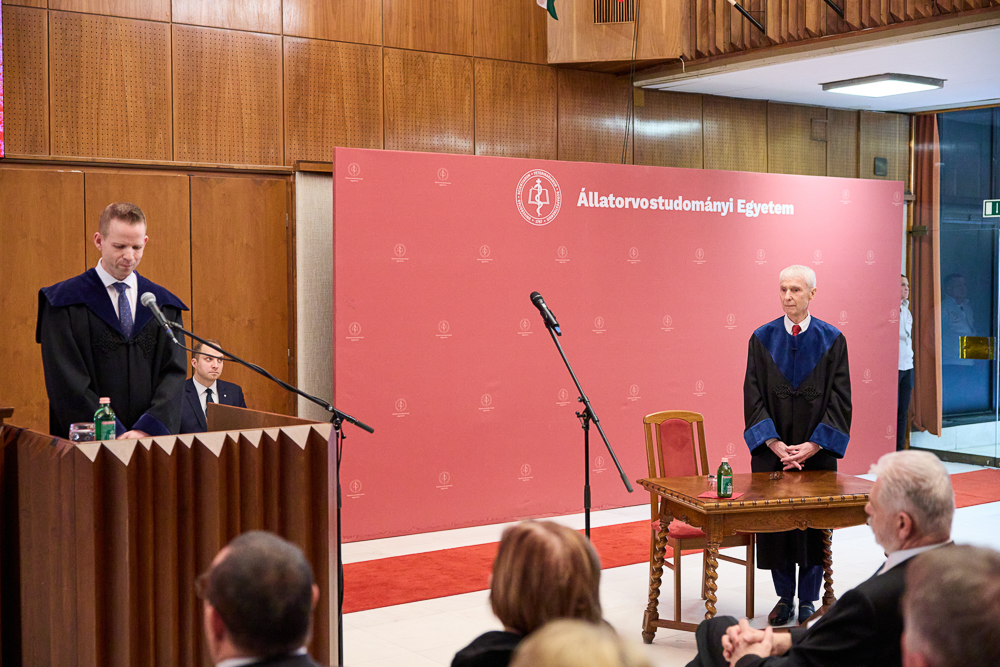
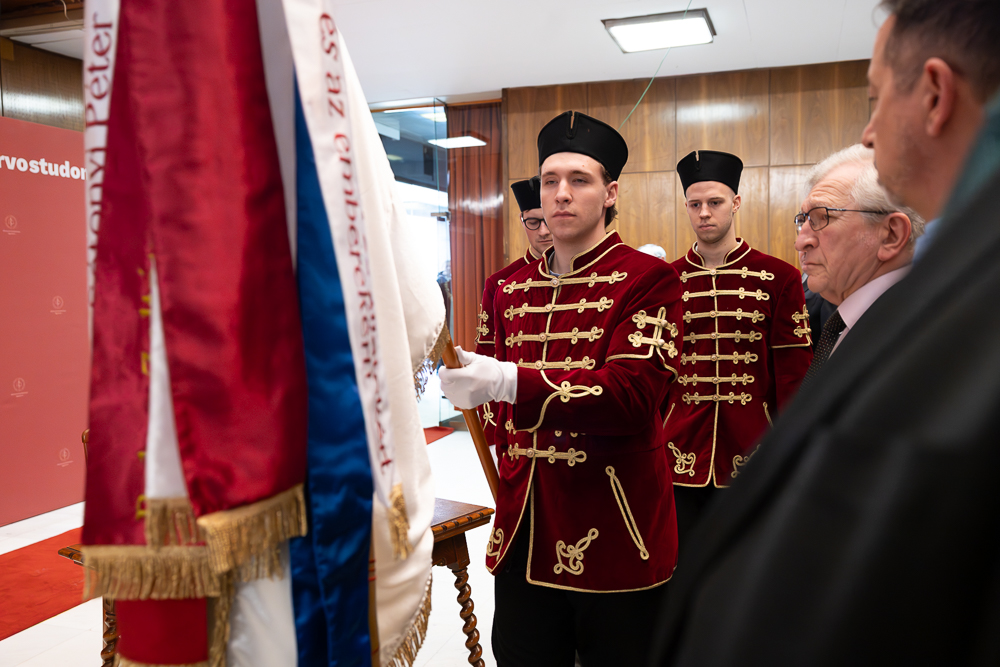
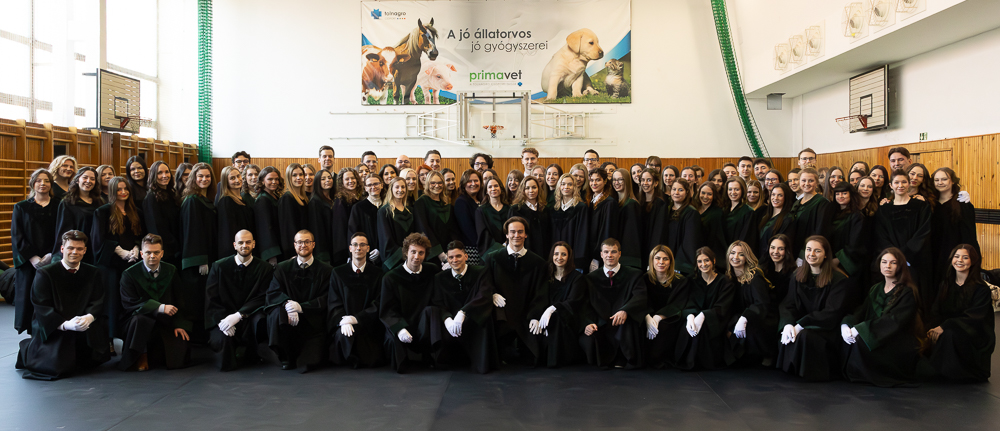
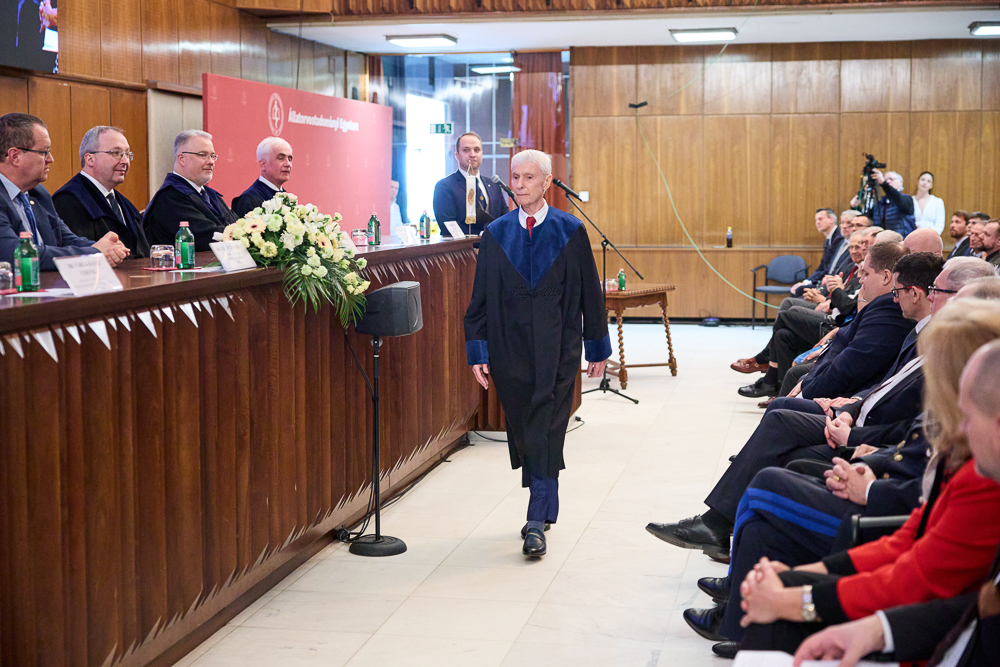
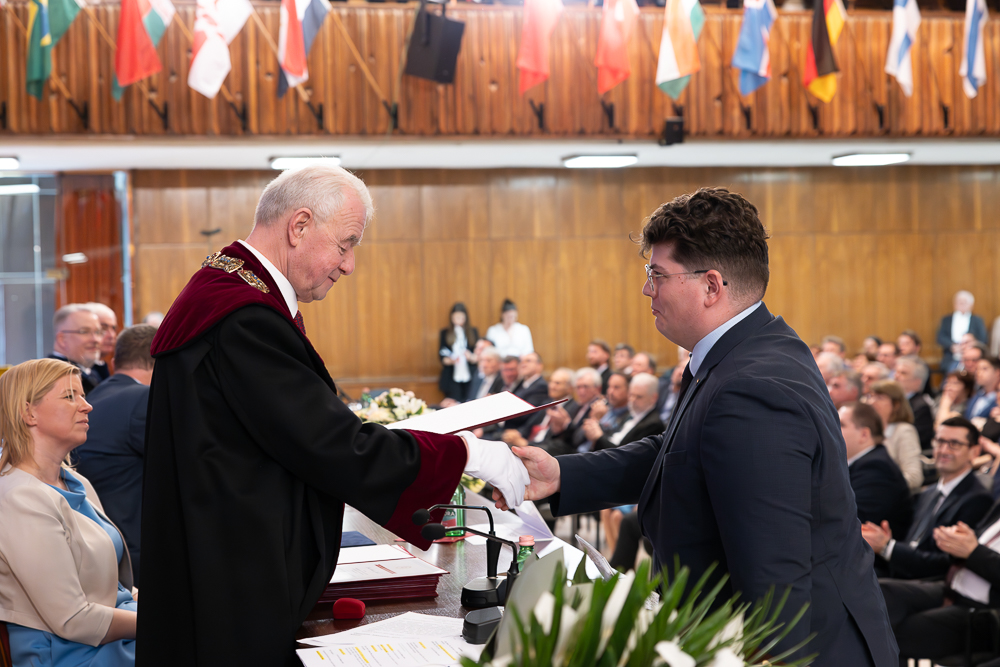
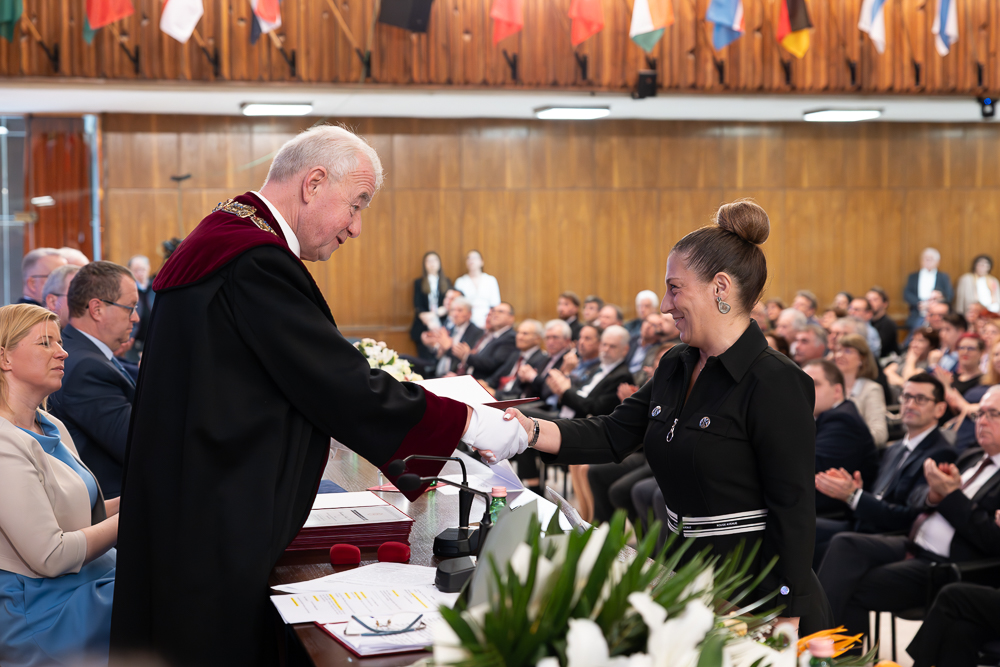
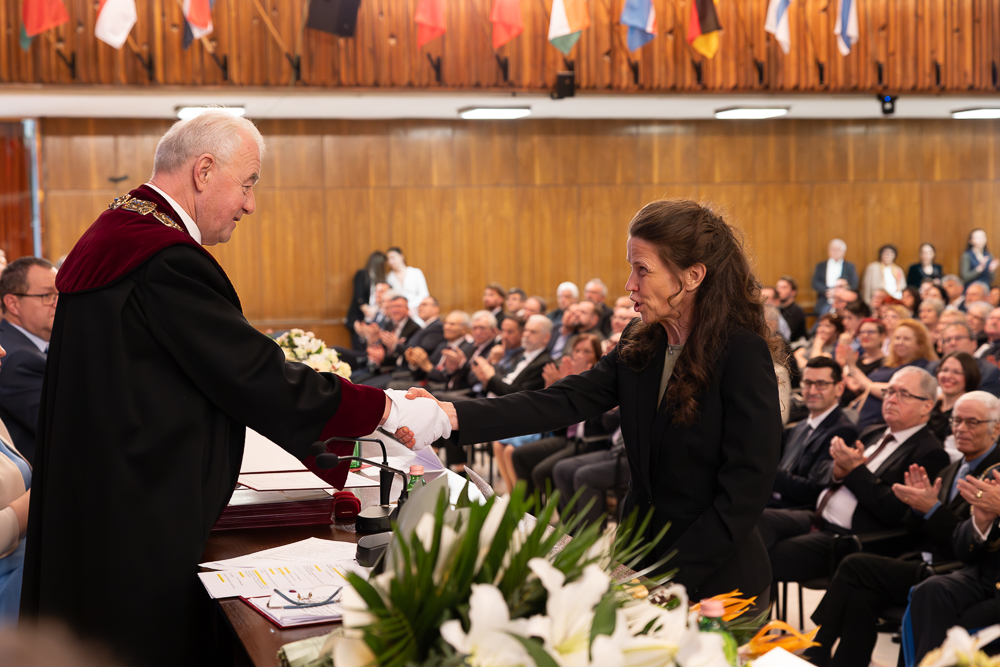
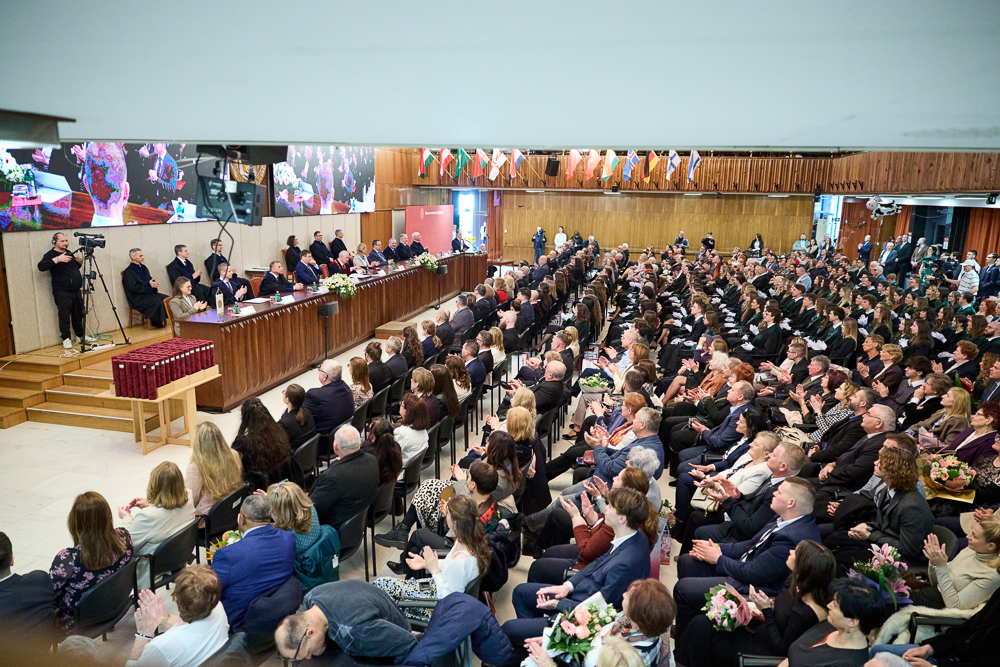
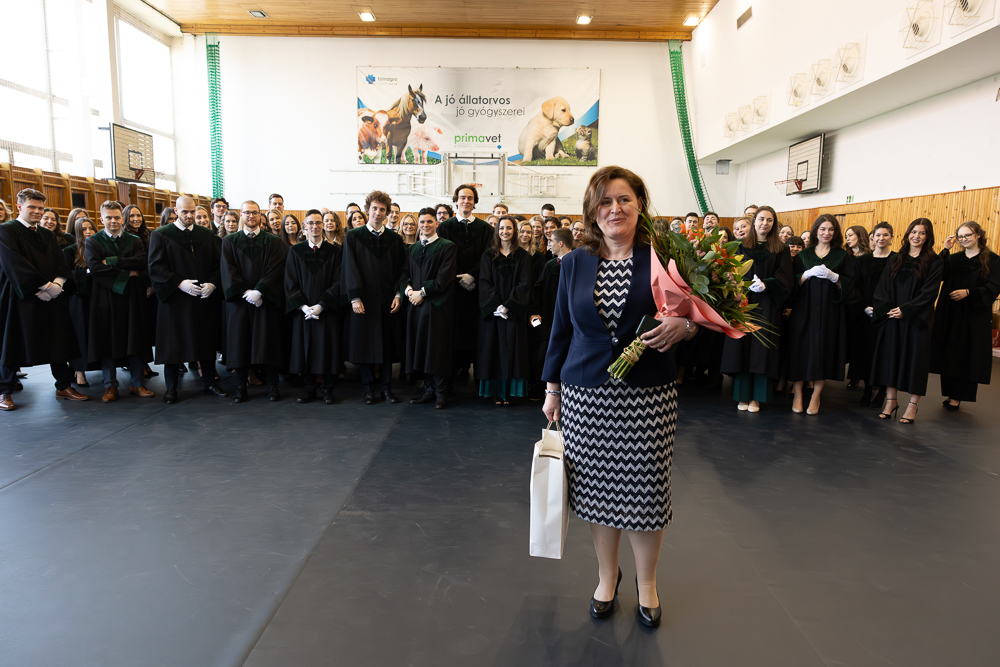
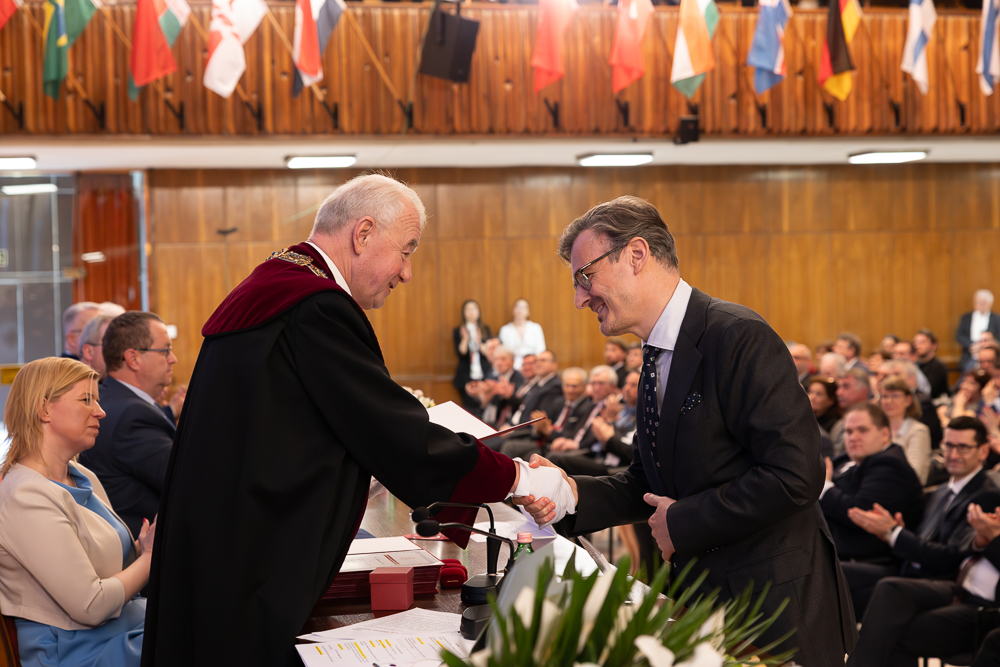
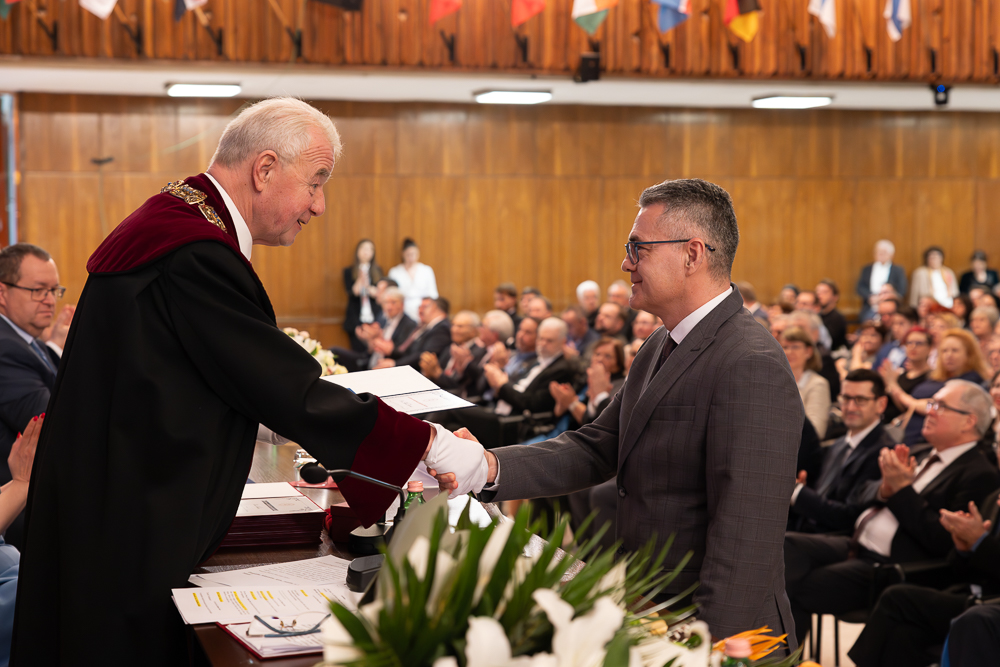
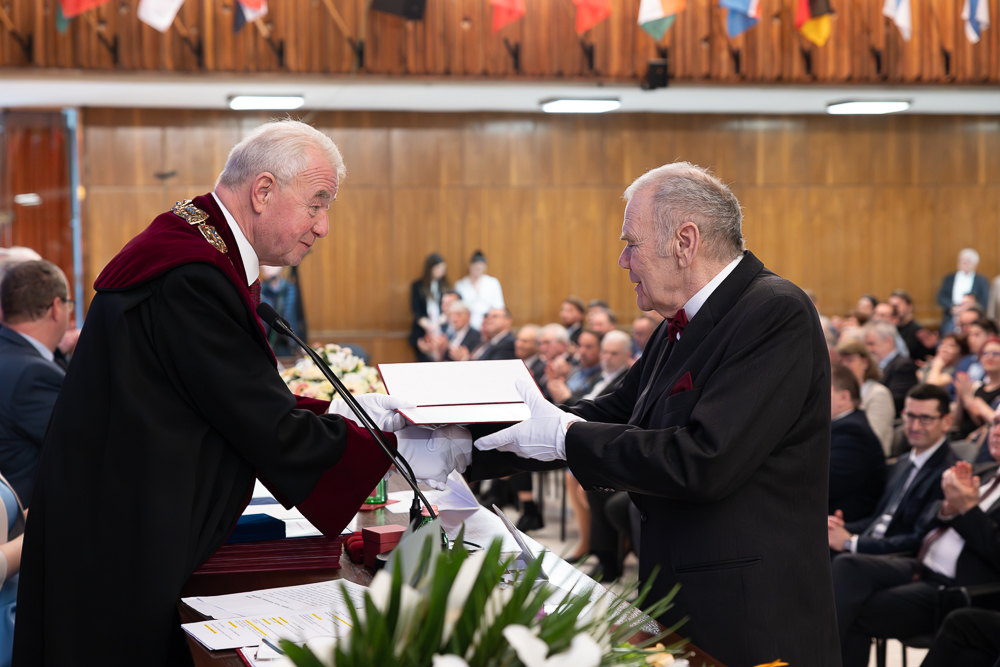
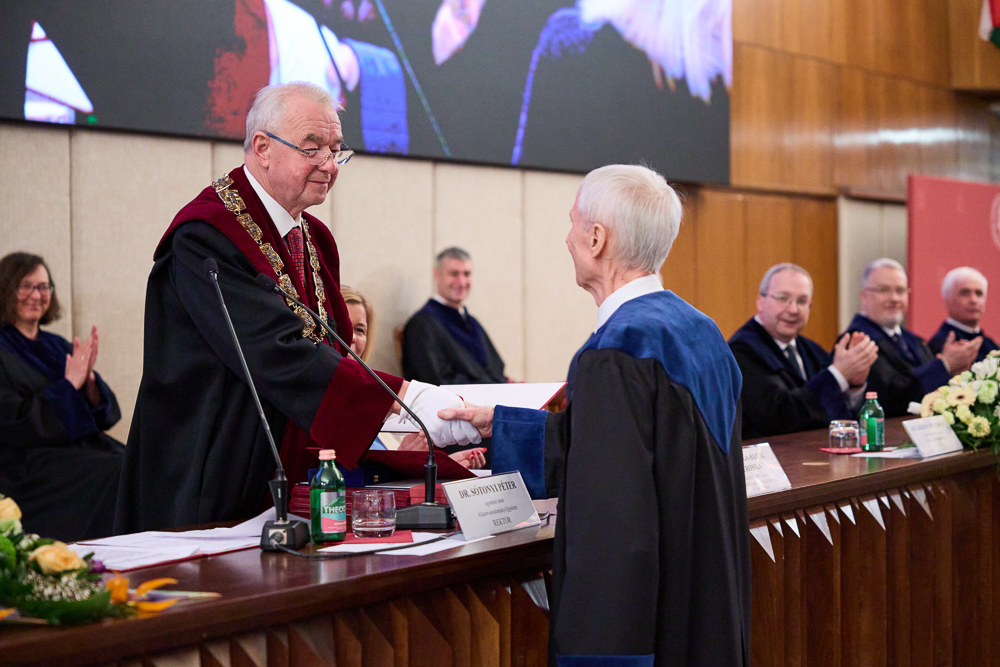
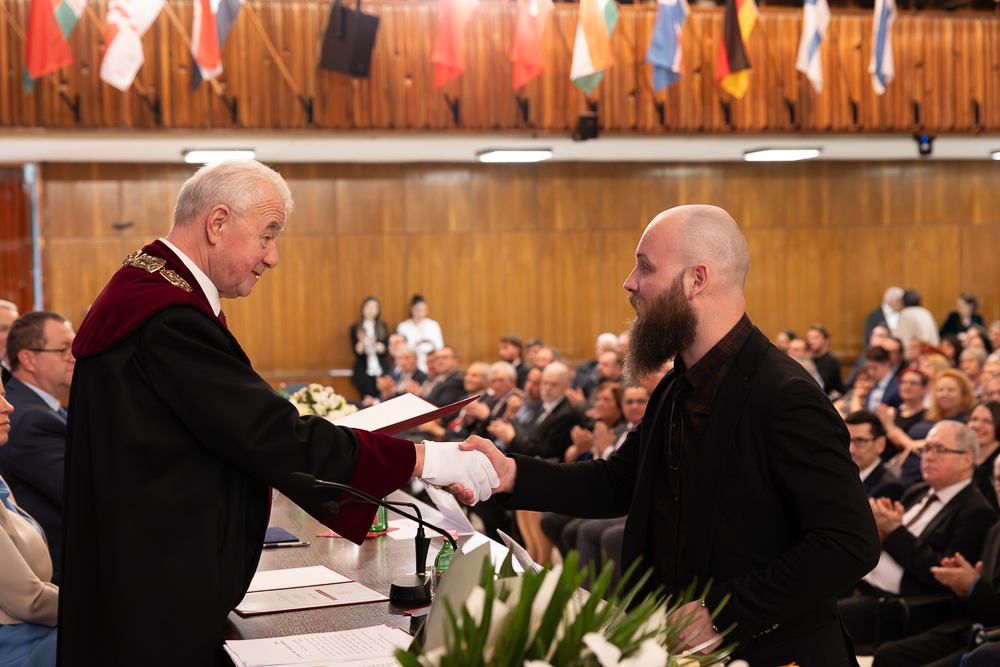
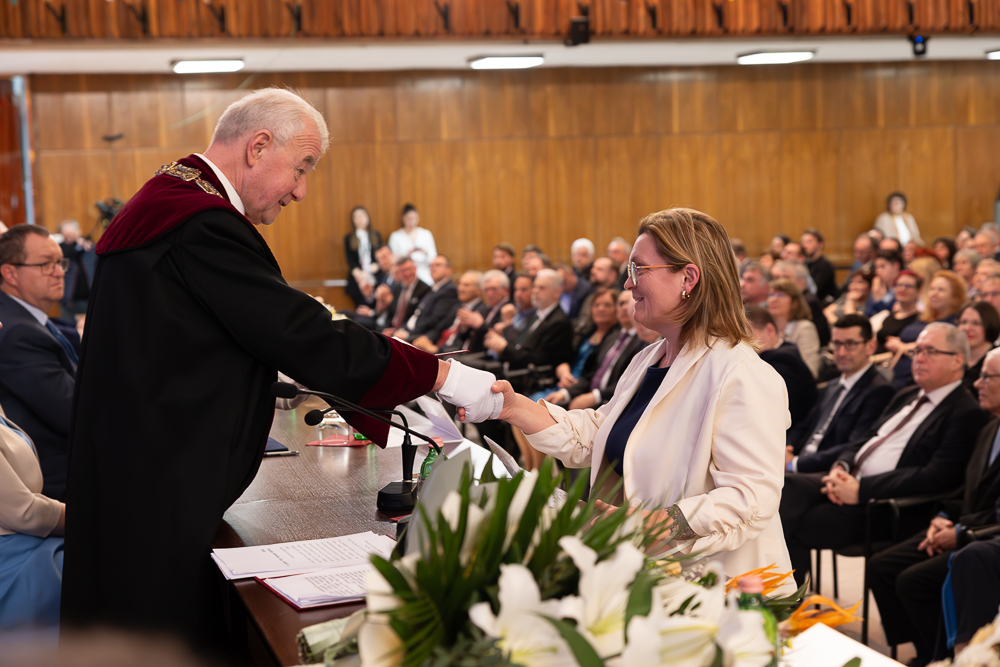
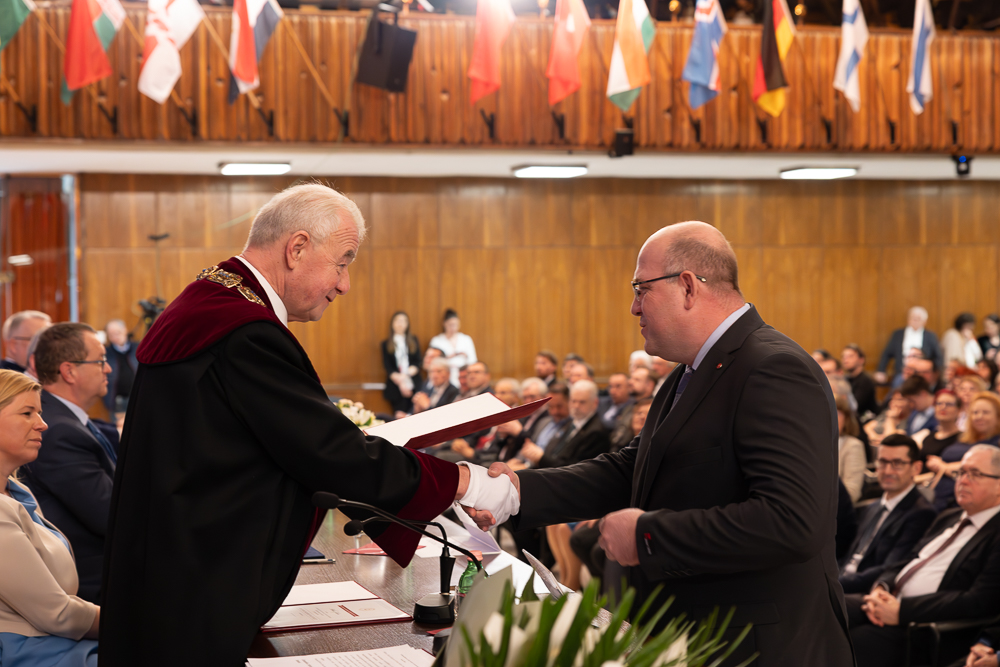
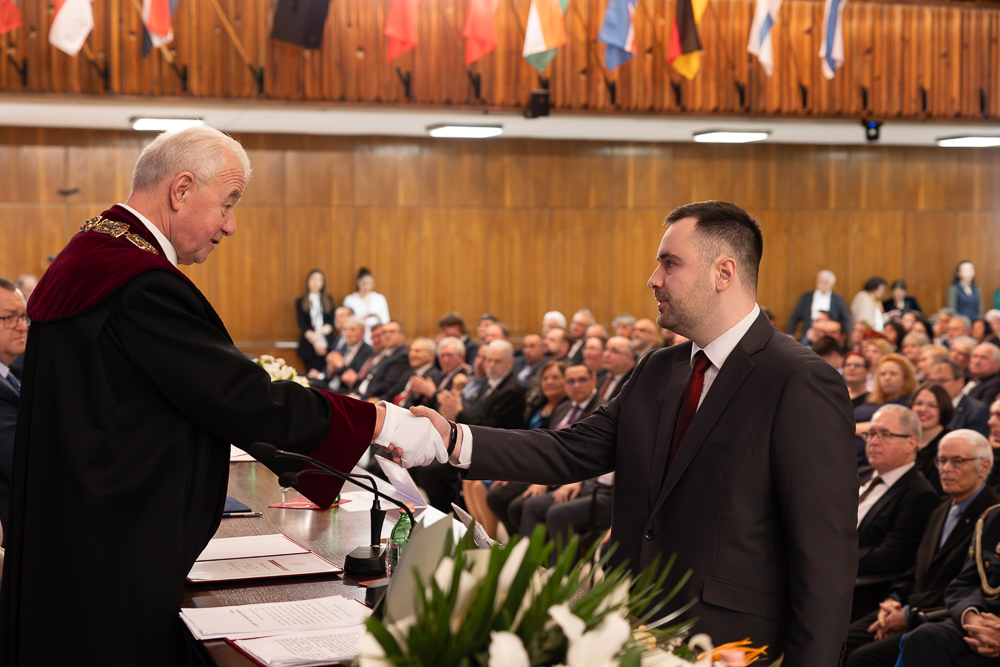
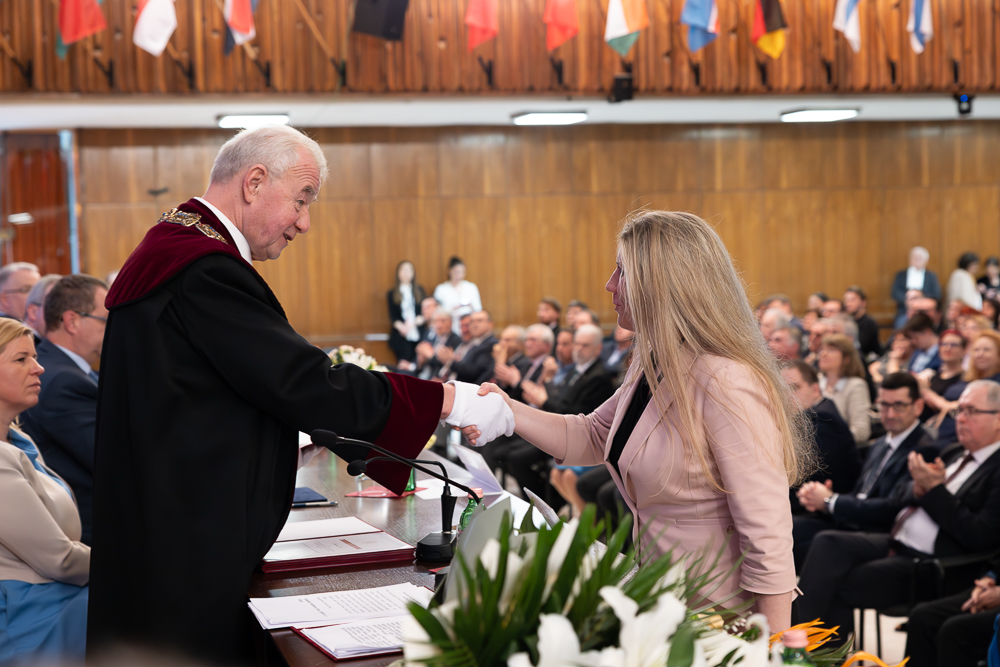
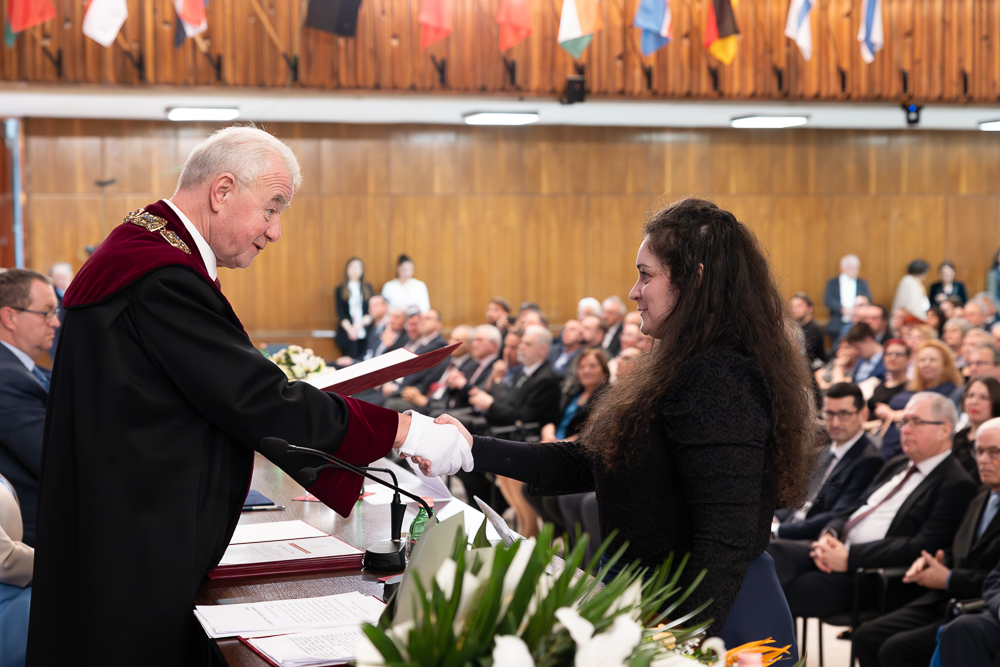
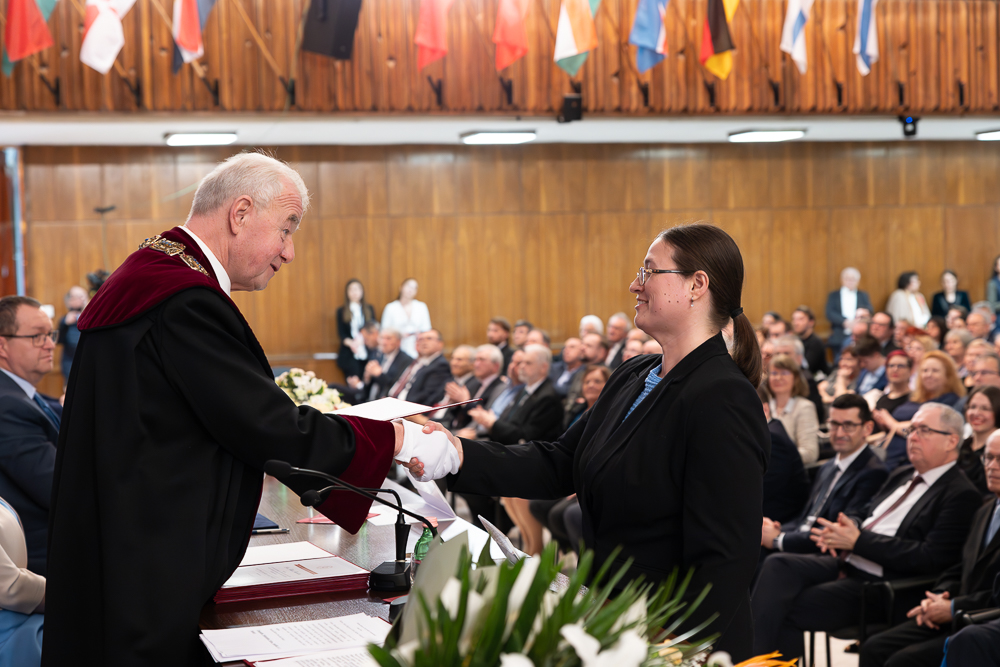
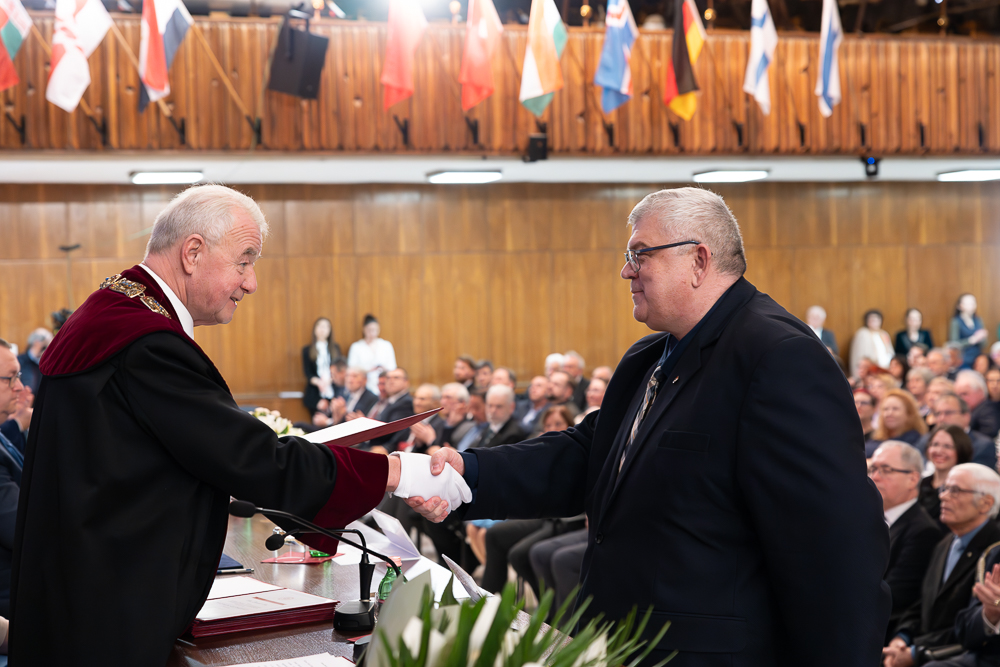
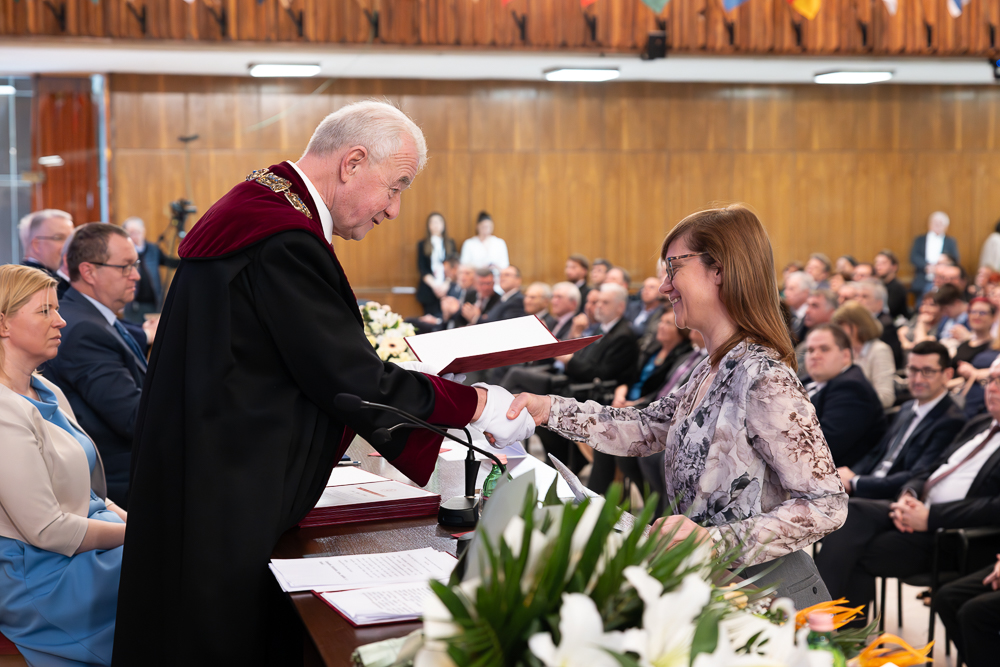
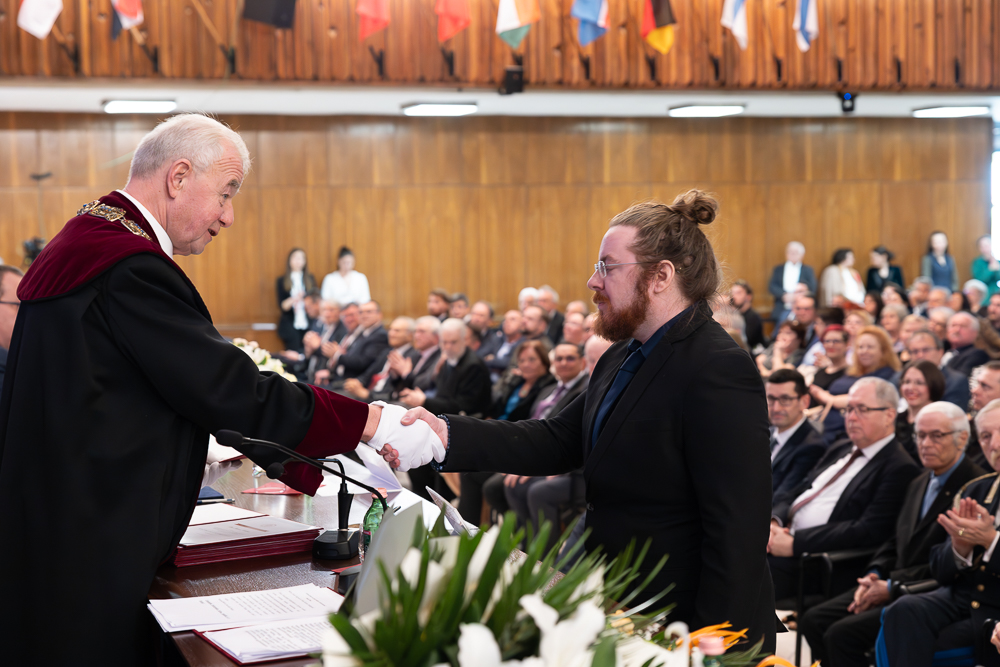
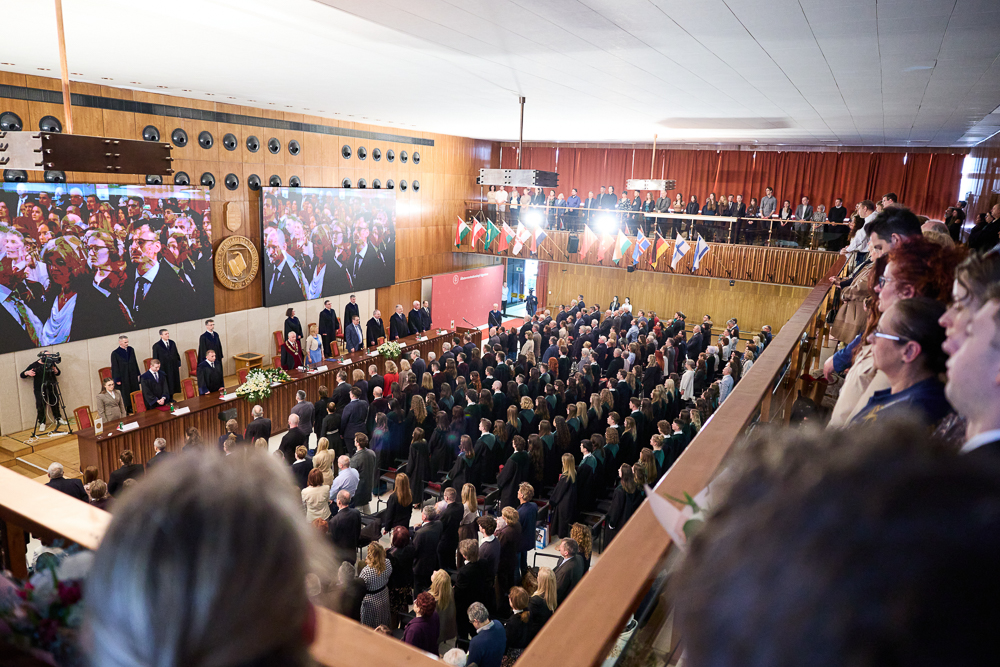
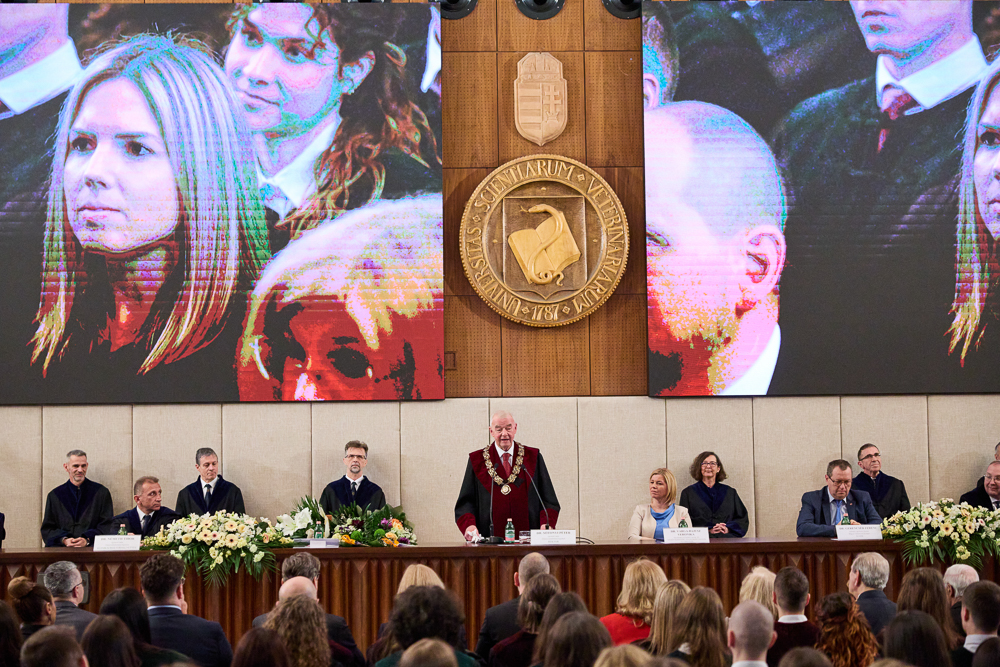
At the two graduation and doctoral inauguration ceremonies held on February 27 at the University of Veterinary Medicine Budapest, 90 Hungarian and 112 English-program veterinary graduates received their diplomas from Professor Péter Sótonyi, Rector of the University. Hundreds followed the ceremonies via live stream, while family members watched the emotional moments on screens set up in the Aula and lecture halls.
In his ceremonial address, the Rector emphasised that the veterinary profession is far more than a job, it is a mission and a form of service. Veterinarians belong to a unique and close-knit community that respects the work of its predecessors, preserves traditions, and takes responsibility for the future. The profession requires both strong professional competence and solid personal integrity, as veterinarians encounter life’s deepest questions every day: birth, illness, loss, and hope.
He also highlighted that centuries of national and international experience in combating epidemics have demonstrated that effective disease diagnosis requires well-grounded veterinary expertise. For this reason, highly trained and respected veterinarians must work within official veterinary authorities. The Rector proudly acknowledged the students’ active participation and exemplary commitment during last year’s response to the outbreak of foot-and-mouth disease. As a final message to the newly graduated veterinarians, he emphasised that maintaining strong relationships with scientists and professional colleagues is a shared goal and the foundation of the future. Through dialogue, critical thinking, and mutual respect, these connections should be nurtured worldwide while preserving the spirit of the University.
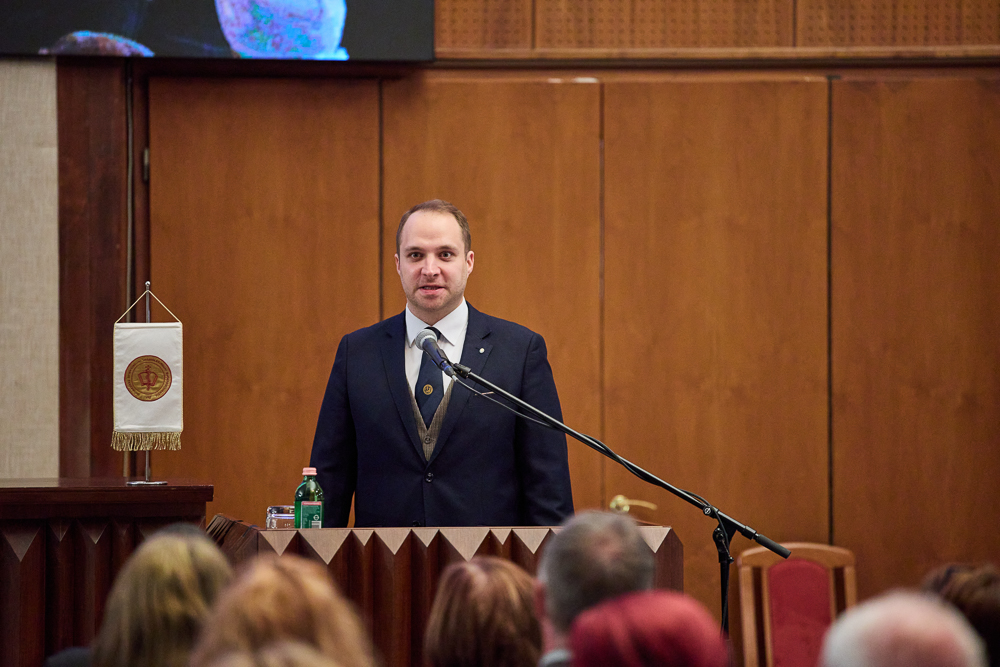
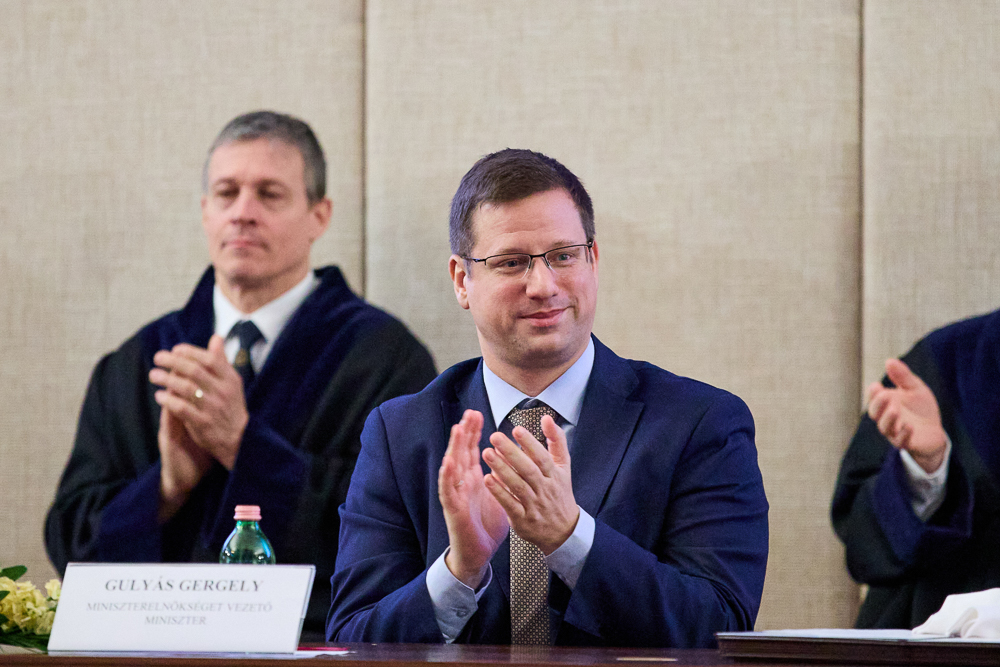
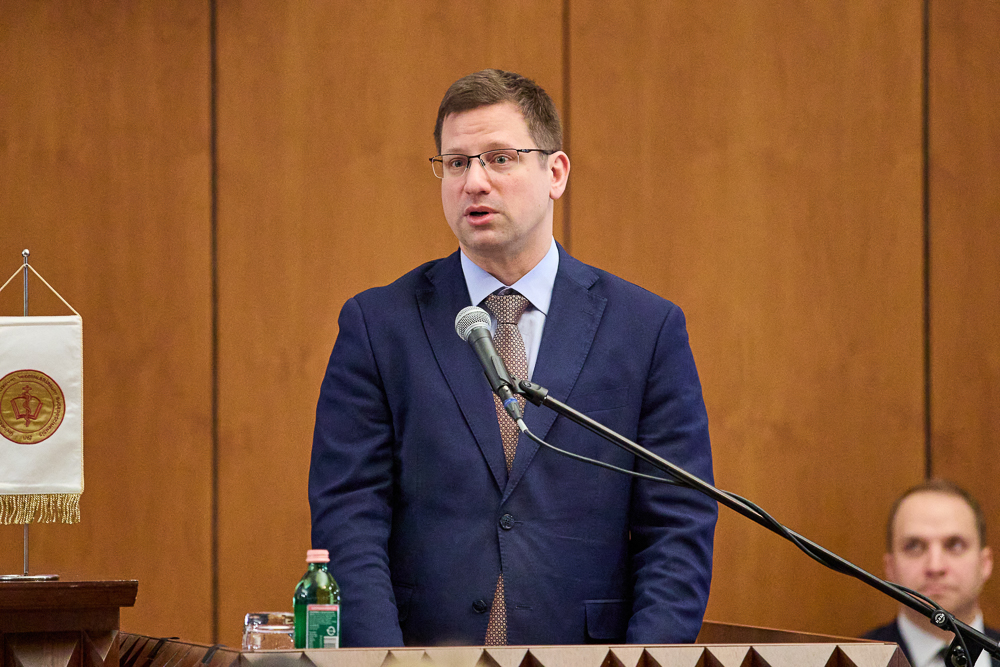
In his greeting, Gergely Gulyás, Minister heading the Prime Minister’s Office, noted that the University of Veterinary Medicine Budapest ranks among Europe’s best higher-education institutions and has grown even stronger in recent years by taking advantage of the opportunities created by Hungary’s higher-education model reform. He highlighted that this noble profession serves both Hungary and the Hungarian agricultural sector, and the institution’s achievements demonstrate that Hungary belongs to the forefront of science, referring to the University’s distinguished position in the Shanghai Ranking of World Universities by Subject in 2025.
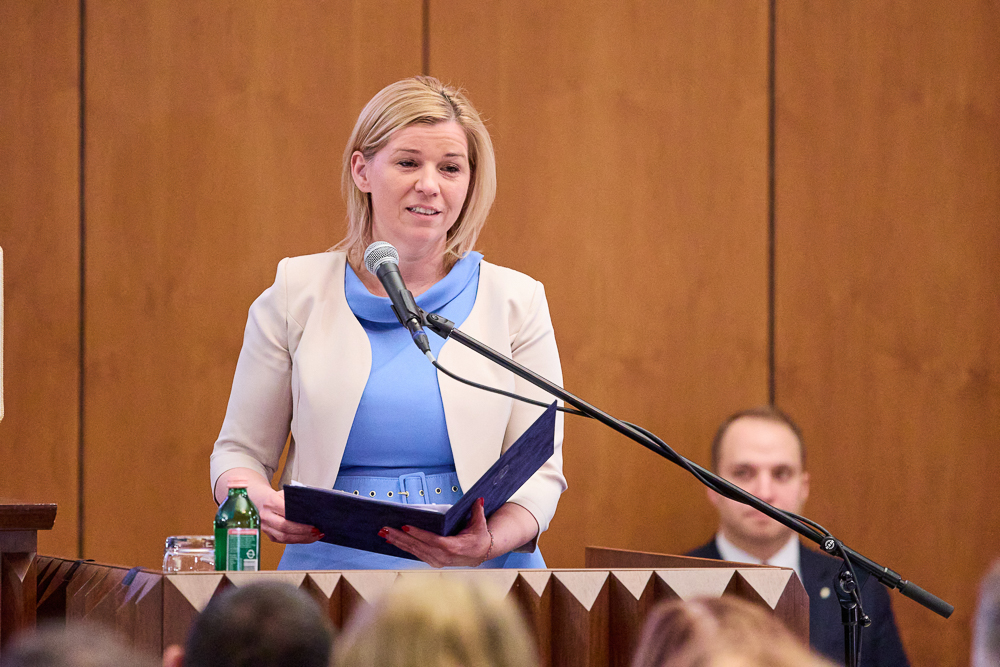
In her speech, Veronika Varga-Bajusz, State Secretary responsible for higher education, vocational training, adult education, and youth at the Ministry of Culture and Innovation, suggested that it is a bold yet realistic ambition for the University of Veterinary Medicine Budapest to become one of the top ten veterinary schools in the world within the next decade. She added that progress in international recognition is supported by a higher-education model developed jointly with universities, based on conscious university leadership, institutional autonomy, competitiveness, long-term strategic partnerships, and performance-based funding.
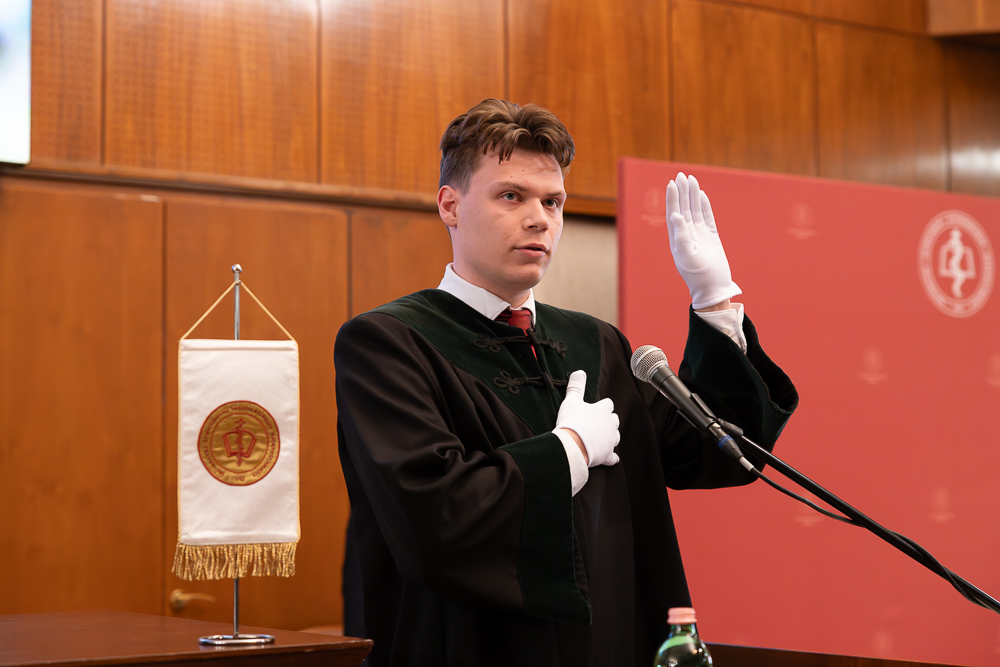
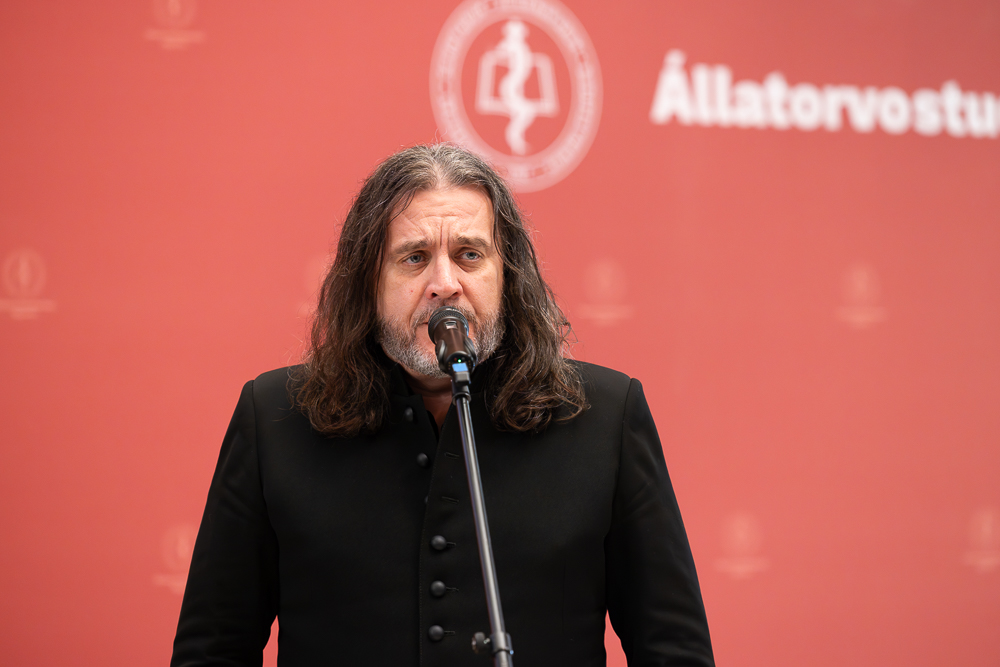
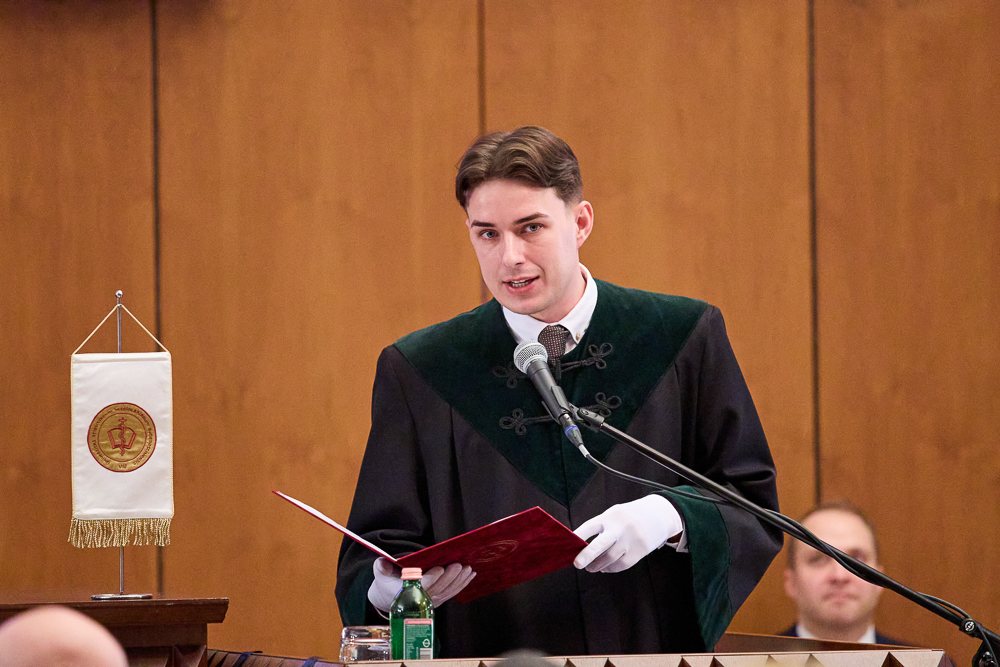
On behalf of the graduating students, Gergő Kurucz reflected that five and a half years earlier, when they first walked through the University gates, they could not have imagined the challenges and difficulties that lay ahead. Both successes and failures shaped them into the young veterinarians they have become, and over the years, they formed a close alliance that feels like a family. The profession goes far beyond treating animals: veterinarians must earn the trust of people every day, not only through professional expertise, but also through personal credibility, empathy, and integrity. Perhaps the hardest lesson, he added, is accepting that one cannot always win. Sometimes the greatest act of love lies in letting go.
Ferenc Gerencsér, President of the Hungarian Veterinary Chamber, emphasised that the keyword is love. He encouraged the newly inaugurated veterinarians to understand the emotions of animal owners, because those who love their animals are also afraid of losing them. Veterinarians should approach owners with empathy, acknowledge their fears, and reassure them that these emotions will be respected throughout the healing process.
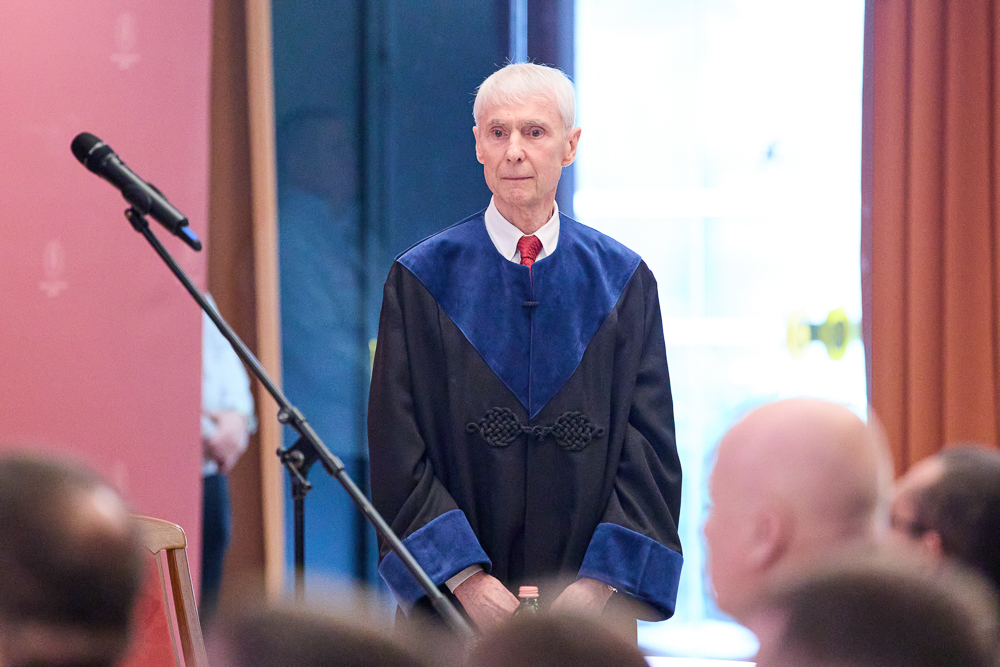
During the ceremony, the University’s highest distinction was awarded to Péter Mátyus, research professor at the University of Veterinary Medicine Budapest, who received an Honorary Doctor (Honoris Causa) title in recognition of his outstanding scientific and professional achievements. László Visnyei, Associate Professor, was awarded the title of Honorary University Professor for his decades-long contributions to university teaching and educational development.
The Pro Arte Veterinaria Medal was presented by the Rector to Tamás Tóth, Dean of the Albert Kázmér Faculty of Széchenyi István University in Mosonmagyaróvár, in recognition of his outstanding work in establishing and strengthening cooperation between the two institutions.
The Pro Universitate Gold Medal was awarded to Noémi Tarpataki, Associate Professor, and Anett Sinka, Director of the University’s teaching farm in Üllő.
The Pro Universitate Juventutis Medal was awarded to veterinary student Kristóf Lehel Harsányi.
The Rector’s Award was presented to Zsolt Becker, Diána Hazai, Péter Hejel, Lea Lénárt, Marietta Máté, Letícia Moravszki, Éva Borbás, Klára Csollány, Martin Horváth, János Lubcsenka, Zoltán Pethes, Ibolya Józsa, and Sándor Nagy.
More photos are available in our photo gallery.