
The second issue of this year’s Magyar Állatorvosok Lapja (Hungarian Veterinary Journal) featured a study titled “The Application of Drones in Animal Husbandry and Veterinary Medicine: A Systematic Literature Review,” authored by Dr. Máté Farkas, Professor Dr. Ákos Jóźwiak, and Dr. Miklós Süth, all from the Institute of Food Chain Science. Supported by the Pannónia Scholarship Programme, Dr. Farkas gave a lecture on this topic in June at Purdue University.
GUSZTÁV BALÁZS
– Please introduce yourself to our readers.
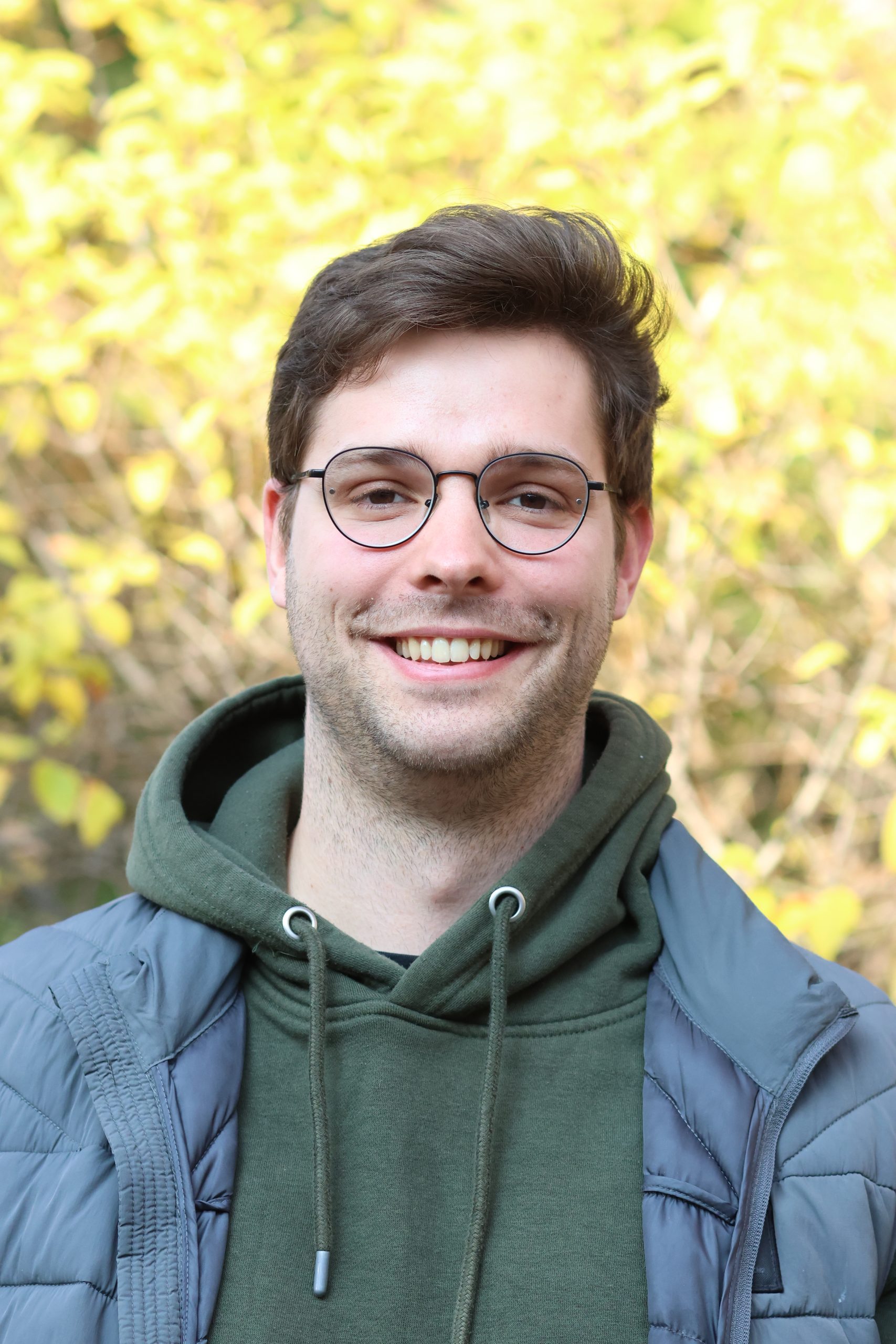
– I’ve been working at the university since 2023, when I received my Doctor of Veterinary Medicine degree. I’m currently pursuing my PhD research at the Department of Food Science within the Institute of Food Chain Science, and I also teach practical courses in both English and Hungarian. I am 27 years old, and I’m engaged to Boglárka Bianka Csiki.
– How did you decide to pursue veterinary medicine?
– The idea took shape during high school. It also helped that my sibling and I entered just about every biology and chemistry competition in the country from primary school onward. We usually performed well, and those results encouraged us to keep going in that direction. We felt it was worth trying. After that, I took a leap of faith – and was admitted to the University on the first try.
 – How did you handle the overwhelming range of fields within veterinary training?
– At first, I envisioned myself working in a small animal practice or as a clinical veterinarian, perhaps even as a specialist. There’s a small animal clinic with an orthopaedic focus in Szentendre where I spent two summers.
As the years went by however, my interests shifted toward farm animals. My involvement in scientific student research played a crucial role in that. To be honest, I approached Dr. László Kovács, assistant professor at the Department of Animal Hygiene, Herd Health and Mobile Clinic, in my third year mainly to secure a thesis topic early so I could focus on my final year in peace. I chose a fascinating subject: environmental factors influencing abnormal behaviour in tom turkeys.
– When did drones become part of your toolkit?
– In my 11th semester, Dr. Miklós Süth, head of the Institute and then Rector’s Chief Advisor, told me about a highly exciting PhD topic – how to integrate drones into veterinary medicine – and asked if I’d like to work on it. Perhaps he appreciated my precision or my work ethic — I’m not quite sure — but I said yes. It soon became clear that this topic also held the promise of a long-term research career.
– How did you end up in the United States?
– To deepen my research, I wanted to do some international networking. During that time, Dr. Süth – by then Vice-Rector for Strategic Affairs – asked: „Well, why don’t you go to America?” So, we began a prolonged process of finding a research group that would fit the summer schedule and promise useful results for both sides. When the University of Veterinary Medicine Budapest and Purdue University signed a partnership agreement in May, we were already able to announce my upcoming visit.
– And now you can evaluate the results.
We both benefited from the collaboration, though I certainly “gained” the most. We completed a joint grant application, and two scientific publications are in the pipeline. Beyond that, I learned a new way of thinking, a novel approach, and organizational methods. My lecture drew a large audience and provided an excellent opportunity for professional dialogue and networking.
– You and your fiancée – how are you preparing for the future?
– We’ve both chosen career paths strongly connected to the intellectual professions. However, we believe that having a diploma does not automatically make someone an intellectual. Unfortunately, the word “intellectual” has developed a negative connotation lately. When someone uses it, it seems to lack meaning, and it may give the impression of sounding superior. We both enjoy art and culture — literature, theatre, museums, but not as something to display for others. Rather, it’s important that these values are part of our lives alongside all the life sciences, work, and study. One thing is certain we are planning our wedding and future together.