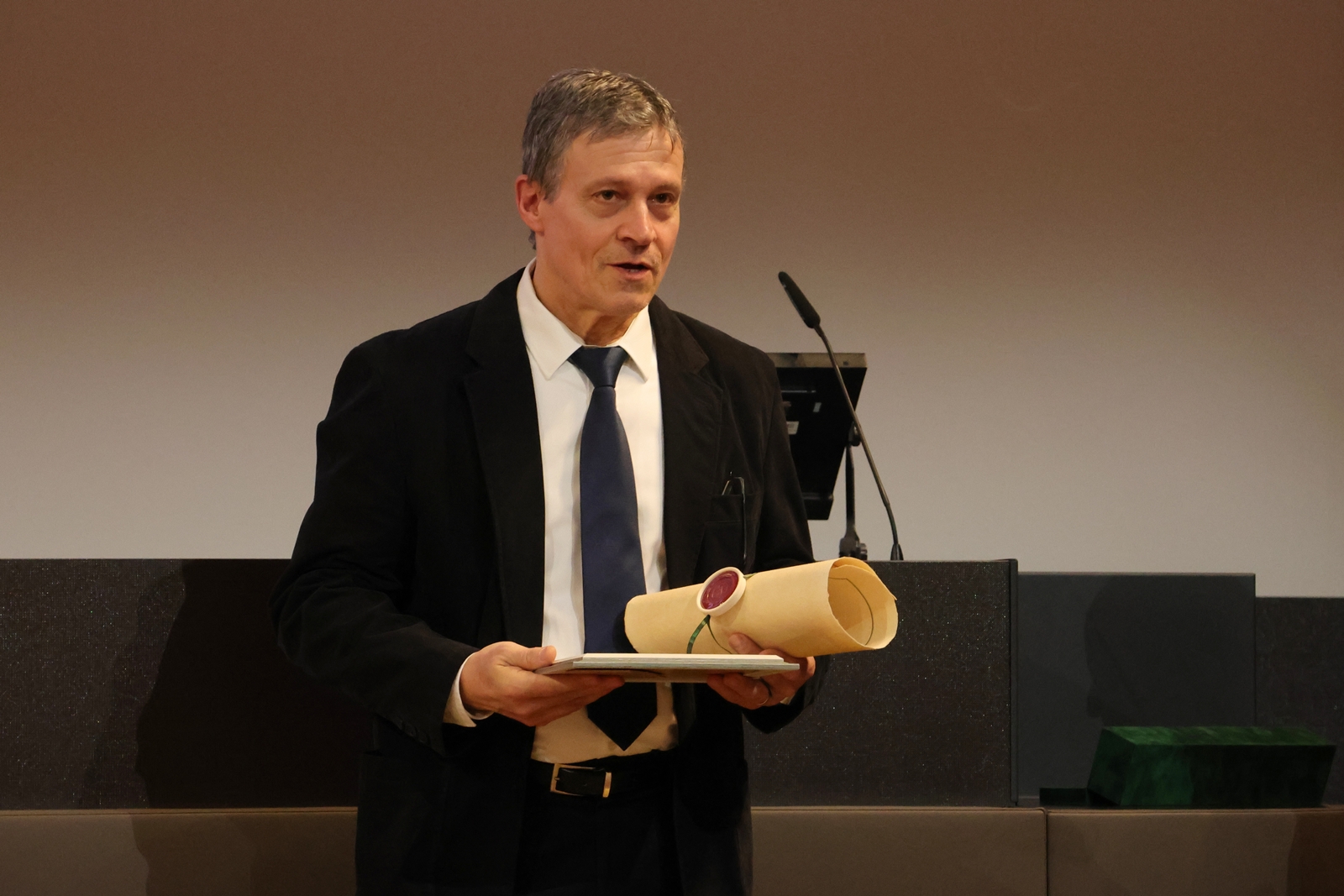
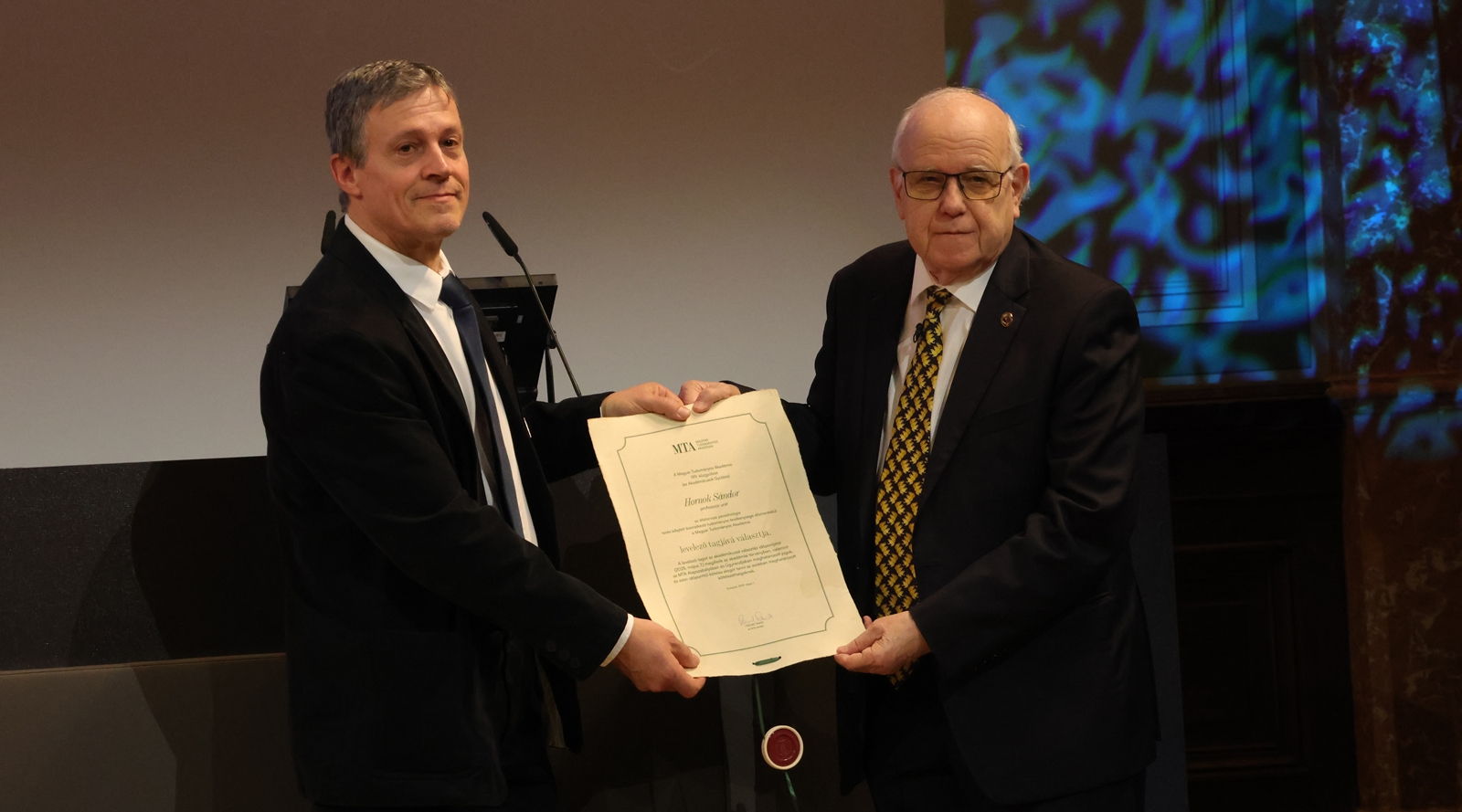
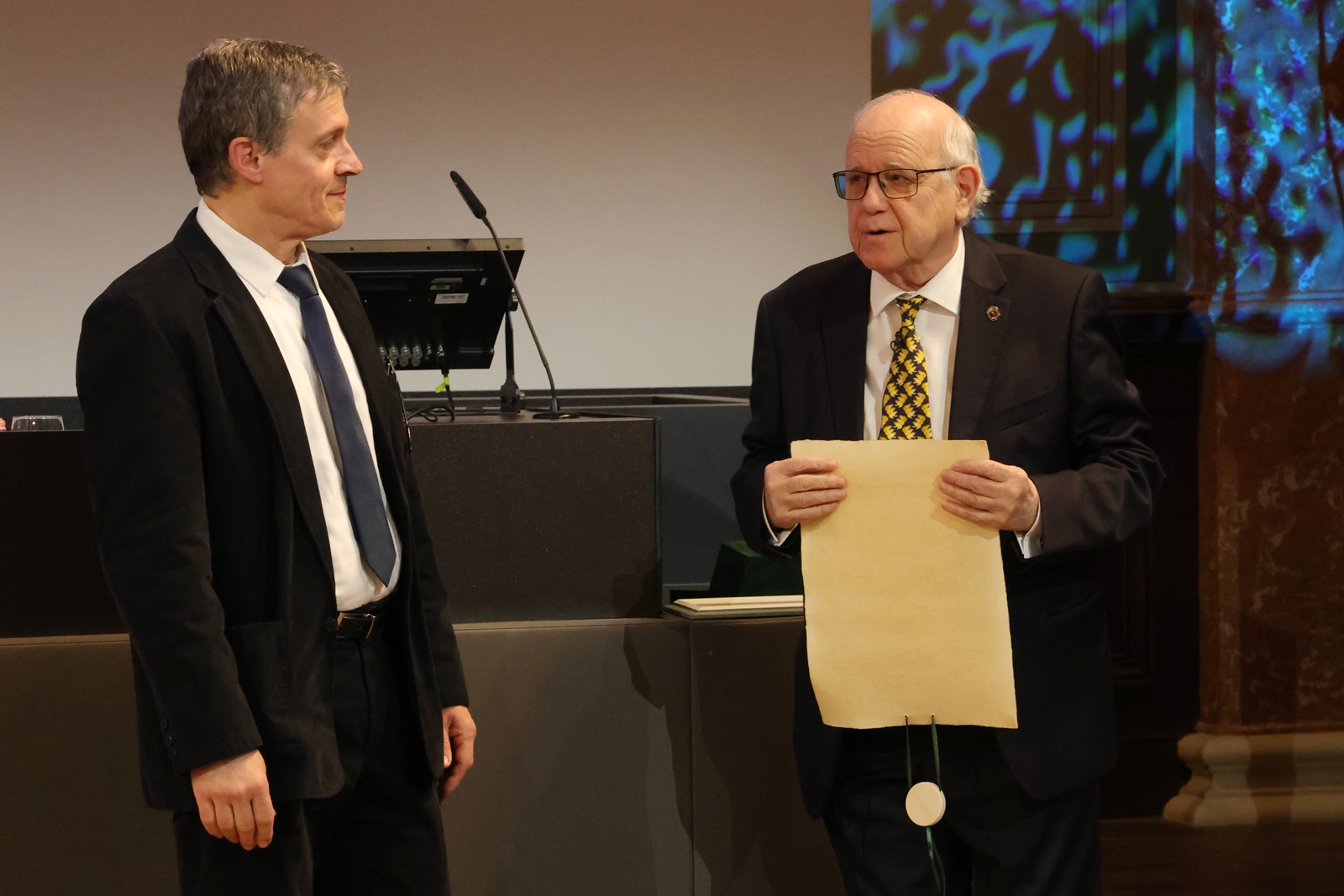
On March 11, Dr. Sándor Hornok, Corresponding Member of the Hungarian Academy of Sciences and Professor at the University of Veterinary Medicine Budapest, delivered his inaugural lecture titled “Parasites and Vector-borne Pathogens in the Anthropocene: Two Sides of the Same Coin” in the Ceremonial Hall of the Hungarian Academy of Sciences.
GUSZTÁV BALÁZS
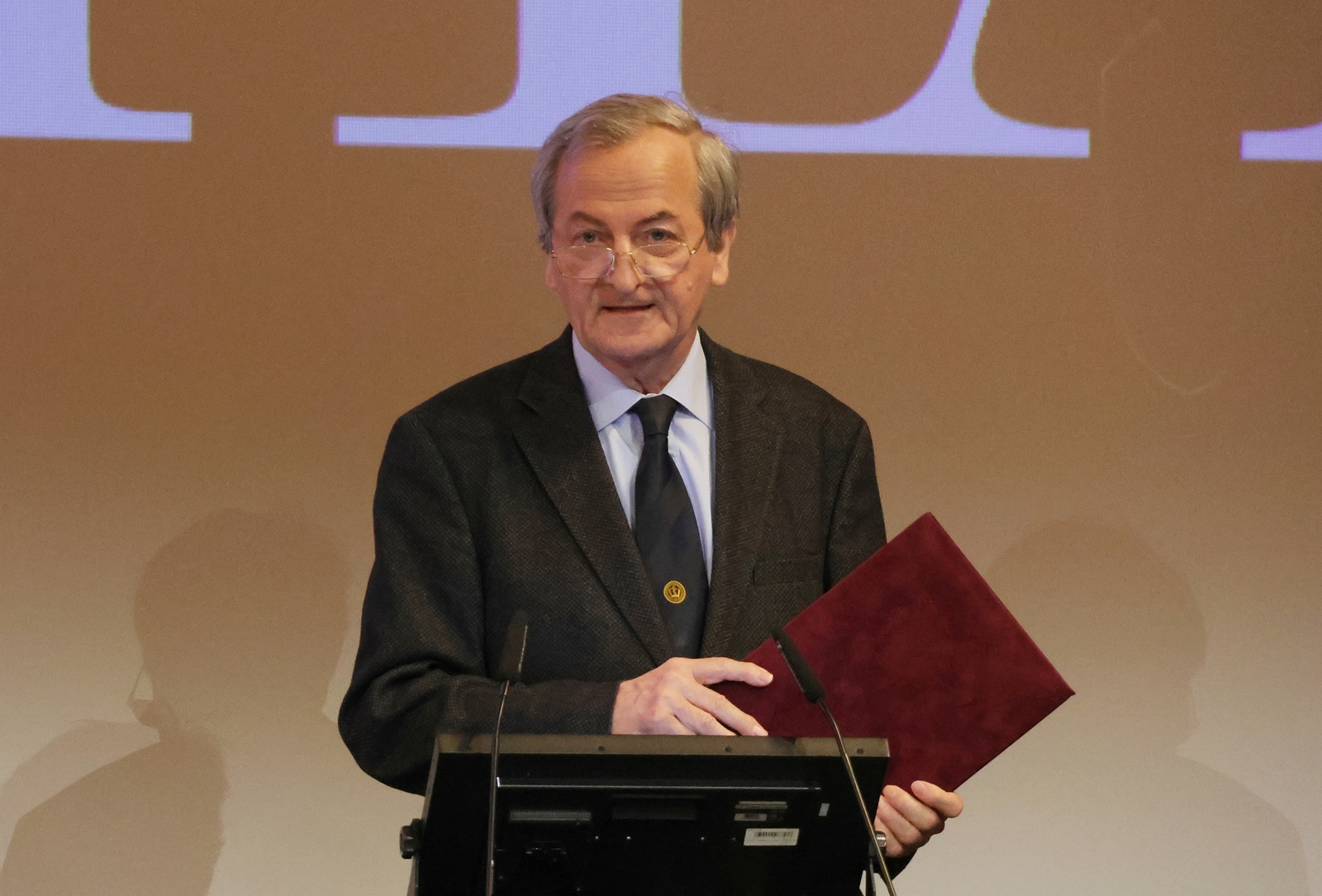
The audience was welcomed by Dr. Ervin Balázs, Full Member of the Hungarian Academy of Sciences and President of the Section of Agricultural Sciences, followed by a laudation delivered by Dr. László Fodor, Professor at the University of Veterinary Medicine Budapest.
 Sándor Hornok was admitted to the University of Veterinary Medicine Budapest in 1987. His scientific interest and commitment to parasitology became evident already during his university years. This was recognised by Professor Tibor Kassai, then Head of the Department of Parasitology and Zoology, who supported his participation in immunoparasitology research at the Faculty of Veterinary Medicine of Utrecht University in the Netherlands. Hornok graduated in 1994.
Following his graduation, he began his PhD studies at the Department of Parasitology and Zoology under the supervision of Professor István Varga and Professor Albert Cornelissen, Head of the Department of Parasitology and Tropical Veterinary Medicine at Utrecht University. In 1998, he became the first Hungarian veterinarian to earn a PhD degree from the Faculty of Veterinary Medicine at Utrecht University.
Since 1994, Hornok has been teaching and conducting research at the Department of Parasitology and Zoology of the University of Veterinary Medicine Budapest. He obtained his Doctor of the Hungarian Academy of Sciences (DSc) degree in 2020. His dissertation was titled “Taxonomic, Eco-epidemiological and Geographical Studies on Ticks, Lice and Their Associated Pathogens.” In the same year, he was appointed full professor.
His most significant postdoctoral research has focused on the molecular analysis, taxonomy, ecology, and geographical distribution of blood-sucking arthropods and the protozoan and bacterial pathogens they transmit.
He has discovered eight tick species new to science: one in Hungary, one in Greece, three in Vietnam, and three in Japan. He elevated one of the 18 groups of ticks to genus rank and reinstated the species status of a previously described but overlooked tick species. He also described a new species of blood-sucking bug and identified a novel rickettsial organism, which he named Candidatus Rickettsia hungarica. Through molecular and morphological evidence, he played a leading role in the discovery of a new flea subspecies, as well as several protozoan parasites and arthropod-borne bacterial species. He also identified previously unknown transmission routes and infection sources of several vector-borne pathogens in domestic animals. Furthermore, he clarified the taxonomy of ticks feeding on birds, bats, and carnivorous mammals, as well as a group of bat bugs and bat-associated Babesia species.
In recognition of his PhD research, Dr. Hornok received the Szent-Iványi Junior Award in 1999. Between 2010 and 2013, he was awarded the János Bolyai Research Scholarship of the Hungarian Academy of Sciences, and in 2014, he received the Bolyai Plaque for his outstanding postdoctoral achievements. In 2023, he was awarded the commemorative medal of the Hungarian Society of Parasitologists.
Dr. Hornok is married and the father of an 18-year-old daughter. As a significant intellectual pursuit in his free time, he translated nine works on philosophy of religion into Hungarian between 1996 and 2004, mainly on Tibetan Buddhism; these have gone through multiple editions.
At the end of his lecture, he paid tribute to Sándor Kőrösi Csoma, who was elected a member of the Hungarian Academy of Sciences in 1833 and, with his dictionary published in 1834, effectively laid the foundations of modern Tibetan studies.