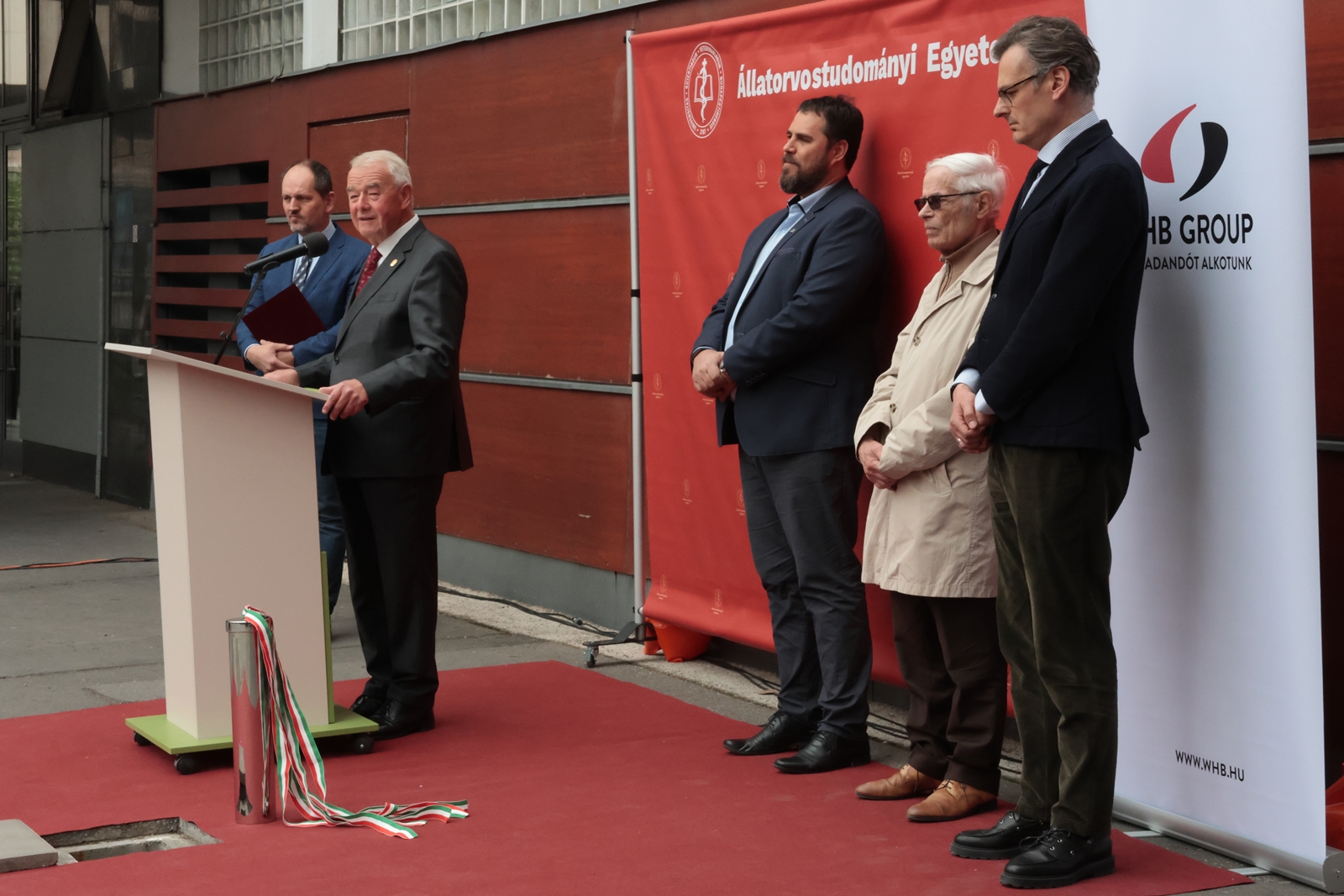
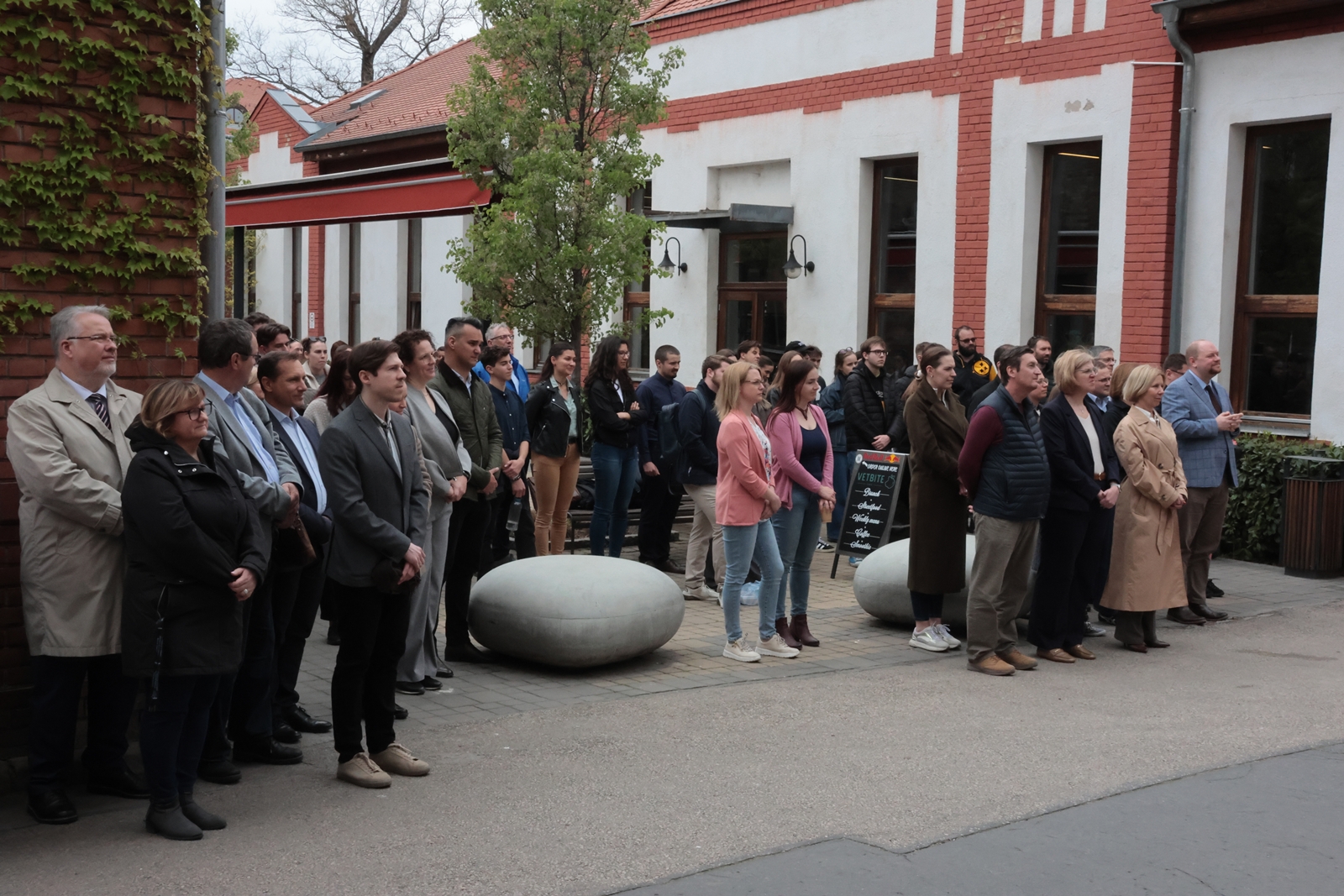
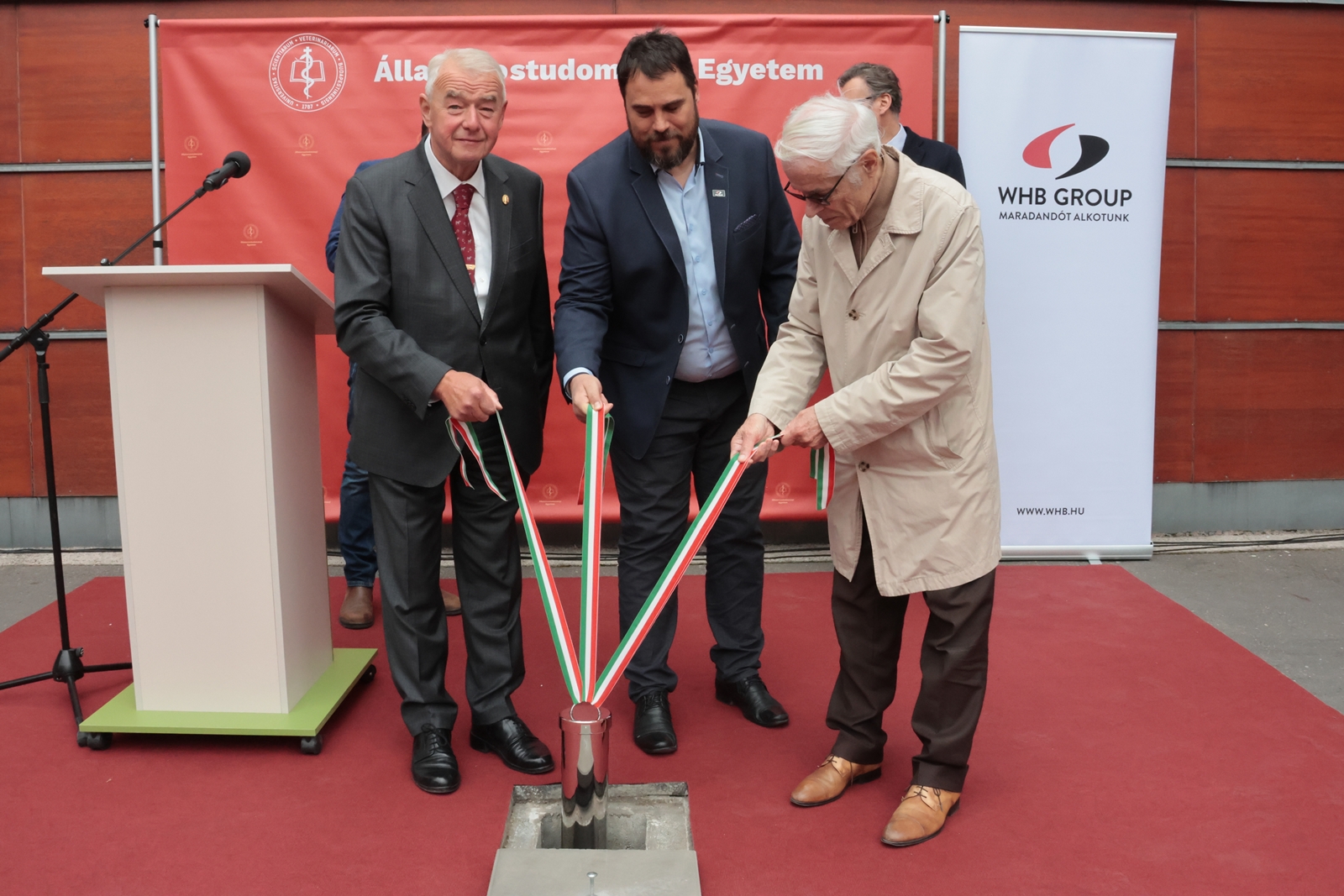
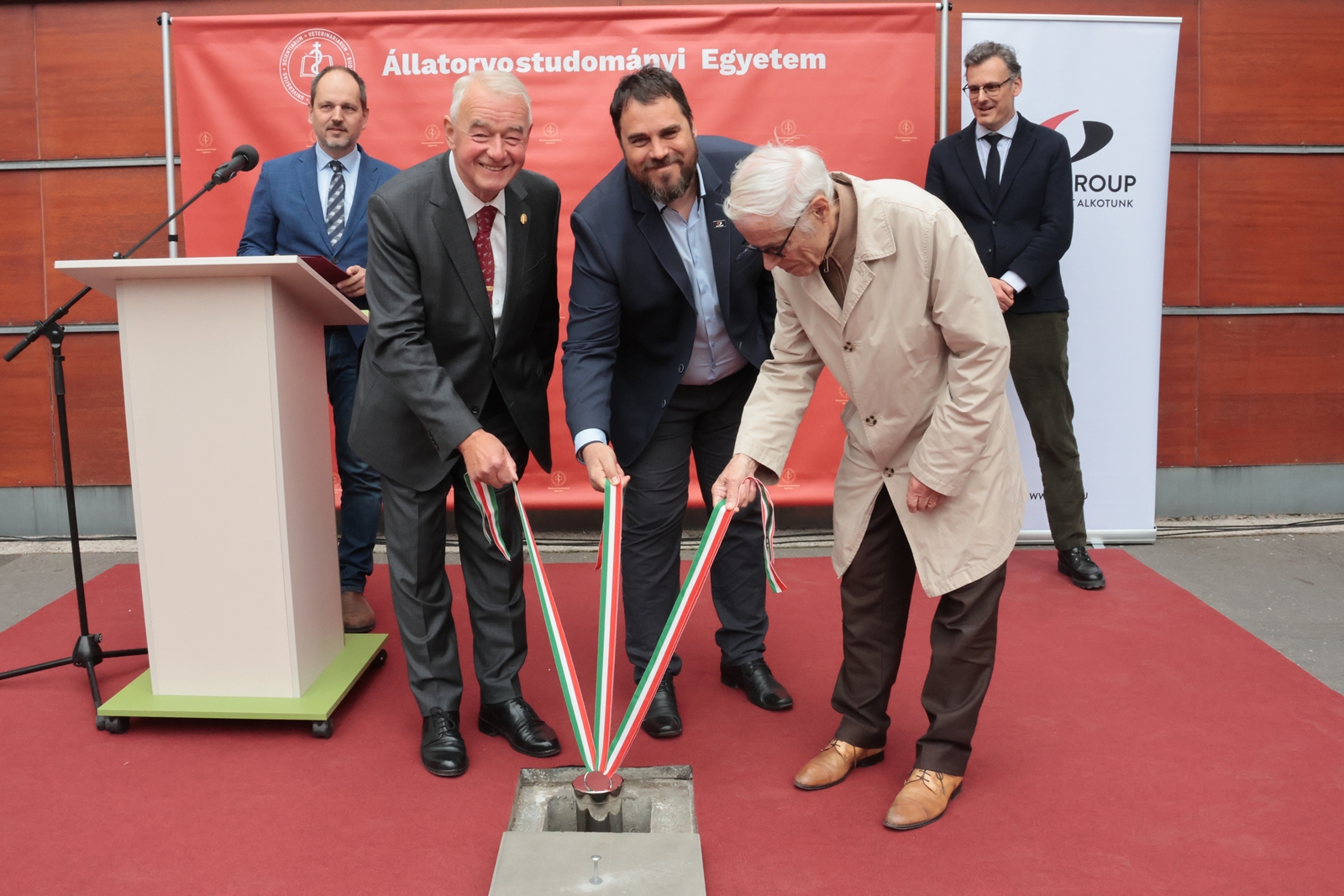
The first phase of the University of Veterinary Medicine Budapest campus development on István Street has reached its second stage: the construction site was officially handed over to the contractor, West Hungária Bau Kft., in a ceremonial setting.
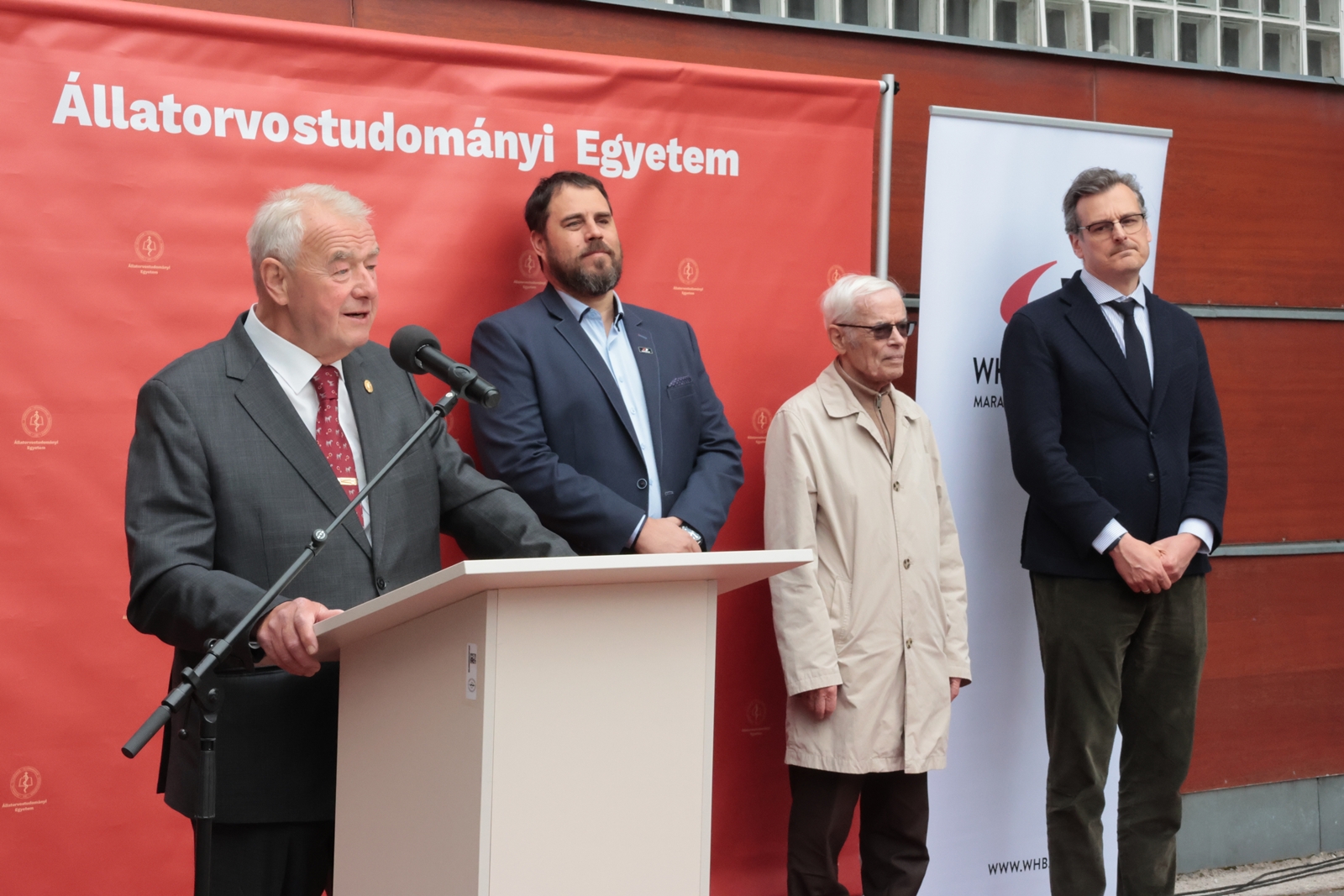
Among the guests were Gábor Náray-Szabó, Chairman of the Board of Trustees of the Marek József Foundation, Barnabás Csépe, Regional Director of WHB Group, and Balázs Kiss, Investment Director of the university.
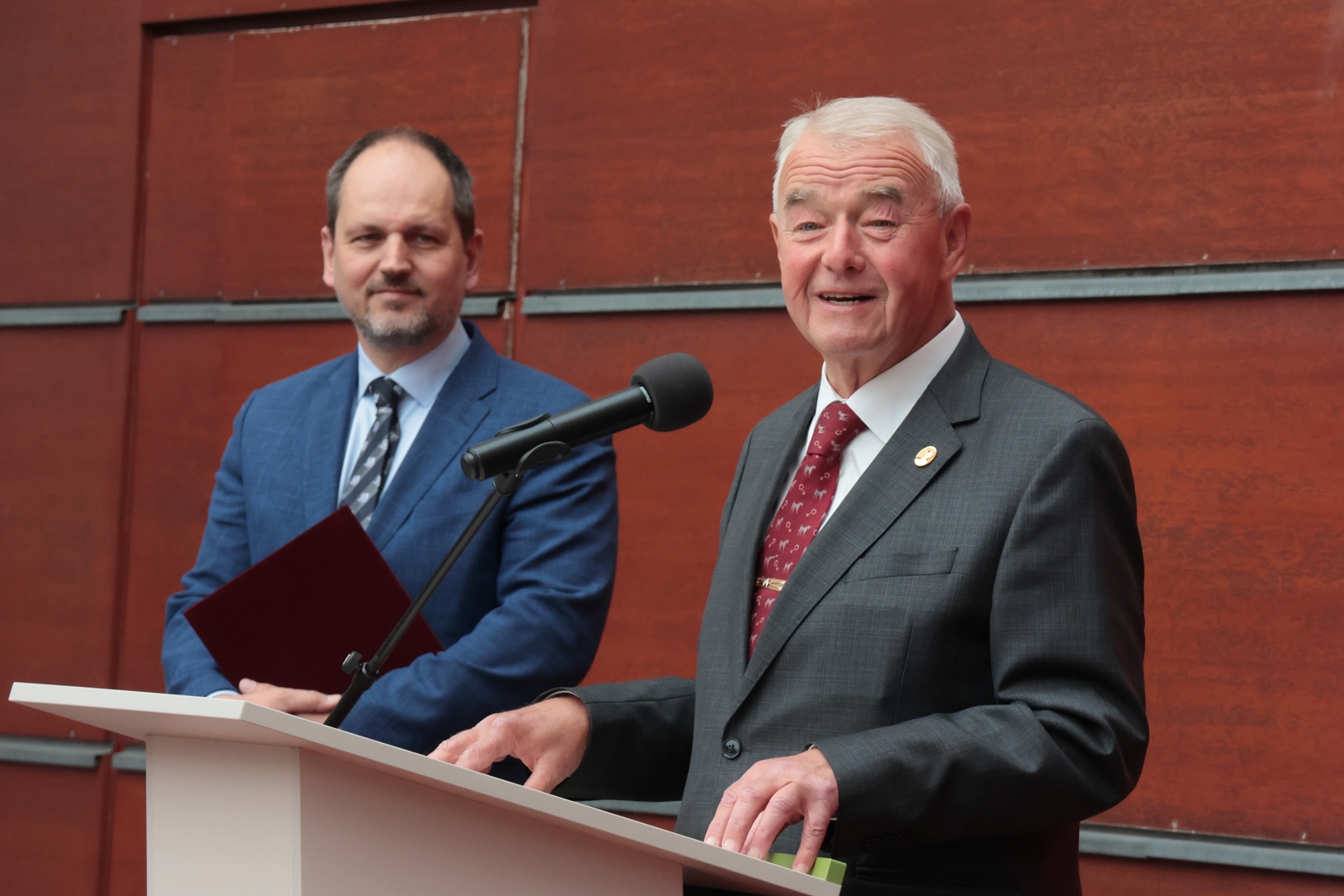
The event was opened by Márton Battay, Secretary General of the university, who then invited Rector Péter Sótonyi to address the audience.
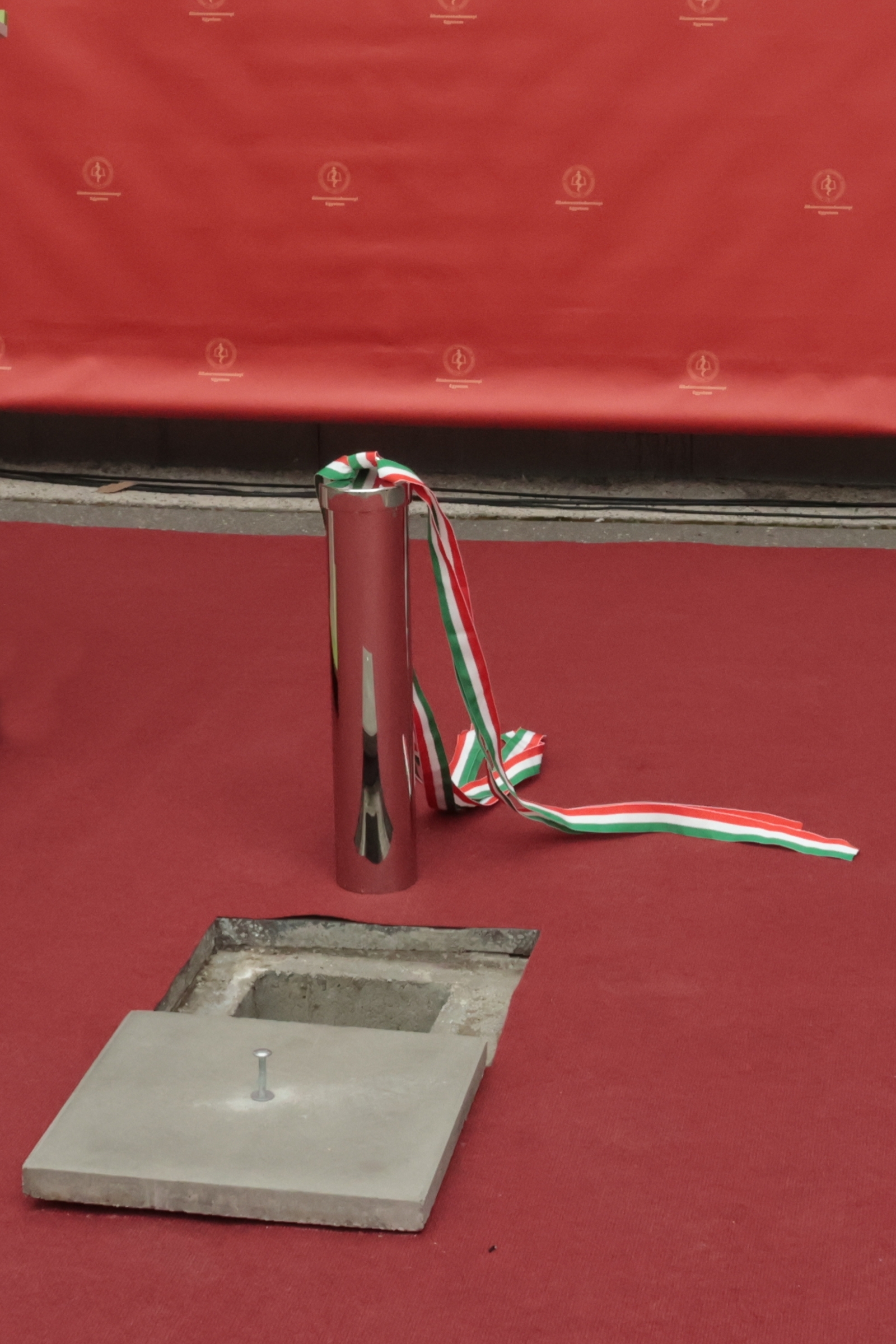
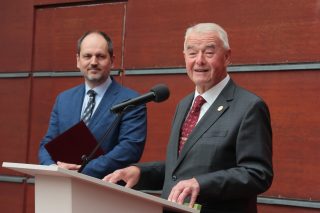 In his speech, the Rector highlighted that within the framework of the comprehensive campus development program, the first phase already saw the renovation of Buildings B and C, as well as the large animal clinic in Üllő. With the placement of a time capsule containing the building plans, the university has symbolically entered the second stage of the first phase, which includes the full renovation of Buildings “H–N” of the stilt-house complex. He emphasised that although this building group is just over 50 years old, it is in worse condition than the older buildings designed by Imre Steindl, which underlines the urgency of renovation—especially in light of the institution’s commitment to innovation and continuous development.
Professor Sótonyi also expressed his appreciation that the project is being carried out by West Hungária Bau Kft., a company with more than 30 years of exclusively Hungarian ownership, which had already completed the first stage of the project by December 2024.
The current renovation aims to create a more modern and livable environment on campus. As part of this, the courtyard façade will be transformed, and a glass-walled central hall connecting the building blocks will be constructed. This space will not only serve circulation purposes but will also function as an exhibition area, integrating the history of veterinary medicine into everyday campus life. An internal atrium will be created between Buildings N and L, serving as a landscaped garden while also providing covered and convenient access from the campus side.
The new community spaces will offer expanded opportunities for studying and social interaction. With increased green areas and the development of accessible walkways, the overall environment will become more organised and user-friendly. The renovation will include complete roof and waterproofing renewal, replacement of doors and windows, full reconstruction of the façade, and comprehensive modernisation of interior spaces, including electrical and mechanical systems. The areas in front of the buildings will also be upgraded, with partial development and new paving.
As the works will be preceded by significant demolition, Rector Sótonyi asked for patience from university staff and students during the renovation period, emphasising that temporary inconveniences serve a shared long-term goal. He added that the strength of the veterinary community has always been rooted in collaboration and expressed confidence in achieving success together.
He also announced that this will be followed by the second phase of development: the establishment of a Comparative Medical Research Centre, representing an additional investment of HUF 46 billion for the university.